

 SkillClick
How Does NDLSPR as a Compression Spring Manufacturer Address Creep and Relaxation in Battery Retention
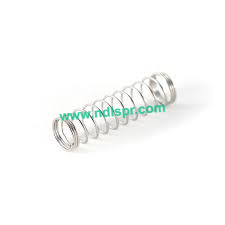
The transition to electric vehicles introduces new engineering challenges, particularly within the battery pack where every component must perform reliably under demanding conditions. Among these components, the compression spring plays a critical role in securing individual battery cells and maintaining electrical contact across thousands of charge-discharge cycles. A Compression Spring Manufacturer must therefore adapt traditional design principles to meet the unique requirements of EV battery retention, where factors such as vibration resistance, thermal stability, and long-term force maintenance become paramount. At NDLSPR, this adaptation involves a systematic approach to material science, geometry optimization, and production precision that addresses the specific stresses found within a vehicle's energy storage system. The question facing design engineers is whether a standard Compression Spring Manufacturer can truly satisfy the rigorous demands of this evolving application.
The primary function of a compression spring within a battery module is to maintain consistent pressure between the cell and the busbar or cooling plate, ensuring stable electrical conductivity and efficient heat transfer. This pressure must remain within a narrow tolerance band despite the constant vibration from road surfaces and the significant thermal expansion that occurs during rapid charging or high-current discharge. A well-designed spring compensates for these dimensional changes while preventing the cell from shifting within its housing, which could cause electrical arcing or mechanical damage. The design process at NDLSPR begins with a thorough analysis of the operating environment, including the expected temperature range, vibration spectrum, and the specific dimensional constraints of the battery enclosure. This analysis determines the required spring rate, free length, and solid height, which then guide the selection of wire material and coil geometry.
Material selection represents one of the most critical decisions in the design process, as the spring must maintain its elastic properties across a wide temperature window while resisting corrosion from any potential electrolyte exposure. While standard music wire may suffice for general-purpose applications, EV battery retention frequently requires materials such as stainless steel or chrome-silicon alloys that offer superior fatigue resistance and thermal stability. The chosen material must also demonstrate minimal relaxation over time, as the spring will remain under constant compression throughout the vehicle's service life. NDLSPR utilizes its extensive experience with various alloys to recommend the optimal material for each specific application, considering factors such as operating temperature, required cycle life, and cost constraints. This careful evaluation of material properties and manufacturing capabilities is what distinguishes a reliable China Compression Spring solution from a generic alternative. The manufacturing process itself must maintain tight tolerances on wire diameter and coil spacing to ensure that every spring delivers consistent force performance.
The geometric design of the spring influences its ability to accommodate the limited space within a battery pack while providing the necessary deflection range. In many EV modules, the available height for the spring is severely restricted, requiring a design with a high spring index or a conical or barrel shape to maximize deflection within a compact envelope. The end configuration also matters, as ground and closed ends provide a flat bearing surface that distributes load evenly and prevents the spring from buckling under side loads. NDLSPR's engineering team employs advanced simulation tools to model spring behavior under various load scenarios, optimizing the design for both performance and manufacturability. This simulation capability enables rapid iteration and reduces the need for extensive physical prototyping, accelerating the development timeline for new battery programs.
The production environment for EV battery components demands exceptional cleanliness and consistency, as any contamination or dimensional variation can affect the electrical performance or safety of the pack. NDLSPR maintains ISO Class 8 cleanroom conditions for spring production, along with automated optical inspection systems that verify each spring's dimensions and surface quality. The wire forming process must also be carefully controlled to avoid introducing residual stress that could lead to premature failure. Post-processing operations such as shot peening and stress relief heat treatment further enhance the spring's durability by introducing compressive residual stresses on the surface, which resist crack initiation. These manufacturing controls ensure that each spring meets the stringent quality standards required for automotive applications.
The specific requirements for EV battery retention springs often involve tight tolerance on spring rate, typically within ±5% of the specified value, to ensure uniform pressure distribution across all cells in a module. Any variation in force can lead to uneven current sharing or localized heating, which reduces battery life and poses a safety risk. NDLSPR's quality management system, certified to IATF 16949, includes statistical process control and comprehensive testing to verify that each production batch meets these strict tolerances. Load testing at multiple points within the spring's deflection range confirms that the spring rate remains consistent throughout its travel. This attention to detail makes the difference between a spring that performs adequately and one that provides the long-term reliability demanded by EV manufacturers.
Beyond the core mechanical requirements, the design process must also consider the spring's interaction with other components within the battery assembly, such as insulating materials or thermal interface pads. The spring's surface finish and coating, if used, must be compatible with these materials and not cause abrasion or chemical degradation. NDLSPR offers various surface treatments, including zinc plating, nickel plating, and various organic coatings, to protect against corrosion and reduce friction between the spring and its mating surfaces. The selection of the appropriate coating depends on the specific operating conditions and compatibility requirements of the battery system. This holistic approach to design ensures that the compression spring functions seamlessly within the larger assembly.
The development of a reliable compression spring for EV battery retention represents a significant engineering achievement, requiring expertise in material science, precision manufacturing, and application-specific design. The right solution ensures that the battery performs safely and efficiently over the vehicle's entire service life. For detailed technical specifications and to explore suitable compression spring designs for your specific application, the product portfolio at https://www.ndlspr.com/product/compression-spring/ provides comprehensive information on available options and customization capabilities. The evolution of electric vehicles demands components engineered for the challenges of this new era, where reliability and safety are paramount. Does your current Compression Spring Manufacturer possess the specialized knowledge required to meet these exacting standards?
- Managerial Effectiveness!
- Future and Predictions
- Motivatinal / Inspiring
- Fitness and Wellness
- Medical & Health
- Manufacturing
- Education
- Real-Estate
- Food Industry
- Hospitality
- Online Games
- Sports
- Home Services
- Civil Engineering
- Safety and Protection
- Software Products & Services
- Fashion and Jewellery
- Artificial Intelligence
- Entrepreneurship
- Mentoring & Guidance
- Marketing
- Networking
- HR & Recruiting
- Literature
- Shopping
- Career Management & Advancement