

 SkillClick
Why Hijab Magnets Are Replacing Traditional Hijab Pins in Everyday Styling
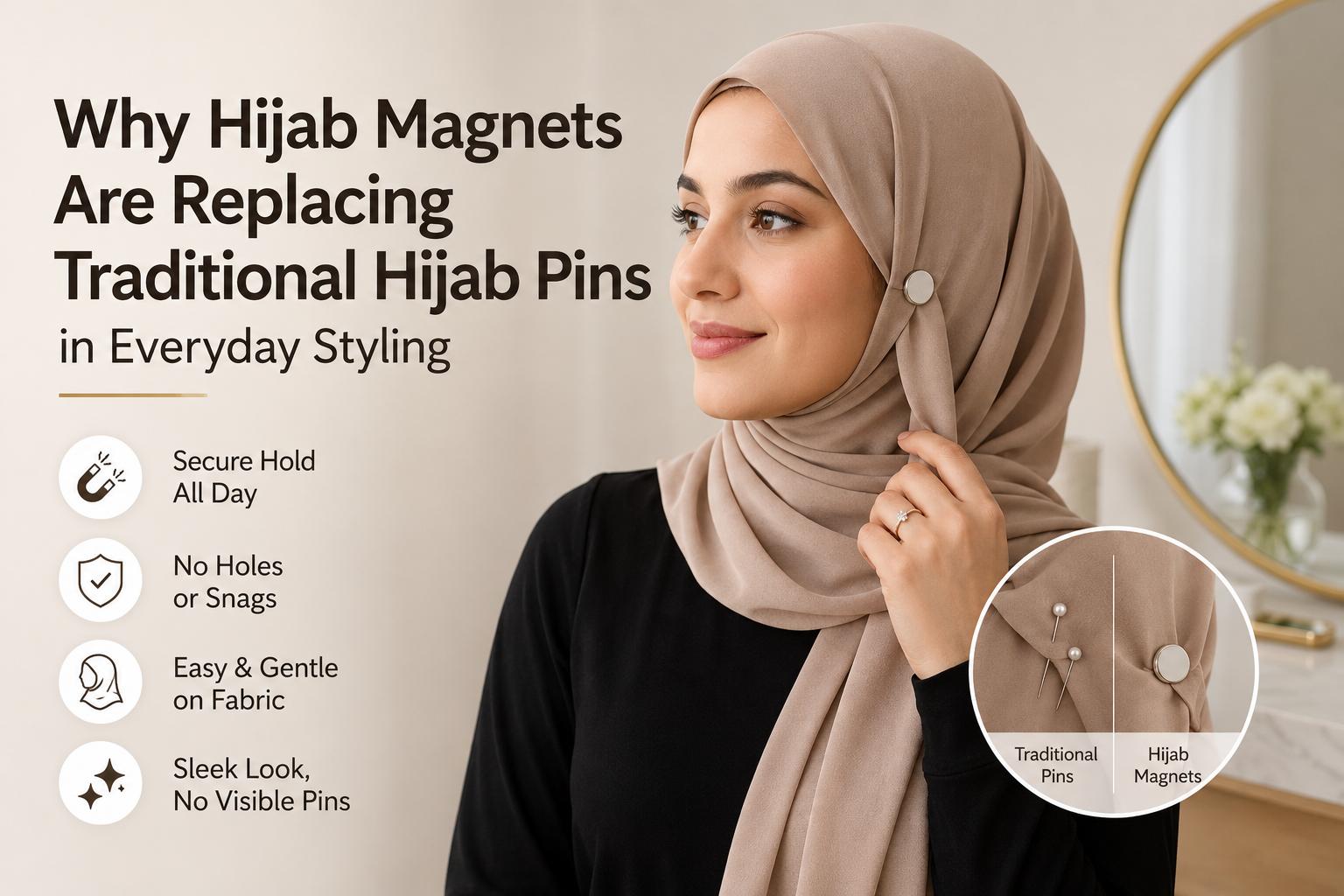
In modern hijab styling, small tools often make the biggest difference in comfort and appearance. Among these, fastening methods have changed significantly over time. For years, Hijab pins were the most common way to secure scarves in place, but recently a new alternative has become widely preferred: Hijab magnets.
This shift is not just a fashion trend. It reflects practical needs related to fabric safety, daily comfort, and ease of styling. As different materials such as chiffon, jersey, and crinkle fabrics are used in modern Hijabs, the demand for safer and more convenient fastening solutions has increased.
The Traditional Role of Hijab Pins
Hijab pins have been used for decades as the standard method of securing scarves. They are simple, widely available, and effective in holding fabric in place.
However, traditional pins come with certain limitations:
- They can damage delicate fabrics
- They may leave holes in lightweight scarves
- They can be uncomfortable during long wear
- They require careful handling to avoid injury
These issues become more noticeable when working with fabrics like Chiffon scarves or fine Scarves that are sensitive to sharp objects.
Despite these drawbacks, pins are still used widely due to habit and availability.
What Are Hijab Magnets?
Hijab magnets are small fastening tools that use magnetic force instead of sharp edges to secure fabric. They usually come in pairs and hold the hijab layers together without piercing the material.
Unlike pins, magnets:
- Do not puncture fabric
- Provide smooth fastening
- Reduce damage risk
- Offer quick application
This simple change in design has made them increasingly popular among daily hijab users.
Why Fabric Safety Matters More Today
Modern hijab fashion includes a wide variety of fabrics, each with different textures and durability levels.
For example:
- Chiffon scarves are lightweight and delicate
- Jersey scarves are stretchy and soft
- Crinkle hijabs have textured surfaces
- Lawn hijabs are breathable and fine
When using pins on delicate materials, even small punctures can lead to long-term damage. Over time, repeated pin use may weaken the fabric structure.
Hijab magnets eliminate this issue completely by securing fabric without piercing it.
Comfort in Daily Wear
Comfort plays a major role in choosing hijab accessories.
Traditional pins can sometimes:
- Press against the skin
- Cause discomfort under the chin or shoulder
- Require frequent adjustment
In contrast, hijab magnets offer a smoother experience.
They remain flat against the fabric, reducing pressure points and making them suitable for long hours of wear, especially in work or outdoor environments.
Compatibility with Modern Hijab Fabrics
Different scarf materials behave differently when styled.
Chiffon Scarves
Chiffon is lightweight and often slippery. Pins may shift or create visible holes. Magnets provide a cleaner hold without damaging the fabric.
Jersey Scarves
Jersey is stretchable and soft. Magnets help maintain shape without pulling the fabric.
Crinkle Hijabs
Crinkle texture can make pin placement uneven. Magnets provide balanced grip.
Lawn Hijabs
Lawn fabric is breathable but delicate. Magnets help preserve its structure.
This compatibility is one of the main reasons hijab magnets are becoming more widely used.
Ease of Use in Daily Routine
One of the strongest advantages of hijab magnets is speed.
In busy routines, users often need quick styling solutions. Magnets can be applied in seconds without worrying about alignment or fabric damage.
They are especially useful for:
- Students
- Working professionals
- Travelers
- Daily wear users
This convenience has contributed significantly to their growing popularity.
Safety Advantages
Pins carry a small but real risk of accidental pricking. This can happen while:
- Adjusting hijabs
- Carrying bags
- Moving quickly during the day
Hijab magnets remove this risk completely since they have no sharp edges. This makes them safer, especially for beginners or younger users.
Style Stability and Appearance
Another important factor is how the fastening method affects appearance.
Pins can sometimes:
- Show through lightweight fabric
- Create visible holes
- Disturb smooth draping
Magnets, on the other hand:
- Remain hidden under fabric layers
- Maintain clean draping
- Preserve natural flow of scarves
This results in a more polished and consistent look.
Why Many Users Still Combine Both Methods
Even though magnets are becoming popular, some users still prefer combining both pins and magnets depending on situation.
For example:
- Magnets for daily wear
- Pins for extra-heavy styling or layered hijabs
This flexible approach allows users to balance comfort and security.
Cost vs Long-Term Value
At first glance, hijab pins are cheaper than magnets. However, fabric damage caused by pins can increase long-term clothing costs.
Magnets help:
- Extend scarf lifespan
- Reduce fabric wear
- Minimize replacement needs
This makes them a more cost-effective choice over time.
Common Misconceptions About Hijab Magnets
Myth 1: Magnets are not strong enough
Modern magnets are designed with strong holding power suitable for daily wear.
Myth 2: They slip easily
When properly placed, they provide stable grip similar to pins.
Myth 3: They are expensive
While slightly more costly initially, they save money by protecting fabric.
The Future of Hijab Styling Accessories
As hijab fashion continues to evolve, practicality and comfort are becoming more important than traditional methods.
Future trends may include:
- Improved magnetic designs
- Fabric-friendly fastening systems
- Hybrid accessories combining safety and strength
Hijab magnets are likely to remain a key part of this evolution.
Final Thoughts
The shift from traditional pins to Hijab magnets reflects a broader change in modern hijab styling. Users today prioritize comfort, fabric safety, and ease of use alongside appearance. While Hijab pins still have their place, magnets offer a practical solution that works well with different types of Hijabs, including Chiffon scarves, Jersey scarves, and Crinkle hijabs.
As daily routines become busier and fashion becomes more fabric-diverse, tools that offer convenience without damaging clothing will continue to grow in demand. Hijab magnets represent this change clearly, combining simplicity with functionality in everyday styling.
- Managerial Effectiveness!
- Future and Predictions
- Motivatinal / Inspiring
- Fitness and Wellness
- Medical & Health
- Manufacturing
- Education
- Real-Estate
- Food Industry
- Hospitality
- Online Games
- Sports
- Home Services
- Civil Engineering
- Safety and Protection
- Software Products & Services
- Fashion and Jewellery
- Artificial Intelligence
- Entrepreneurship
- Mentoring & Guidance
- Marketing
- Networking
- HR & Recruiting
- Literature
- Shopping
- Career Management & Advancement