

 SkillClick
MCP Server Complete Guide: Understanding the Backbone of Modern AI Integrations
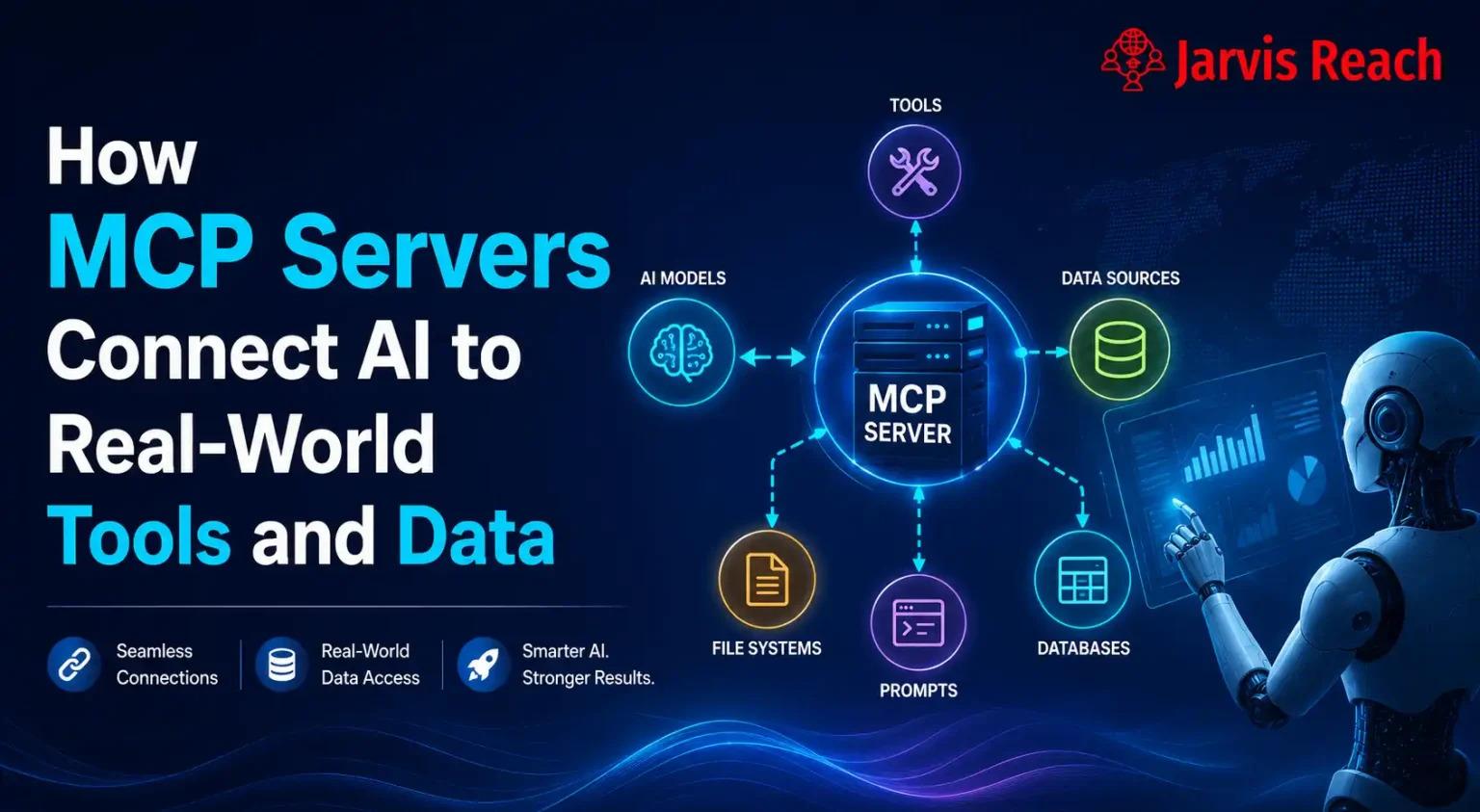
Artificial Intelligence is evolving at an unprecedented pace, and organizations are increasingly looking for ways to connect AI models with real-world tools, databases, applications, and services. While AI models are incredibly powerful, they are limited when operating in isolation. To become truly useful, they need access to external data and systems.
This is where the MCP Server comes into play. The Model Context Protocol (MCP) has emerged as one of the most important standards in the AI ecosystem, enabling seamless communication between AI applications and external resources. Many experts compare MCP to USB-C for AI because it provides a universal method for connecting AI systems with tools and services.
What Is an MCP Server?
An MCP Server is a service that exposes tools, resources, and prompts to AI applications through the Model Context Protocol. Instead of creating custom integrations for every AI model and every software application, developers can build a single MCP-compliant server that works across multiple AI platforms.
The protocol was introduced to solve a major challenge in AI development: integration complexity. Traditionally, every AI application required unique connections to databases, APIs, cloud platforms, and business software. MCP simplifies this process by creating a common communication standard.
Why MCP Matters in Modern AI Development
Before MCP, developers faced what is often called the "N × M integration problem." If ten AI applications needed to connect with ten different tools, developers potentially had to create one hundred separate integrations. MCP reduces this complexity dramatically by providing a standardized protocol that all compatible systems can use.
This means organizations can:
- Build integrations faster
- Reduce maintenance costs
- Improve scalability
- Increase interoperability
- Accelerate AI deployment
As AI adoption continues to grow, standardization becomes increasingly important for businesses that want flexible and future-proof solutions.
How an MCP Server Works
The MCP architecture consists of three major components:
Host
The host is the AI application that users interact with. This could be an AI assistant, coding environment, business automation platform, or productivity application.
Client
The MCP client acts as a communication layer between the AI application and MCP servers. It handles requests, responses, and protocol interactions.
Server
The MCP server exposes capabilities that AI systems can access. These capabilities may include databases, APIs, cloud resources, file systems, and various business applications.
Together, these components allow AI systems to perform actions beyond simple text generation.
Core Components of an MCP Server
Tools
Tools are executable functions that AI applications can invoke.
Examples include:
- Sending emails
- Querying databases
- Running searches
- Generating reports
- Managing workflows
Tools allow AI systems to perform meaningful actions instead of merely providing information.
Resources
Resources provide contextual information that AI applications can access and analyze.
Examples include:
- Documents
- Business records
- Knowledge bases
- Research datasets
- Configuration files
Resources help AI models deliver more accurate and relevant responses.
Prompts
Prompts are reusable templates that guide interactions between users and AI systems. They help maintain consistency and improve workflow efficiency.
Benefits of Using MCP Servers
Faster Development
Developers can create a single integration that works across multiple AI platforms rather than building separate connectors for each system.
Better Scalability
Organizations can expand their AI infrastructure without significantly increasing integration complexity.
Improved Interoperability
Different AI models and tools can communicate using the same protocol, creating a more connected ecosystem.
Reduced Maintenance
A standardized architecture reduces the need for continuous updates and maintenance across multiple custom integrations.
Real-World Applications of MCP Servers
The adoption of MCP Servers is growing rapidly across industries.
Software Development
AI coding assistants can access repositories, documentation, deployment systems, and issue trackers through MCP connections.
Business Automation
Organizations can connect AI systems to CRM platforms, customer support software, and workflow management tools.
Research and Analytics
Researchers can use MCP-enabled AI systems to interact with scientific knowledge graphs and large datasets through natural language queries.
Cloud Infrastructure Management
AI applications can monitor, manage, and automate cloud operations using MCP-compatible services.
MCP vs Traditional API Integrations
Traditional API integrations require developers to manually manage authentication, requests, responses, error handling, and maintenance for every connection.
MCP simplifies this process by providing:
- Standardized communication
- Reusable integrations
- Tool discovery mechanisms
- Unified workflows
- Better scalability
This approach significantly reduces development overhead while improving compatibility across systems.
Security Considerations
Although MCP offers numerous advantages, organizations must implement proper security controls.
Important considerations include:
- Authentication management
- Permission controls
- Prompt injection protection
- Tool validation
- Access monitoring
Researchers have identified security risks associated with improperly configured MCP implementations, highlighting the importance of governance and secure deployment practices.
The Future of MCP Servers
The future looks extremely promising for MCP technology. Industry adoption continues to accelerate, with major AI companies and development platforms embracing the protocol as a standard method for connecting AI applications with external systems.
As AI agents become more autonomous and capable of performing complex tasks, the need for reliable, scalable, and standardized integration frameworks will continue to grow. MCP Servers are expected to become a foundational component of next-generation AI infrastructure.
Businesses that invest in MCP Server technology today will be better positioned to build intelligent, connected, and future-ready applications.
Conclusion
MCP Servers are transforming the way AI systems interact with the digital world. By providing a universal communication layer between AI models and external tools, they simplify development, improve interoperability, and unlock powerful new capabilities.
Whether you are a developer, business leader, or technology enthusiast, understanding MCP Servers is becoming increasingly important as AI moves from isolated applications to fully integrated intelligent ecosystems. As adoption continues to grow, MCP is poised to become one of the most influential technologies shaping the future of AI integration.
- Managerial Effectiveness!
- Future and Predictions
- Motivatinal / Inspiring
- Fitness and Wellness
- Medical & Health
- Manufacturing
- Educação
- Real-Estate
- Food Industry
- Hospitality
- Online Games
- Sports
- Home Services
- Civil Engineering
- Safety and Protection
- Software Products & Services
- Fashion and Jewellery
- Artificial Intelligence
- Entrepreneurship
- Mentoring & Guidance
- Marketing
- Networking
- HR & Recruiting
- Literature
- Shopping
- Career Management & Advancement