

 SkillClick
Most Popular Spirits by Associated Alcohols & Breweries Limited in India
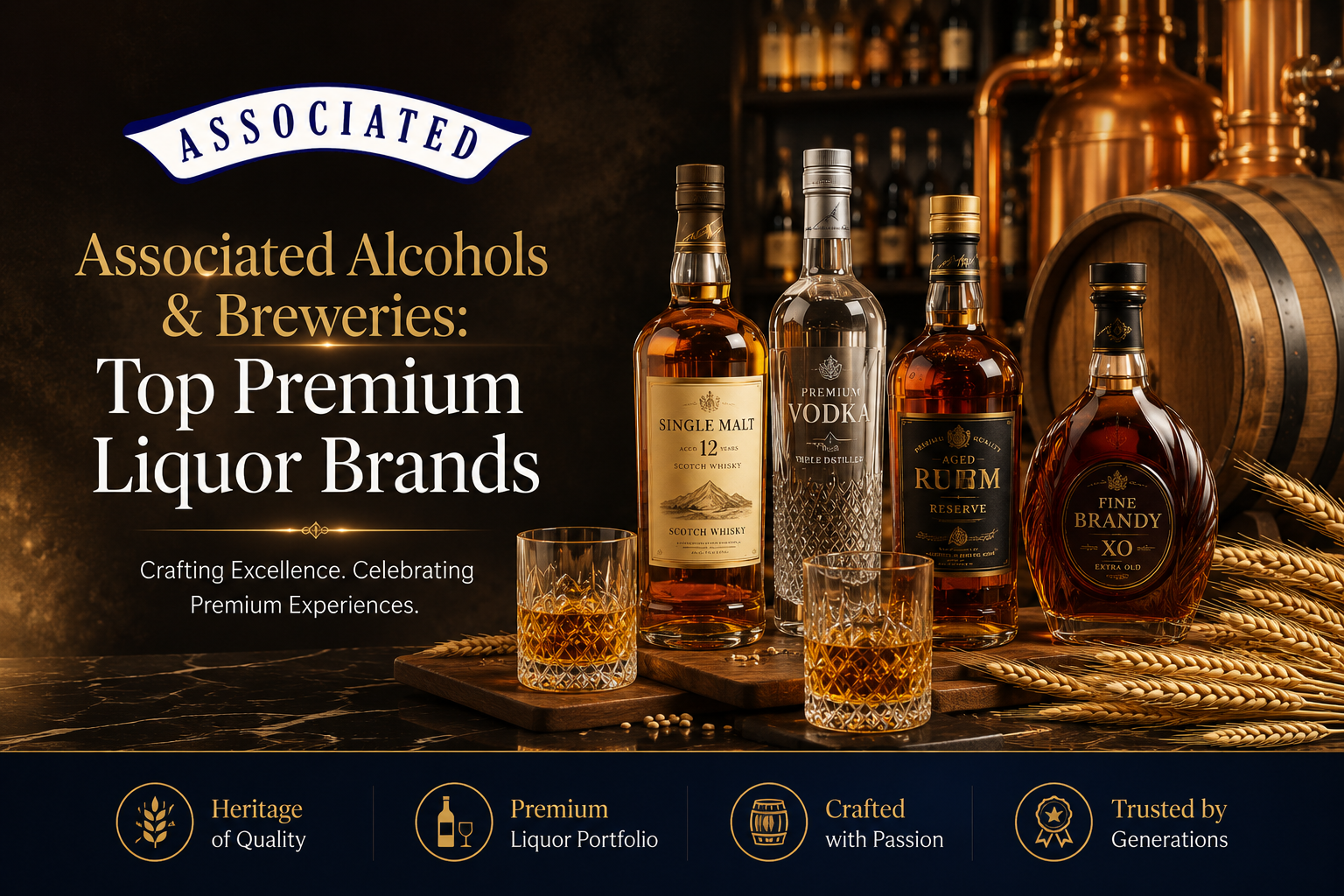
India is the world's largest whisky market by volume, consuming over 200 million cases annually. That scale has created space for homegrown distillers to build genuinely competitive portfolios. Associated Alcohols & Breweries Limited is one such manufacturer a Madhya Pradesh-based distillery known for producing a wide range of IMFL and grain-based spirits at accessible price points.
In this post, you will learn which spirit categories this company focuses on, what makes certain products popular in the Indian market, and how IMFL brands compete in an increasingly crowded space.
What Are the Most Popular Spirits Made in India?
Indian spirits can be split into two main categories: IMFL (Indian Made Foreign Liquor) and country liquor. IMFL includes whisky, rum, vodka, gin, and brandy produced domestically to meet quality standards set by state excise bodies. Whisky dominates the IMFL segment, accounting for roughly 60% of all spirits sold in India. Whisky Leads Indian Spirit Consumption
Indian consumers associate whisky with aspiration and social occasions. The price range is wide from ₹200 to over ₹5,000 a bottle which means brands can target multiple income groups. Blended whiskies using ENA (Extra Neutral Alcohol) and a small proportion of malt or grain spirit remain the most common format.
The Role of Rum and Other Categories
Rum holds a strong second position in volume terms, especially in eastern and southern states. Vodka and gin are growing fast among urban consumers under 35. Brandy remains dominant in Tamil Nadu, where it makes up over 50% of all spirits consumed.
How Grain-Based Spirits Fit In
Grain spirit manufacturers supply ENA to both their own branded products and third-party bottlers. Companies that control both ends production and branding tend to achieve better margins and supply chain reliability. This vertical integration is a key feature of several mid-sized Indian distillers.
What Is IMFL and How Does It Differ From Country Liquor?
IMFL refers to alcoholic beverages produced in India that follow a defined production standard and carry a duty-paid label. Country liquor, by contrast, is manufactured under a different regulatory framework, sold in smaller volumes at lower prices, and often restricted to specific states. IMFL products are sold through licensed retail channels and are subject to state excise duties.
Regulatory Framework for IMFL in India
Each Indian state sets its own excise policy, which controls pricing, distribution, and the number of retail licences. This means a spirit popular in Madhya Pradesh may not be available at all in Tamil Nadu, or may be priced very differently. State-level regulation makes national distribution a complex challenge for any IMFL brand.
Quality Standards and Labelling
IMFL must meet Bureau of Indian Standards (BIS) specifications for alcohol content, permitted additives, and packaging. Products sold through the CSD (Canteen Stores Department) face additional quality audits. Meeting CSD approval is considered a mark of manufacturing credibility in the Indian spirits industry.
Price Segmentation in IMFL
IMFL is typically segmented into economy (below ₹300), regular (₹300–₹700), prestige (₹700–₹1,500), and premium (above ₹1,500). The economy and regular segments account for the majority of volume. Brands that build a strong presence in these tiers tend to achieve the highest throughput, particularly in Tier 2 and Tier 3 cities.
Which Indian Whisky Brands Are Most Consumed?
Volume-wise, affordable blended whiskies dominate Indian consumption. These are products that combine ENA with a small portion of malt or aged grain spirit and sell at accessible price points. The most consumed whiskies in India are not single malts they are high-volume blends produced by large and mid-sized domestic distillers.
What Drives Brand Popularity at the Economy End
Price is the primary driver at the economy and regular tiers. After price, consistency of taste and availability at local retail outlets matter most. Brands that secure wide state distribution and maintain stable pricing tend to retain consumer loyalty in these segments.
How Mid-Sized Distillers Compete
Mid-sized manufacturers compete by focusing on specific geographies, targeting CSD distribution, and building private label or contract manufacturing capabilities. Companies with their own ENA production have a structural cost advantage. For those interested in the production and brand portfolio side of this industry, the official company site at Associated Alcohols & Breweries Limited provides insight into how integrated distillers operate in India.
What Makes a Spirit Brand Popular in the Indian Market?
A spirit brand succeeds in India when it balances price, taste consistency, and distribution reach. No single factor is sufficient on its own. A well-priced product with poor retail presence will not move volume; a well-distributed product that changes taste between batches loses repeat buyers quickly.
Distribution as a Competitive Moat
State-controlled retail in most Indian states means brand success depends heavily on government procurement relationships and state-level distribution agreements. Brands with long-standing presence in a state benefit from shelf priority and institutional memory among wholesale buyers.
Packaging and Consumer Perception
At the economy and regular tiers, packaging signals quality. A bottle that looks and feels premium relative to its price point performs better on shelf. Incremental packaging upgrades new closures, label redesigns consistently lift volumes in competitive segments, according to trade reports from Euromonitor International (2022).
Conclusion
India's spirits market rewards brands that combine manufacturing efficiency with targeted distribution. Associated Alcohols & Breweries Limited has built its portfolio around this principle focusing on IMFL categories that see steady volume demand, particularly whisky and rum, at accessible price points. As premiumisation trends accelerate in urban India, the question for mid-sized distillers is whether to chase higher-margin products or protect volume in the economy and regular tiers. Both strategies carry risk, and the answer will shape the next decade of Indian spirits competition.
- Managerial Effectiveness!
- Future and Predictions
- Motivatinal / Inspiring
- Fitness and Wellness
- Medical & Health
- Manufacturing
- Education
- Real-Estate
- Food Industry
- Hospitality
- Online Games
- Sports
- Home Services
- Civil Engineering
- Safety and Protection
- Software Products & Services
- Fashion and Jewellery
- Artificial Intelligence
- Entrepreneurship
- Mentoring & Guidance
- Marketing
- Networking
- HR & Recruiting
- Literature
- Shopping
- Career Management & Advancement