

 SkillClick
MCP Server: The Complete Guide to AI Integration, APIs, and Enterprise Data
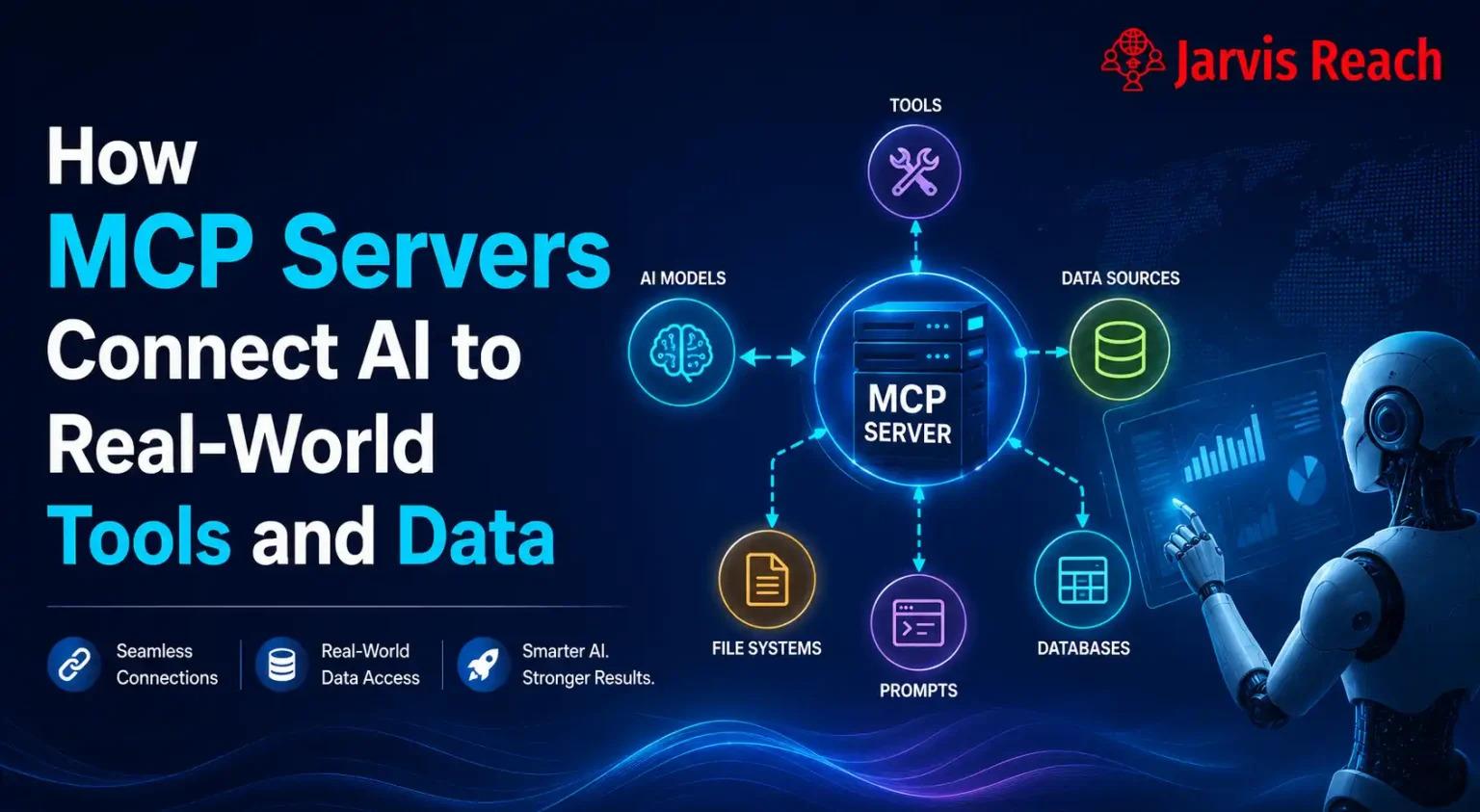
As artificial intelligence continues to evolve, AI applications need a reliable way to connect with external tools, databases, and business systems. This is where MCP Server (Model Context Protocol Server) comes in. MCP is rapidly becoming the standard framework for connecting AI models with APIs, enterprise data, SQL databases, file systems, and other external resources.
By providing a unified communication layer, MCP Server simplifies integrations and allows AI platforms to access real-time information, automate workflows, and perform complex tasks more efficiently.
What Is an MCP Server?
An MCP Server is a server that implements the Model Context Protocol (MCP), an open standard designed to help AI applications interact with external systems.
Instead of building custom integrations for every tool or service, developers can use MCP to create a standardized connection between AI models and external resources.
With MCP, AI applications can securely access:
- APIs
- Enterprise data
- SQL databases
- Data sources
- File systems
- Prompt templates
- External tools and services
This standardized approach reduces development complexity and improves scalability.
How MCP Server Works
MCP follows a client-server architecture.
MCP Client
The MCP Client is the application or AI platform that requests information or actions from external systems.
Examples include:
- AI assistants
- AI agents
- Chatbots
- Automation platforms
- Enterprise AI applications
The client communicates with MCP Servers using a standardized protocol.
MCP Server
The MCP Server acts as a bridge between the AI platform and external resources.
Its responsibilities include:
- Processing requests
- Managing authentication
- Accessing data sources
- Returning structured information
- Executing tools and workflows
This architecture allows AI systems to interact with multiple resources through a consistent interface.
Connecting APIs Through MCP
One of the most valuable features of MCP is API integration.
Organizations often use dozens of APIs across their workflows. Traditionally, developers had to build separate integrations for each service.
With MCP Server, APIs become accessible through a standardized framework.
Benefits include:
- Faster development
- Simplified maintenance
- Consistent communication
- Better scalability
This makes AI applications more flexible and easier to expand.
Accessing Enterprise Data
Modern businesses generate massive amounts of enterprise data.
Important information is often stored across:
- CRM platforms
- ERP systems
- Internal databases
- Document repositories
- Cloud storage solutions
MCP Server enables AI platforms to access enterprise data securely and efficiently.
This allows AI assistants to answer questions, retrieve records, and automate business processes using real organizational data.
Working with SQL Databases
SQL databases remain one of the most common ways businesses store information.
MCP Servers can connect AI systems to:
- MySQL
- PostgreSQL
- Microsoft SQL Server
- Oracle Database
- SQLite
Through MCP, AI applications can retrieve, analyze, and process data directly from SQL databases without requiring custom integrations for every database platform.
Managing Multiple Data Sources
Organizations rarely rely on a single data source.
Information may be spread across:
- Databases
- APIs
- Cloud applications
- Internal systems
- File storage platforms
MCP Server helps unify these data sources under a single protocol, making it easier for AI systems to access information regardless of where it is stored.
Using Prompt Templates
Prompt templates are reusable instructions that guide AI behavior.
MCP allows prompt templates to be stored and managed as resources.
Benefits include:
- Consistent AI responses
- Easier prompt management
- Better workflow automation
- Improved scalability
Organizations can standardize prompts across multiple AI applications.
Stateless vs Stateful MCP Servers
Stateless MCP Servers
A stateless server does not retain information between requests.
Advantages:
- Simpler architecture
- Better scalability
- Lower resource usage
Stateless systems are ideal for independent tasks where historical context is not required.
Stateful MCP Servers
A stateful server maintains context across interactions.
Advantages:
- Session persistence
- Improved user experiences
- Context-aware workflows
Stateful MCP Servers are useful for conversational AI, long-running processes, and enterprise applications requiring memory.
Authentication and Security
Authentication is a critical component of MCP architecture.
Since AI systems often access sensitive business information, secure authentication mechanisms are essential.
Common approaches include:
- API keys
- OAuth
- Access tokens
- Role-based permissions
Strong authentication helps ensure that only authorized users and systems can access protected resources.
File Systems and Resource Access
MCP Servers can also expose file systems as resources.
This allows AI applications to:
- Read files
- Analyze documents
- Access reports
- Process structured data
- Retrieve knowledge base content
File system access expands the capabilities of AI systems beyond simple API interactions.
MCP and Modern AI Platforms
Today's AI platform ecosystem increasingly relies on external tools and resources.
MCP provides a standardized foundation for:
- AI assistants
- Autonomous AI agents
- Enterprise AI solutions
- Workflow automation systems
- Knowledge management platforms
By simplifying integrations, MCP helps developers focus on building intelligent experiences instead of managing complex connections.
Benefits of MCP Server
Key advantages include:
- Standardized integrations
- Real-time data access
- Improved scalability
- Simplified API connectivity
- Secure authentication
- Better enterprise AI capabilities
- Easier maintenance
- Enhanced workflow automation
These benefits make MCP one of the most important emerging standards in the AI ecosystem.
Conclusion
MCP Server is transforming how AI applications interact with APIs, enterprise data, SQL databases, file systems, and other external resources. By providing a unified protocol for communication, MCP eliminates the need for countless custom integrations while improving security, scalability, and efficiency.
As AI platforms continue to evolve, MCP Servers will play a crucial role in enabling smarter, more connected, and highly capable AI systems that can seamlessly access the tools and information needed to perform real-world tasks.
- Managerial Effectiveness!
- Future and Predictions
- Motivatinal / Inspiring
- Fitness and Wellness
- Medical & Health
- Manufacturing
- Educação
- Real-Estate
- Food Industry
- Hospitality
- Online Games
- Sports
- Home Services
- Civil Engineering
- Safety and Protection
- Software Products & Services
- Fashion and Jewellery
- Artificial Intelligence
- Entrepreneurship
- Mentoring & Guidance
- Marketing
- Networking
- HR & Recruiting
- Literature
- Shopping
- Career Management & Advancement