

 SkillClick
AABL Bottling Plant India: How It Powers Premium Spirits
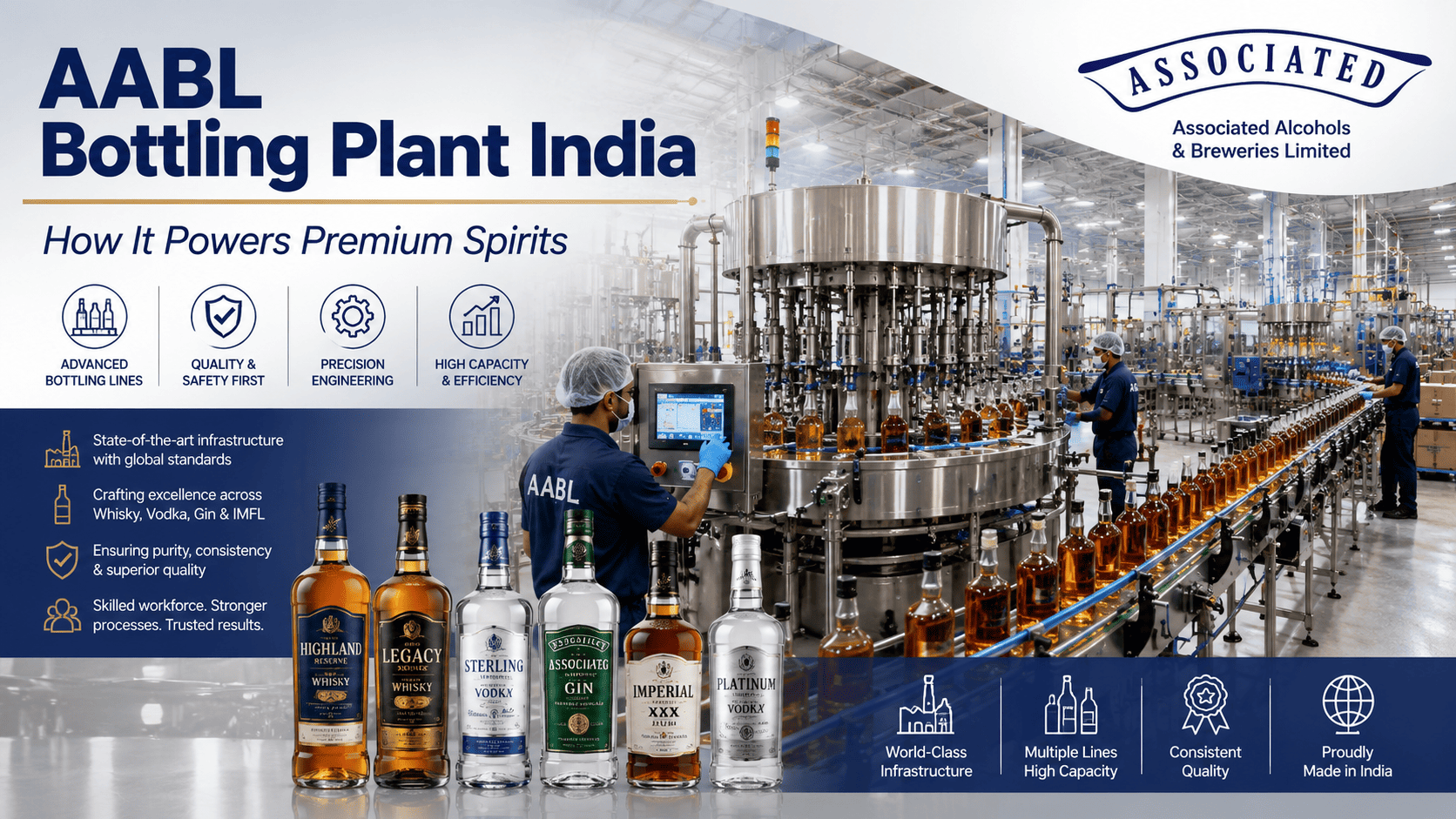
India's spirits market is valued at approximately $52.5 billion as of 2024 and is forecast to grow at a CAGR of 6.8%, reaching $64 billion by 2028. The AABL bottling plant India sits at the centre of this shift giving global and domestic premium spirits brands a high-capacity, compliant production base without building one from scratch. This post covers how the facility works, what it produces, and why contract bottling in India has become a core strategy for premium brand growth.
What Is the Bottling Capacity of the AABL Bottling Plant in India?
The AABL bottling plant India, set up near Indore in Madhya Pradesh, runs 25 bottling lines across three dedicated sections with a production capacity of 10 million cases per annum. That scale lets the facility service multiple brand owners simultaneously without compromising throughput on any single line.
The plant handles the full spirits value chain from extra neutral alcohol (ENA) production to blending and final bottling. ENA is the base raw material for virtually all IMFL and IMIL production. Its quality directly determines the consistency of the finished product. The Indore facility is nationally recognised for the grade of ENA it produces, making it a preferred source for brands where spirit purity is non-negotiable.
What Products Does the AABL Bottling Plant Produce?
The facility covers a wide product range: extra neutral alcohol, potable alcohol, grain spirit (extra fine, triple-distilled), rectified spirit, and a full portfolio of IMFL expressions. Grain spirit processed here undergoes triple distillation a step that removes impurities at each pass and produces a cleaner base for blending premium whiskies, vodkas, and gins.
How Does the 25-Line Setup Improve Operational Efficiency?
Running 25 lines across three separate sections allows the plant to separate production runs by product type, bottling format, or client. This reduces cross-contamination risk, lowers changeover time between SKUs, and keeps quality control contained to each section. For brands launching across multiple SKUs simultaneously say, a 180ml and a 750ml expression at the same time multi-line facilities are the only practical option at scale.
How Does Contract Bottling Support Premium Spirits Brands in India?
Contract bottling lets a premium spirits brand go to market without building its own distillery or bottling line. The brand owner supplies the recipe, formulation, and brand specifications. The bottling facility handles production, compliance, and output all under the brand owner's label.
India's premium-and-above spirits segment grew 8% by volume in the first half of 2025, outpacing the overall market's 7% growth rate. Most of that growth is driven by brands that do not own their own production infrastructure. They rely on established contract bottling partners to absorb volume spikes without the capital expenditure of building new plants.
Why Do Global Spirits Brands Choose Contract Bottling Partners in India?
India offers a cost-efficient, large-scale production base for IMFL brands targeting both the domestic market and export. Labour, raw materials, and operational costs are substantially lower than in Western markets. More importantly, established bottling partners already hold the necessary state excise licences, FSSAI compliance certifications, and production audits that new entrants would take years to build independently.
What Is the Difference Between Contract Bottling and Franchise Bottling?
Contract bottling means a brand owner pays a facility to produce their product under a production agreement the brand retains full ownership of the recipe and label. Franchise bottling is a licensed manufacturing arrangement where a distillery produces a brand under a formal franchise agreement with the original brand owner. Both models are active in India. The AABL bottling plant India supports both, producing proprietary house brands alongside franchise labels for major international spirits groups.
What Role Does ENA Quality Play in IMFL Production?
ENA quality is the single most critical input in IMFL production. Poor ENA introduces off-notes, methanol traces, and inconsistent mouthfeel problems no amount of blending or flavouring can fully correct. Premium brands require ENA with a very high degree of purity, typically produced through multi-column continuous distillation.
The AABL bottling plant India has built its reputation specifically on ENA quality. A distillery that produces both ENA and finished IMFL in-house can control the full input chain. That vertical integration removes the quality variability that comes when ENA is sourced from a third-party supplier.
Why Does Madhya Pradesh Matter for Indian Spirits Production?
Madhya Pradesh has become one of India's most significant spirits production states due to access to grain, molasses, and dual raw material sources. The state's regulatory environment for excise-licensed distilleries is well-established. Proximity to central India's road and rail networks also reduces logistics costs for distribution to northern, western, and southern markets.
How Does Grain Spirit Triple Distillation Affect Final Product Quality?
Each distillation pass removes a higher proportion of congeners and heads-and-tails fractions. Triple distillation produces a noticeably cleaner grain spirit. For premium expressions single malts, craft gins, premium vodkas that clarity is essential. It reduces the masking work required at the blending stage and allows the final flavour profile to be built from a neutral, stable base rather than correcting for base spirit defects.
Why Is India's Premiumisation Trend Driving Demand for Large-Scale Bottling Infrastructure?
India's whisky market alone is projected to grow from $19.16 billion in 2024 to $48.65 billion by 2030, a CAGR of 16.8%. That growth rate demands production infrastructure at scale and it demands it now, not after a three-year plant construction timeline.
Brands that want to enter or expand in India's premium segment face a clear choice: build or partner. Building a compliant, multi-line distillery and bottling facility in India requires significant capital, multi-year licensing timelines, and deep expertise in state excise regulation. Partnering with an existing, proven facility like the AABL bottling plant India compresses time-to-market from years to months.
How Are Emerging Indian Craft Spirits Brands Using Contract Bottling?
Smaller craft spirits brands particularly new-age gin and single malt producers are increasingly using contract bottling to test market viability before committing to owned production assets. A contract bottling run of 50,000 to 100,000 cases gives a brand real market data on pricing acceptance, channel performance, and consumer repeat rates. That data then informs whether a capital investment in owned infrastructure is justified.
Conclusion
The AABL bottling plant India represents the kind of integrated production infrastructure that India's premium spirits market increasingly needs. With 25 operational lines, 10 million cases of annual capacity, and nationally recognised ENA quality, the facility supports both global franchise brands and emerging Indian labels at scale. As premiumisation accelerates and brands compete for shelf space across India's expanding off-trade and on-trade channels, access to high-quality, high-capacity contract bottling will only become more strategically important. The real question is whether India's existing bottling infrastructure can grow fast enough to match the pace of brand ambition in this market.
- Managerial Effectiveness!
- Future and Predictions
- Motivatinal / Inspiring
- Fitness and Wellness
- Medical & Health
- Manufacturing
- Education
- Real-Estate
- Food Industry
- Hospitality
- Online Games
- Sports
- Home Services
- Civil Engineering
- Safety and Protection
- Software Products & Services
- Fashion and Jewellery
- Artificial Intelligence
- Entrepreneurship
- Mentoring & Guidance
- Marketing
- Networking
- HR & Recruiting
- Literature
- Shopping
- Career Management & Advancement