

 SkillClick
Refrigerator Buying Mistakes That Can Cost You Money for Years
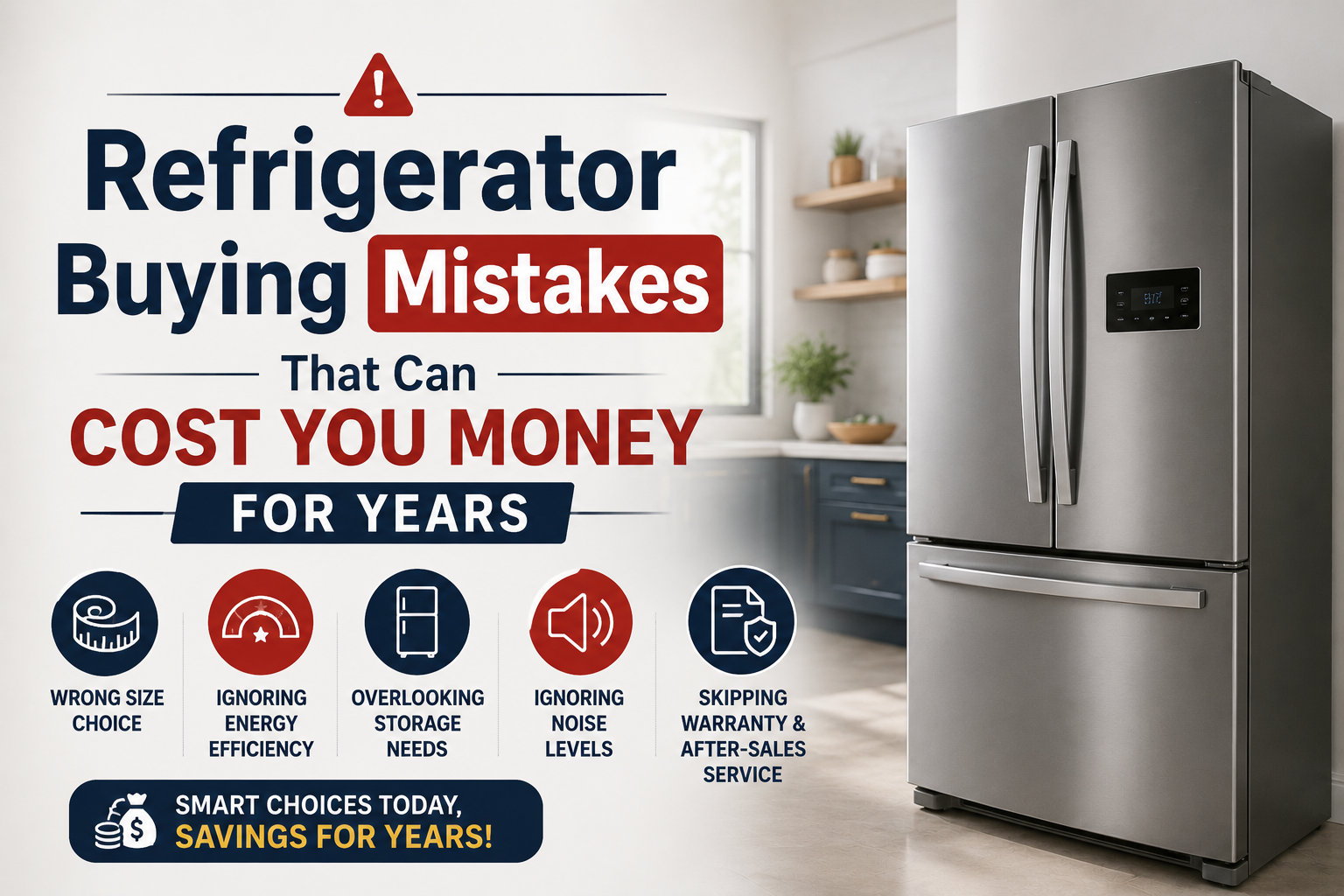
Purchasing a refrigerator is one of the most important decisions homeowners make when setting up or upgrading a kitchen. Unlike many household products that are replaced every few years, refrigerators are long-term investments that often remain in use for a decade or more. Because they operate continuously, the wrong choice can affect not only convenience and food storage but also long-term electricity costs.
Many consumers focus primarily on appearance, brand recognition, or purchase price when selecting a inverter refrigerator. While these factors may influence buying decisions, they often overlook critical considerations that determine how efficiently the appliance will perform over its lifetime. Choosing the wrong refrigerator can lead to higher utility bills, insufficient storage space, maintenance challenges, and reduced satisfaction over the years.
Understanding common buying mistakes can help consumers make more informed decisions and avoid unnecessary expenses. This guide explores the most frequent refrigerator purchasing errors and explains what buyers should consider before making a long-term investment.
Why Refrigerator Selection Matters
A refrigerator is one of the few appliances that operates 24 hours a day, seven days a week.
Unlike televisions, washing machines, or microwaves, refrigerators rarely stop working.
Their continuous operation means that factors such as efficiency, size, and design can have a lasting impact on:
- Household electricity consumption
- Food preservation
- Kitchen functionality
- Long-term operating costs
Because refrigerators remain in service for many years, small differences in performance can accumulate into significant financial consequences over time.
Mistake 1: Focusing Only on the Purchase Price
One of the most common buying mistakes is evaluating refrigerators solely based on initial cost.
A lower purchase price may appear attractive at first, but long-term operating expenses often tell a different story.
Consumers should consider:
Energy Consumption
Electricity costs continue throughout the appliance's lifespan.
Maintenance Requirements
Some models may require more frequent servicing.
Durability
Long-term reliability affects overall value.
Technology Features
Efficiency improvements can influence future costs.
When evaluating a refrigerator, lifetime operating expenses can be just as important as the initial purchase price.
Mistake 2: Ignoring Energy Efficiency
Because refrigerators run continuously, efficiency plays a major role in household electricity consumption.
An inefficient refrigerator may consume significantly more power over the course of a year.
Many buyers underestimate how much electricity usage influences total ownership costs.
Modern Energy Efficient Appliances are designed to optimize cooling performance while reducing unnecessary energy consumption.
Considering efficiency during the purchasing process can help reduce long-term utility expenses.
Understanding Continuous Energy Usage
Unlike seasonal appliances such as air conditioners, refrigerators operate throughout the entire year.
Energy consumption is influenced by factors such as:
- Compressor performance
- Insulation quality
- Internal temperature settings
- Usage habits
- Door-opening frequency
Because these appliances run constantly, efficiency improvements can provide long-term benefits.
Mistake 3: Choosing the Wrong Size
Many consumers either underestimate or overestimate their storage requirements.
Both mistakes can create problems.
Too Small
Insufficient space may result in overcrowding and poor organization.
Too Large
Excess capacity can increase electricity consumption and occupy unnecessary kitchen space.
Before purchasing a refrigerator, buyers should evaluate:
- Household size
- Shopping habits
- Food storage requirements
- Available kitchen dimensions
Selecting an appropriate size improves both practicality and efficiency.
Why Capacity Planning Matters
Storage needs vary between households.
For example:
Small Households
May prioritize compact efficiency.
Larger Families
Often require additional storage capacity.
Frequent Entertainers
May benefit from expanded refrigeration space.
Bulk Shoppers
Typically require larger food storage areas.
Matching refrigerator size to actual needs helps maximize usability.
Mistake 4: Overlooking Kitchen Space Measurements
Many buyers focus entirely on refrigerator specifications without carefully measuring available installation space.
This can create several challenges:
- Difficult installation
- Restricted airflow
- Limited door clearance
- Reduced accessibility
Accurate measurements should include:
Width
The refrigerator must fit comfortably within the designated area.
Height
Cabinet clearance should be considered.
Depth
The appliance should not obstruct movement.
Door Swing Space
Doors should open fully without interference.
Careful planning helps prevent installation problems after purchase.
Mistake 5: Ignoring Technology Differences
Refrigerator technology has evolved considerably over the years.
Consumers who focus only on appearance may overlook important operational differences.
One of the most significant developments has been the introduction of the Inverter Refrigerator.
Unlike conventional systems that repeatedly start and stop at full power, inverter technology adjusts cooling performance according to demand.
Potential benefits may include:
- Improved efficiency
- More consistent cooling
- Reduced energy consumption
- Smoother operation
Understanding these technological differences can help buyers make informed decisions.
Mistake 6: Paying Too Much Attention to Appearance
Modern refrigerators are available in a wide range of designs and finishes.
While appearance is important, aesthetics should not outweigh practical considerations.
Consumers sometimes prioritize:
- Color
- Finish
- Display features
- Exterior design
Without fully evaluating:
- Capacity
- Efficiency
- Durability
- Functional layout
A balanced approach often produces better long-term satisfaction.
Why Internal Layout Matters
The organization of interior storage space can significantly influence usability.
Important considerations include:
Adjustable Shelves
Allow greater flexibility.
Door Storage
Provides convenient access to frequently used items.
Freezer Configuration
Different designs suit different preferences.
Storage Accessibility
Efficient layouts improve convenience.
Two refrigerators with similar external dimensions may offer very different storage experiences.
Mistake 7: Neglecting Maintenance Considerations
Every refrigerator requires some degree of maintenance.
Before purchasing, consumers should consider:
- Cleaning requirements
- Accessibility of components
- Ventilation needs
- Service availability
Ignoring maintenance considerations may create challenges later.
Understanding care requirements helps support long-term performance.
The Relationship Between Refrigerators and Food Preservation
A refrigerator's primary purpose is preserving food safely and effectively.
Performance affects:
- Freshness
- Food quality
- Storage duration
- Waste reduction
Consistent cooling is essential for maintaining proper storage conditions.
Choosing a refrigerator solely based on appearance or price may overlook these important functional requirements.
Why Refrigerators Influence Household Costs
Beyond electricity usage, refrigerators can affect overall household expenses through:
Food Waste
Poor organization may increase spoilage.
Maintenance Costs
Repairs can become expensive over time.
Energy Consumption
Continuous operation contributes to utility bills.
Replacement Frequency
Durable products may remain useful for longer periods.
Considering these factors helps provide a more complete picture of ownership costs.
Future Trends in Refrigeration Technology
The refrigerator industry continues to evolve.
Several trends are shaping future developments:
Improved Energy Efficiency
Manufacturers continue focusing on reducing power consumption.
Smart Monitoring Systems
Connected technologies provide greater control and visibility.
Enhanced Storage Solutions
Design improvements aim to increase convenience.
Sustainable Technologies
Environmental considerations are becoming increasingly important.
Consumers are likely to see continued innovation in both performance and efficiency.
Practical Tips Before Buying a Refrigerator
Before making a purchase, consumers should:
- Measure available kitchen space carefully.
- Evaluate household storage requirements.
- Compare efficiency ratings.
- Consider long-term operating costs.
- Review maintenance needs.
- Understand available technologies.
- Prioritize functionality alongside appearance.
These steps can help reduce the risk of costly purchasing mistakes.
Frequently Asked Questions
1. Why is refrigerator efficiency important?
Because refrigerators operate continuously, efficiency significantly affects long-term electricity costs.
2. What is an inverter refrigerator?
An inverter refrigerator adjusts cooling output according to demand, helping improve efficiency.
3. Should I choose a refrigerator based only on price?
No. Long-term operating costs and performance should also be considered.
4. How do I determine the right refrigerator size?
Household size, food storage habits, and available kitchen space should all be evaluated.
5. Why does refrigerator layout matter?
A practical layout improves accessibility, organization, and storage efficiency.
6. Can a refrigerator affect food waste?
Yes. Proper cooling and storage organization can help preserve food quality.
7. How long does a refrigerator typically last?
Lifespan varies depending on usage, maintenance, and product quality.
Final Thoughts
Buying a refrigerator is a long-term decision that extends far beyond the purchase date. Factors such as energy consumption, capacity, layout, technology, and maintenance requirements all influence ownership costs and daily convenience. By avoiding common buying mistakes and carefully evaluating available options, consumers can select products that better meet their needs while benefiting from the advantages offered by a modern Inverter Refrigerator.
- Managerial Effectiveness!
- Future and Predictions
- Motivatinal / Inspiring
- Fitness and Wellness
- Medical & Health
- Manufacturing
- Education
- Real-Estate
- Food Industry
- Hospitality
- Online Games
- Sports
- Home Services
- Civil Engineering
- Safety and Protection
- Software Products & Services
- Fashion and Jewellery
- Artificial Intelligence
- Entrepreneurship
- Mentoring & Guidance
- Marketing
- Networking
- HR & Recruiting
- Literature
- Shopping
- Career Management & Advancement