

 SkillClick
Why Getting Your Legal Foundation Right Can Make or Break Your Startup
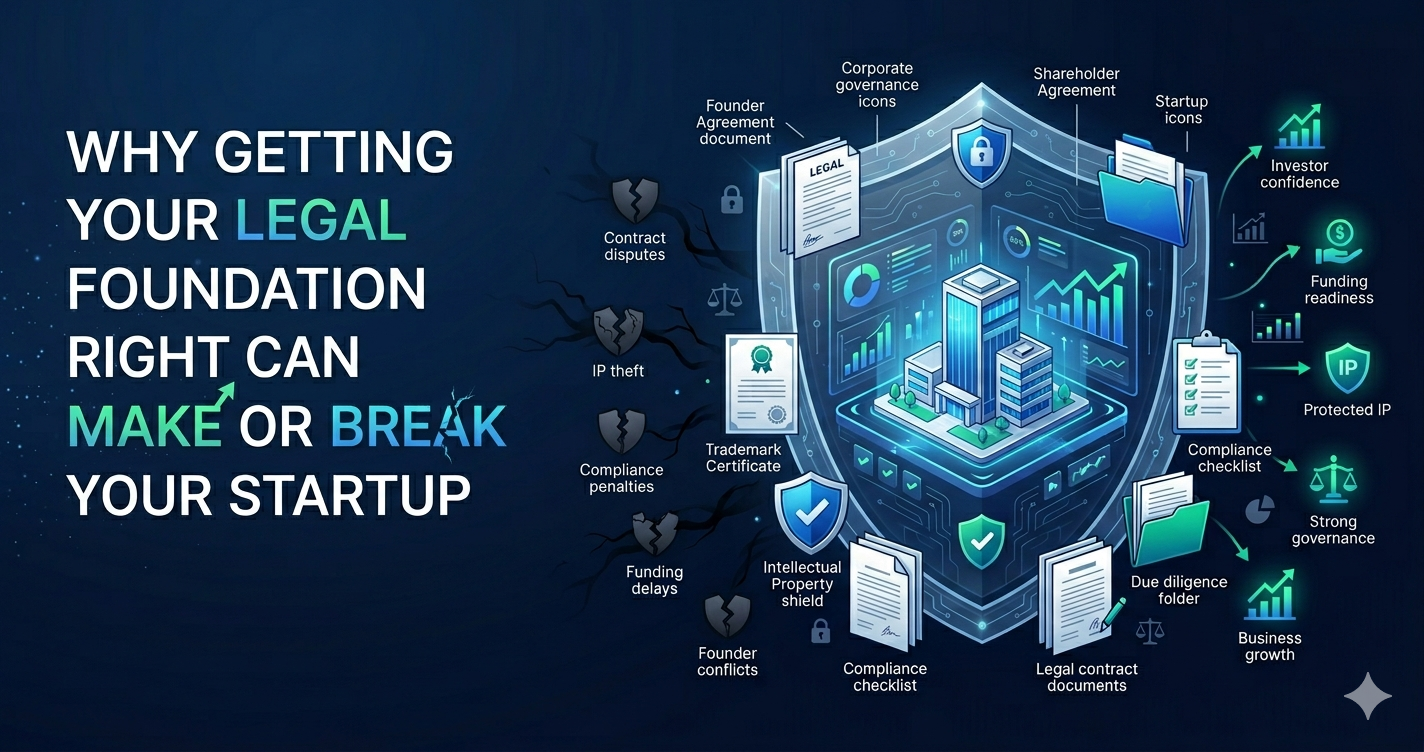
Most founders treat legal work as a checkbox. Incorporate the company, sign a few contracts, and move on. But the startups that run into serious trouble later — co-founder disputes, investor deal fallouts, IP theft, compliance penalties, almost always trace the problem back to one thing: weak legal foundations built in a hurry at the start.
Good legal support is not just about avoiding problems. It is about building a startup that investors trust, partners respect, and users feel safe with.
The Legal Mistakes That Hurt Startups the Most
Before getting into solutions, it helps to understand where startups go wrong:
Vague founder agreements that leave equity and decision-making undefined. Employment contracts that do not protect the company's IP. Trademarks never filed, leaving the brand vulnerable. Term sheets signed without proper review, costing founders equity they did not need to give away. Compliance gaps discovered during due diligence that delay or kill a funding round.
Every one of these is preventable with the right legal advice at the right time.
5 Legal Pillars Every Startup Must Get Right
1. Founders and Shareholder Agreements
The most common source of startup failure is not the market. It is co-founder conflict. A well-drafted founders agreement defines equity distribution, vesting schedules, exit clauses, and decision rights from day one. It protects everyone involved and signals maturity to investors.
2. Employment and Vendor Contracts
Every person you hire and every vendor you work with should be bound by a clear, enforceable contract. Employment terms, NDA templates, vendor agreements, and service contracts protect your business relationships and your confidential information.
3. IP, Trademark and Copyright Protection
Your brand name, product design, software code, and content are assets. Without trademark registration, copyright protection, and a clear IP strategy, those assets are exposed. Filing early is significantly cheaper than litigating later.
4. Investment Document Review
Term sheets, shareholder agreements, and investment documentation are where founders unknowingly give away control. Expert review of liquidation preferences, anti-dilution clauses, board composition rights, and pro-rata terms can save crores in equity and keep founders in the driver's seat.
5. Regulatory and Compliance Advisory
From SEBI and RBI guidelines to GDPR, data protection laws, and industry-specific licensing, staying compliant is non-negotiable. A single compliance gap discovered during investor due diligence can stall a funding round for months.
How Startup Coach Has Helped 200+ Startups Stay Legally Protected
At Startup Coach, our legal team has advised 200+ startups, drafted 1500+ legal documents, and maintained a 99% compliance rate across every engagement.
We cover every legal need a startup faces: incorporation documents, founder agreements, employment contracts, IP filings, term sheet reviews, due diligence support, regulatory compliance, and litigation support. Our structured process goes from Legal Assessment to Document Preparation, Review and Compliance, and Ongoing Support as your startup grows.
You do not need a full-time legal team. You need the right legal partner who understands startups.
Build on Solid Ground
A great product and a strong team can only take you so far if the legal structure underneath is fragile. Investors will find the gaps. Disputes will expose the cracks. Getting your legal house in order early is one of the highest-return investments you can make as a founder.
Explore Startup Coach's Legal Advisory Services
- Managerial Effectiveness!
- Future and Predictions
- Motivatinal / Inspiring
- Fitness and Wellness
- Medical & Health
- Manufacturing
- Education
- Real-Estate
- Food Industry
- Hospitality
- Online Games
- Sports
- Home Services
- Civil Engineering
- Safety and Protection
- Software Products & Services
- Fashion and Jewellery
- Artificial Intelligence
- Entrepreneurship
- Mentoring & Guidance
- Marketing
- Networking
- HR & Recruiting
- Literature
- Shopping
- Career Management & Advancement