

 SkillClick
How to Optimize Business Categories Through a Google Business Profile Audit
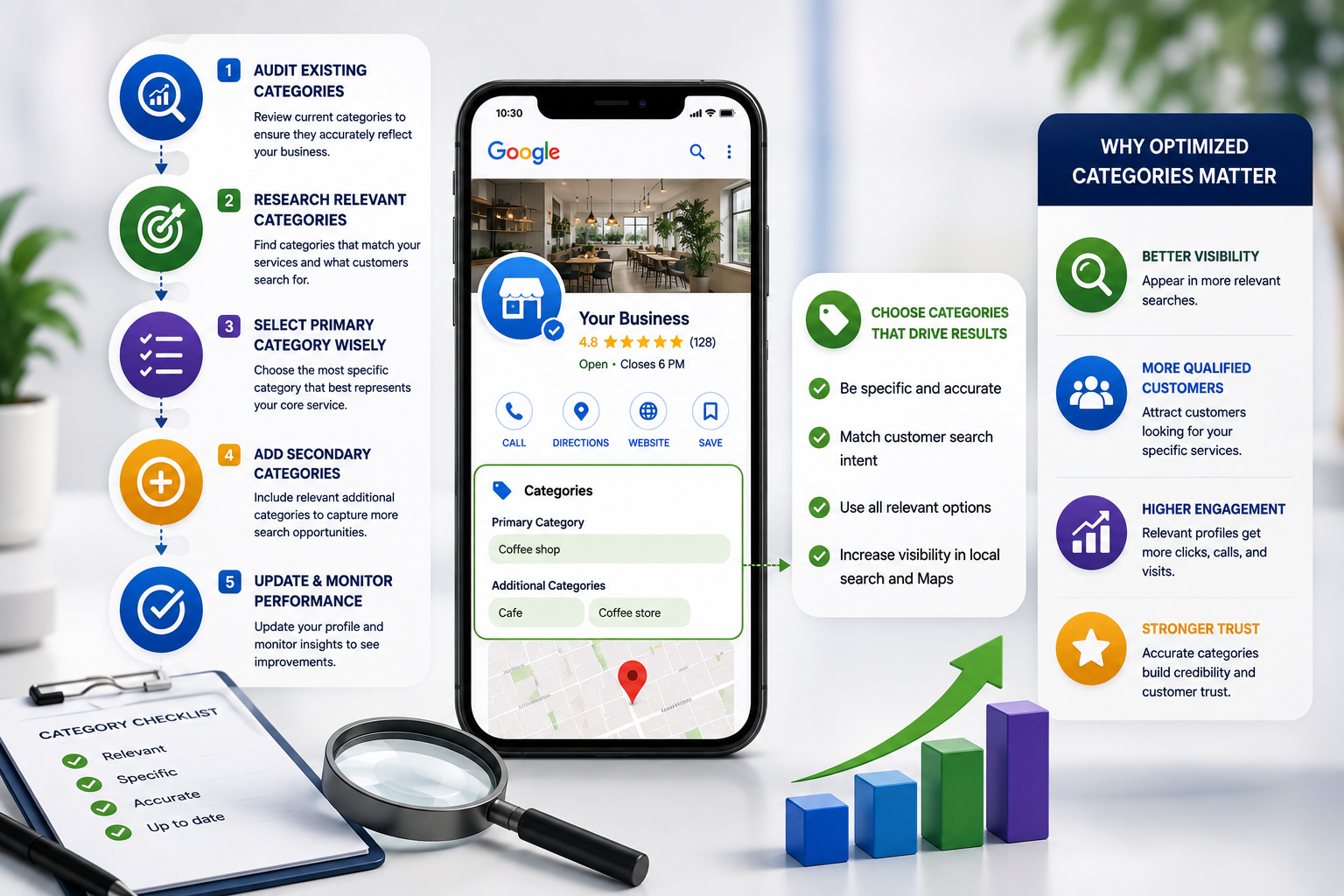
Business categories are one of the most important elements of a Google Business Profile. They help Google understand what your business offers and determine when your profile should appear in local search results. Choosing the right categories can improve visibility, increase relevance, and help attract customers who are actively searching for your products or services.
Many businesses select categories when creating their profile and never revisit them. Over time, services may expand, business priorities may change, and competitors may adopt more effective category strategies. Without regular evaluation, category choices can limit local search performance.
A Google Business Profile Audit helps businesses review and optimize categories to ensure they align with current services and local SEO goals. By making strategic category improvements, businesses can strengthen their online presence and improve local rankings.
Why Business Categories Matter
Google uses categories to understand the primary focus of a business.
When customers search for local services, Google compares search intent with business categories to determine which profiles are the most relevant.
Well-optimized categories can help businesses:
- Improve local search visibility
- Increase Google Maps rankings
- Reach more qualified customers
- Enhance search relevance
- Generate additional leads
Selecting the right categories is one of the simplest ways to improve local SEO performance.
Understanding Primary and Secondary Categories
Google Business Profile allows businesses to choose a primary category and multiple secondary categories.
The primary category represents the main service or product offering. Secondary categories provide additional context about related services.
For example, a marketing agency may use:
- Primary Category: Marketing Agency
- Secondary Categories: Advertising Agency, Internet Marketing Service, Business Development Service
A Google Business Profile Audit helps determine whether current categories accurately reflect the business.
Review Your Current Category Selection
The first step in category optimization is evaluating existing selections.
During an audit, ask the following questions:
- Does the primary category accurately represent the core business?
- Are secondary categories supporting important services?
- Have business offerings changed since categories were selected?
- Are important services missing from category selections?
Answering these questions helps identify potential improvements.
Align Categories With Core Services
Many businesses select categories that are too broad or too generic.
A Google Business Profile Audit helps ensure that categories align with the services that generate the most revenue and customer interest.
For example, a business specializing in local SEO may benefit from categories directly related to digital marketing rather than broad consulting categories.
The closer categories match actual services, the stronger the relevance signal becomes.
Analyze Competitor Categories
Competitor analysis is a valuable part of category optimization.
Reviewing top-performing competitors can reveal:
- Popular category selections
- Industry-specific opportunities
- Local search trends
While businesses should never copy competitors blindly, competitor insights can help identify categories that may have been overlooked.
A Google Business Profile Audit often includes this type of analysis to uncover new opportunities.
Remove Irrelevant Categories
Some businesses add categories simply because they seem related to their industry.
However, irrelevant categories can create confusion for both customers and search engines.
An audit should identify categories that:
- Do not represent current services
- Generate low relevance
- Dilute the profile’s focus
Removing unnecessary categories helps strengthen overall profile clarity.
Expand Category Coverage Strategically
Many businesses provide more services than their profiles communicate.
A Google Business Profile Audit can reveal opportunities to add relevant secondary categories that support additional offerings.
For example, a home improvement company may provide:
- Kitchen remodeling
- Bathroom renovation
- Flooring installation
Adding appropriate categories for these services can increase visibility for a wider range of local searches.
Evaluate Category Performance
Not all categories deliver equal results.
During an audit, businesses should evaluate whether current categories are helping drive:
- Profile views
- Calls
- Website visits
- Customer inquiries
Performance data helps determine which categories contribute most effectively to visibility and engagement.
This insight allows businesses to make informed optimization decisions.
Improve Local Search Relevance
Google prioritizes relevance when displaying local search results.
Categories play a major role in helping Google understand which searches are most appropriate for a business profile.
An audit helps ensure that category selections accurately communicate:
- Services provided
- Industry specialization
- Customer focus
Greater relevance often leads to stronger local search performance.
Support Google Maps Visibility
Google Maps rankings depend on several factors, including category optimization.
Businesses that use accurate and relevant categories often have a better chance of appearing in map-based searches.
A Google Business Profile Audit can identify category adjustments that may improve Maps visibility and increase customer discovery opportunities.
Match Categories With Customer Search Behavior
Successful category optimization requires understanding how customers search.
During an audit, businesses should consider:
- Common search phrases
- Customer intent
- Industry terminology
Categories should align with the language and services customers are actively searching for.
This improves the likelihood of appearing in relevant search results.
Keep Categories Updated
Businesses evolve over time.
New services, expanded markets, and changing business goals can make existing categories outdated.
A Google Business Profile Audit helps ensure category selections remain accurate and relevant.
Regular updates help maintain strong local search performance and support long-term growth.
Common Category Optimization Mistakes
Several mistakes frequently appear during audits.
These include:
- Choosing overly broad categories
- Ignoring secondary categories
- Using outdated category selections
- Adding irrelevant categories
- Failing to review competitor strategies
Identifying and correcting these mistakes can improve profile effectiveness.
Create a Category Review Process
Category optimization should not be a one-time task.
Businesses should establish a routine review process to evaluate whether categories continue supporting local SEO goals.
Recommended review intervals include:
- Monthly profile checks
- Quarterly category evaluations
- Annual comprehensive audits
Regular reviews help maintain relevance and competitiveness.
Benefits of Optimized Categories
Businesses that optimize categories effectively often experience:
- Improved local rankings
- Better Google Maps visibility
- Increased customer engagement
- More qualified leads
- Stronger search relevance
- Enhanced online visibility
These benefits contribute directly to business growth.
Conclusion
Business categories are a foundational component of local SEO success. Choosing the right categories helps Google understand your services, improves search relevance, and increases visibility in local search results.
A Google Business Profile Audit provides the insights needed to evaluate, refine, and optimize category selections. By regularly reviewing categories, analyzing competitors, and aligning selections with customer search behavior, businesses can strengthen their local presence and attract more qualified customers.
If you want to identify category optimization opportunities within your profile, try our Google Business Profile Audit Tool:
- Managerial Effectiveness!
- Future and Predictions
- Motivatinal / Inspiring
- Fitness and Wellness
- Medical & Health
- Manufacturing
- Education
- Real-Estate
- Food Industry
- Hospitality
- Online Games
- Sports
- Home Services
- Civil Engineering
- Safety and Protection
- Software Products & Services
- Fashion and Jewellery
- Artificial Intelligence
- Entrepreneurship
- Mentoring & Guidance
- Marketing
- Networking
- HR & Recruiting
- Literature
- Shopping
- Career Management & Advancement