

 SkillClick
How Brands Use Gamification For User Engagement To Build Loyalty And Drive Repeat Engagement
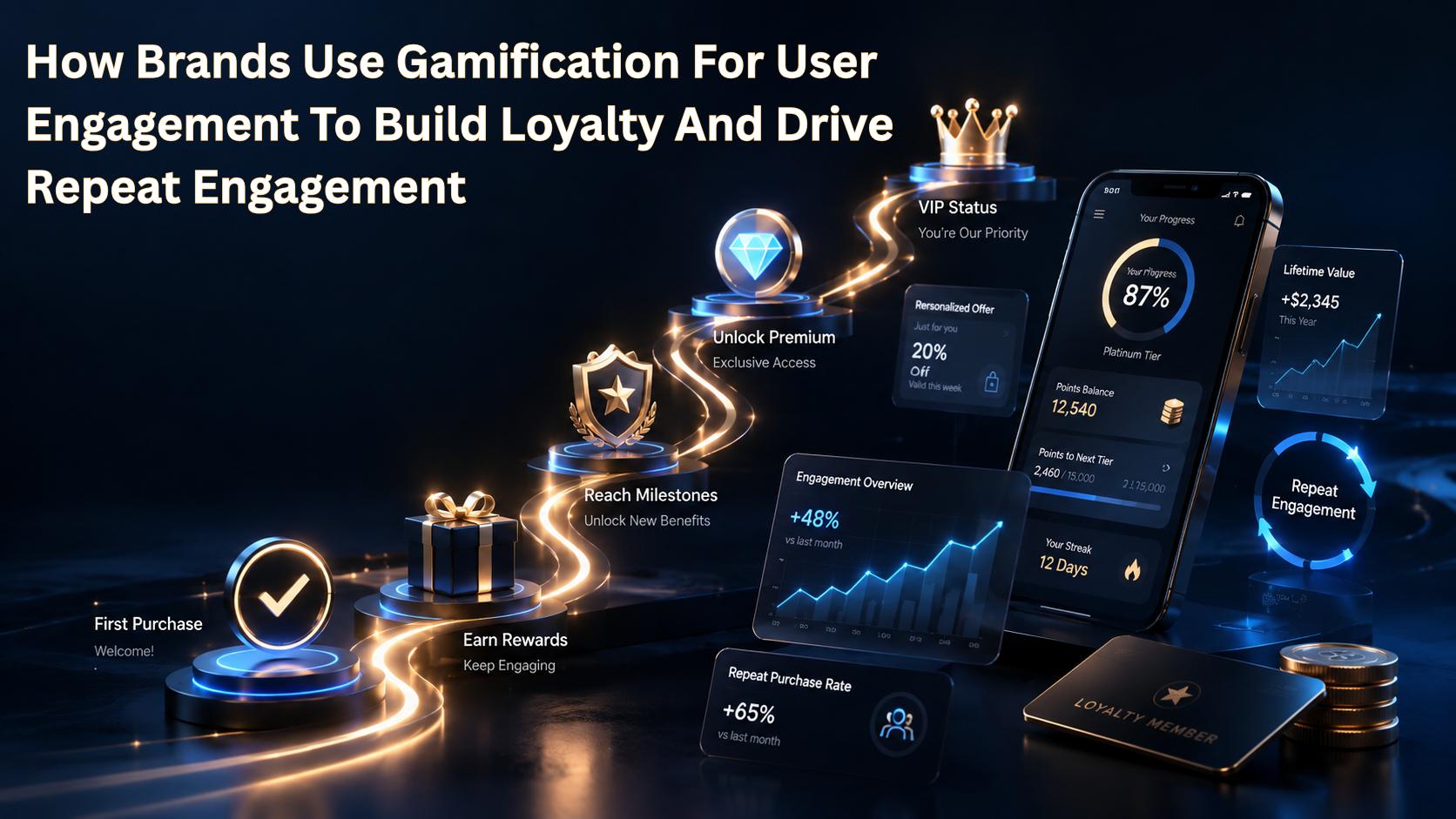
Last year, a friend told me she'd switched coffee shops not because the coffee was better, but because the new place had a stamp card. Tenth drink free. She knew it was a marketing trick. She didn't care. She went back nine times specifically to earn that tenth. That's gamification in its most stripped-down form, and it's been working on humans long before anyone gave it a name.
What's changed is scale. Brands now build entire behavioral architectures around the same psychology that makes stamp cards work progress tracking, points systems, achievement badges, daily streaks, leaderboards. When it's done well, users don't notice the architecture. They just notice that coming back feels good.
This is the honest breakdown of how it works, where it fails, and what brands should actually be paying attention to.
What Is Gamification For User Engagement?
Understanding Gamification Beyond Points
Most brands implement points and think they've done gamification. They haven't. Points alone are just a currency with extra steps. What makes gamification work is the feedback loop underneath its action, signal, reward, repeat. The points, badges, and streaks are just how that loop gets made visible.
Behavioral psychology has studied this for decades. Variable reward schedules, loss aversion, the near-miss effect, social comparison game designers understood these things long before marketing did. Gamification for user engagement is basically the application of game design logic to non-game contexts. The goal isn't to make your loyalty program feel like a video game. The goal is to make showing up feel like it means something.
Most successful gamification systems include:
- Progress users can see.
- Goals that feel reachable.
- Rewards tied to meaningful actions.
- Small wins along the way.
- A reason to come back tomorrow.
How Gamification Influences User Actions
Here's what actually happens in a user's head when gamification is working. They're not consciously thinking "I should engage with this brand." They've built a habit, and habits don't require decisions. The streak counter, the progress bar at 70%, the leaderboard position they want to protect these create a low-level pull that operates below the level of deliberate choice.
That's the real value. Not the purchase today, but the behavioral pattern that makes coming back tomorrow feel obvious. User retention goes up because leaving now means losing something, and people weight losses significantly heavier than equivalent gains. It's called loss aversion and it's one of the most reliable features of human psychology.
Why User Engagement Matters More Than Ever
The Link Between Engagement And Loyalty
Passive customers are the most expensive kind to have. They'll leave for a 10% discount from a competitor without a second thought, because they've built nothing with your brand. No streak to protect, no status to lose, no community to leave behind. Acquisition costs for replacing them are high, and the cycle just keeps spinning.
Active customer engagement breaks that cycle. When users are invested in their progress, their rewards, their standing, they're not doing cold math on every purchase. The relationship has weight. That weight is what customer loyalty actually is when it's real, and it's very different from someone who just hasn't gotten around to cancelling yet.
Common Challenges Brands Face Today
The obvious answer to disengagement, more emails, more push notifications, more promotional offers, makes things worse. Users don't have an attention problem with brands that feel worth paying attention to. They have an attention problem with brands that keep interrupting them without offering anything real in return.
Gamification strategies solve this differently. Instead of going to the user, they give the user a reason to come. That shift sounds small. The difference in customer retention numbers over 12 months isn't small.
How Gamification Builds Long-Term User Loyalty
Progress Tracking Creates Ongoing Motivation
Nobody likes leaving something 80% finished. That's not a quirk it's wired in. Brands that design around this tendency, through visible tier progressions, completion meters, and level systems, create a pull that runs without advertising spend. The user comes back because they can see exactly how close they are.
Tiered loyalty programs outperform flat reward structures for this reason specifically. Being 300 points from Platinum status feels completely different from being 300 points toward a discount code. One is about identity. The other is just math. Identity wins.
But progress tracking breaks badly when brands reset it without warning, or in ways that feel arbitrary. Users will absorb slow progress. They will not absorb losing ground they've already covered. That's loss aversion again, and it works against you just as powerfully as it works for you.
Reward Systems Reinforce Desired Behaviors
The version of reward systems that most brands build is "points for purchases." That works. The version that actually earns its keep is points structured to encourage the specific behaviors the brand cares about higher-margin categories, more frequent visits, referrals. Same mechanic, completely different strategic output.
Customer rewards have to feel fair, or they fail. If the points math is opaque, if redemption requires navigating three app screens, if the reward options are underwhelming users stop caring. I've watched brands spend real money building loyalty programs that nobody used because the redemption experience was too annoying. The earning side was fine. The spending side was broken.
The strongest reward systems usually share a few traits:
- Rewards feel attainable, not distant.
- Value is understood immediately.
- Small achievements are acknowledged along the way.
- Redemption is kept simple.
- Consistent participation is encouraged over one-time actions.
- Users feel they earned the reward rather than received a random giveaway.
- The experience remains fair as the program grows.
Recognition Strengthens Emotional Connections
There's a category of user motivation that points don't touch at all, and that's the desire to be seen. Not rewarded. Seen.
Achievement badges do this well when they're designed properly. The badge for something 90% of users get in their first week isn't recognition it's noise. The badge for a two-year streak, for reaching a rank most users never hit, for completing a challenge only a fraction of members finish that means something. It represents something the user did. Not something the brand handed them. Brand loyalty gets built in that gap between "they gave me something" and "I earned something here."
Popular Gamification Techniques Used By Brands
Points Systems That Encourage Participation
Points work partly because everyone already understands them. There's no onboarding required. The challenge for brands isn't explaining points it's making their specific points system feel meaningfully different from the twelve other loyalty programs already sitting in the user's wallet or phone.
The brands that pull this off link points to a clear, motivating endpoint the user actually wants. Customer engagement holds when the next reward feels close and worth having. When it feels distant and underwhelming, points become something users stop thinking about entirely.
Badges And Achievements That Reward Progress
Earn them too easily and they're meaningless. Make them impossible and nobody tries. The useful design space is in between achievements that require consistent effort but feel reachable, that create visible proof of something the user invested in.
Nike Run Club's badge system is worth looking at if you haven't. The monthly challenge badges, the milestone badges, the badges for conditions (running in rain, running on consecutive days) they're differentiated in ways that make each one feel specific. That specificity is the point.
Daily Streaks And Habit-Forming Engagement Loops
Streaks are the most powerful mechanic on this list and the most frequently misused. When they're working, users build genuine routines. They open the app before bed not because they want to but because the streak is sitting there and breaking it would feel like a loss. Duolingo built a significant portion of its entire retention model on this one mechanic.
But streaks collapse when the action required to maintain them becomes meaningless. If your streak just needs you to tap a button, the tap eventually feels like an obligation with no payoff. Users start resenting the app. They'll keep the streak for a while out of inertia, and then one day they'll just stop, and they'll feel vaguely relieved. That's not a sign of successful gamification. That's a user who finally escaped a trap.
Make the streak-maintaining action worth doing. Then the streak tracks something real.
Leaderboards That Inspire Friendly Competition
Leaderboards are psychologically effective and socially messy. The problem with a single global ranking is that most users will look at it, see they're nowhere near the top, and disengage immediately. You've just shown them they're losing. That's not motivating for most people.
Cohort-based leaderboards fix this. Rank users against others at a similar level same tier, same join date, same activity range and suddenly the top 10 is reachable. Repeat engagement climbs when the competition feels like something you could actually win, not a scoreboard you're watching from the outside.
Challenges And Quests That Drive Activity
A well-designed time-limited challenge is one of the cleanest tools in the gamification toolkit. It creates urgency that doesn't feel pushy, because the user opts in. They want the badge, the points, the title. They choose to participate. That psychological positioning choosing to engage versus being pushed to engage changes the whole dynamic.
One practical note: the difficulty calibration matters a lot more than brands give it credit for. Too easy and finishing feels like nothing. Too hard and most users quit by day three. The target is a challenge that takes real effort and produces real satisfaction when completed. Finding that spot requires actually testing with real users, not guessing.
Measuring The Success Of Gamification Programs
Key Metrics That Reveal User Engagement
Day-30 retention and Day-90 retention are more useful than daily active users for understanding whether gamification is building actual habits or just generating initial curiosity. The engagement metrics that matter most are behavioral: session frequency over time, how many users are actively participating in specific gamification features (not just aware of them), and whether participation in those features correlates with reduced churn.
Correlation between gamification participation and retention is the signal. If users who engage with the streak system churn at half the rate of users who don't, you know the streak system is doing something real.
Metrics worth tracking include:
- Day-30 retention shows whether users return after the initial excitement wears off.
- Day-90 retention gives a clearer view of long-term habits.
- Session frequency reveals how often users actively engage.
- Participation in challenges, streaks, or rewards should be monitored closely.
- Churn rate helps identify where engagement starts to drop.
Indicators Of Growing Customer Loyalty
Customer retention rate is the number. Everything else is context for it.
Net Promoter Score tells you whether users like you, which matters but is different from whether they stay. Repeat purchase frequency tells you whether engagement is converting to commercial behavior, which is the gap a lot of gamification programs fall into high app engagement, flat revenue impact. Customer lifetime value is the number that ties them together, and it's the one that should be visible in every conversation about gamification ROI.
Strong signs of customer loyalty include:
- Customers make purchases more often over time.
- Retention rates stay steady or improve.
- Referrals are generated without heavy incentives.
- Customer lifetime value continues to grow.
- Positive recommendations are shared with friends, family, or colleagues.
- Brand switching becomes less common among active users.
Common Gamification Mistakes Brands Should Avoid
Overusing Rewards Without User Value
Give out too many badges and none of them mean anything. Make points too easy to earn and users stop valuing them. This is the dilution problem and it's extremely common brands want to make users feel good constantly, which is a nice instinct, but it hollows out the reward system over time.
Scarcity isn't cruelty. An achievement that most users never reach is more motivating to the people chasing it than an achievement everyone gets by Tuesday.
Creating Complex Participation Requirements
Every extra step between a user and their reward is a place where they can decide to stop. Most of them will, especially anyone who isn't already highly engaged. This is one of those things that's obvious in principle and still gets ignored constantly in practice. Gamification strategies that require users to read an explainer before they can start have already lost most of their audience.
Common friction points that reduce participation:
- Rules take too long to understand.
- Too many steps are required before rewards can be earned.
- Benefits are hidden behind complicated conditions.
- Rewards are delayed after actions are completed.
- New users feel lost during setup.
- Progress is difficult to track from one screen.
- The redemption process feels harder than the reward is worth.
Ignoring User Motivation And Preferences
Status and savings are not the same motivation. Competing against others and beating personal records are not the same motivation. Brands that build one gamification system for everyone and wonder why it underperforms have skipped the most basic question: what do these specific users actually want from this?
The answer requires research. Not assumptions, not what worked for a different brand in a different category, not what the product team found motivating internally. Actual user research. The brands that skip it spend a lot of money building systems that generate engagement metrics while doing nothing for customer retention or revenue.
Future Trends Shaping Gamification Strategies
Ai-Powered Personalized User Experiences
The shift happening now is from gamification systems that treat all users the same to systems that adjust in real time based on individual behavior. A user who's drifting gets a targeted challenge. A user close to a milestone gets a nudge showing them what's one purchase away. The timing, the mechanic, the reward personalized, not just segmented.
This isn't coming. It's here for the brands investing in it. The gap between personalized gamified experiences and generic ones is already visible in retention data.
Community-Based Rewards And Social Features
Solo progress has a ceiling. Once you've hit the personal milestones available to you, the motivation to keep pushing fades. Community mechanics extend that ceiling because the social comparison never runs out. Seeing your friend's streak, competing in a team challenge, contributing to a group goal these keep engagement alive in a way that individual achievement systems eventually exhaust.
And honestly, this is the area most brands have underbuilt. Not because the value isn't clear, but because community features are harder to build well than a points counter. The brands that figure it out will have a retention advantage that's genuinely hard to copy.
Predictive Engagement And Smart Incentives
The next real development in user engagement strategies is getting ahead of churn rather than reacting to it. Behavioral signals declining session frequency, dropping streak maintenance, reduced purchase intervals can predict disengagement weeks before a user actually leaves. Brands that act on those signals with a well-timed challenge or a personalized reward land the intervention when it's most likely to work.
Conclusion
Bolt on a leaderboard, watch the numbers bump for three weeks, declare it a success. That's what most brands do with gamification for user engagement, and it explains why most of them are quietly disappointed with the results.
Brands like Captain Up that get durable outcomes real customer loyalty, measurable drops in churn, growing customer lifetime value build around what their specific users are motivated by. They design reward systems that feel fair, progress systems that feel meaningful, and recognition that feels earned. None of that requires a big budget. It requires actually thinking about the user first, and the mechanics second. Get that order right and the retention follows.

- Managerial Effectiveness!
- Future and Predictions
- Motivatinal / Inspiring
- Fitness and Wellness
- Medical & Health
- Manufacturing
- Education
- Real-Estate
- Food Industry
- Hospitality
- Online Games
- Sports
- Home Services
- Civil Engineering
- Safety and Protection
- Software Products & Services
- Fashion and Jewellery
- Artificial Intelligence
- Entrepreneurship
- Mentoring & Guidance
- Marketing
- Networking
- HR & Recruiting
- Literature
- Shopping
- Career Management & Advancement