

 SkillClick
We strictly comply with all applicable Government of India regulations, state excise laws, industry standards, and responsible consumption guidelines.
STOK Strong Beer India: Strong Lager vs Regular Lager Explained
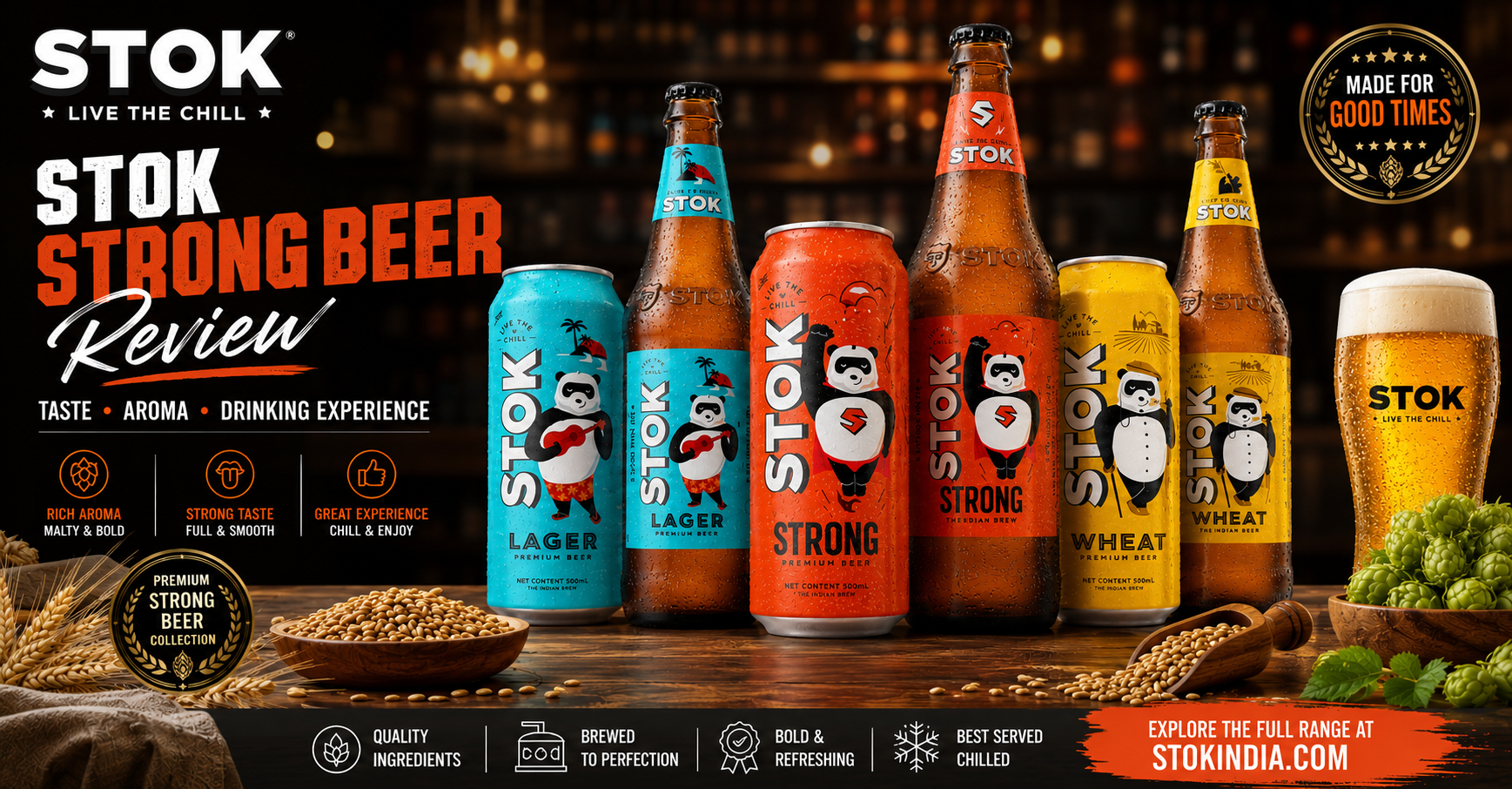
Strong lager outsells mild beer in India by a significant margin the strong beer segment accounts for over 80% of total beer volumes in the country. Yet most drinkers cannot clearly explain what makes a strong lager different from a regular one. The answer lies in fermentation science, malt ratios, and how ABV changes taste.
This post covers the core differences between strong and regular lager, what pushes a beer into the 'strong' category, and where STOK strong beer India fits within that spectrum. By the end, you will have a clear, factual picture of how these two beer styles differ.
What Is the Difference Between Strong Lager and Regular Lager?
Strong lager has a higher alcohol by volume (ABV) than regular lager typically above 6% ABV, compared to 4–5% for standard lager. The higher ABV results from a greater proportion of fermentable malt sugars in the brewing process. This changes both the body and the flavour profile of the beer.
How ABV Is Measured and Why It Matters
ABV is the standard global measure for alcohol content in beverages. In India, the Food Safety and Standards Authority of India (FSSAI) classifies beer as 'strong' when its ABV exceeds 5%. This classification directly affects how a beer is taxed, labelled, and marketed across states.
A beer with 7–8% ABV contains roughly 40–60% more alcohol per serving than a regular 4.8% lager. Consumers who drink a standard 330ml strong lager consume approximately the same alcohol as 1.5 servings of regular beer. This matters for responsible consumption and product selection.
Role of Malt in Building Alcohol Strength
Brewers increase ABV by raising the malt-to-water ratio in the mash. More fermentable sugars mean yeast has more material to convert into ethanol. This also increases the residual malt body after fermentation the beer feels fuller and less thin compared to a light lager.
Some strong lagers also use adjuncts such as rice or corn to manage cost while maintaining ABV, though this can reduce the grain-forward flavour. Premium strong lagers stick closer to pure malt formulations for a cleaner finish.
Temperature and Fermentation Differences
Both strong and regular lagers use bottom-fermentation at cold temperatures (5–10°C). The difference is fermentation time. Strong lager requires a longer lagering period to allow yeast to fully attenuate the higher sugar load. Rushing this stage results in off-flavours, which is why fermentation control is central to strong lager quality.
Why Does Strong Beer Taste Different from Regular Beer?
Strong beer tastes different primarily because of three factors: higher residual maltiness, more pronounced alcohol warmth on the finish, and a fuller mouthfeel. Regular lagers are brewed for crispness and light body, while strong lagers balance alcohol heat with enough malt sweetness to keep the beer drinkable.
Malt Sweetness vs Hop Bitterness in Strong Lagers
Strong lagers in India tend to be malt-forward with restrained hopping. This means the bitterness level stays moderate, while the grain sweetness is more noticeable. The result is a rounder flavour compared to the dry, thin profile of many regular lagers.
Regular lagers often sit in the 10–15 IBU range. Strong lagers can vary widely but typically fall between 15–25 IBU enough bitterness to balance the malt without becoming aggressively hoppy. The difference is subtle but detectable on the palate.
Mouthfeel and Body
The higher malt content in strong lager creates a denser liquid. Proteins and unfermented dextrins from the malt add body and a slight creaminess that regular lagers lack. Drinkers often describe this as a 'heavier' or 'fuller' feeling compared to a lighter lager, which tends to be thin and watery.
Alcohol Warmth on the Finish
At higher ABV levels, ethanol itself becomes a sensory contributor. At 7–8% ABV, drinkers notice a mild warming sensation on the finish similar to what you experience with wine. Well-made strong lagers integrate this warmth cleanly. Poorly made ones let it dominate, creating a harsh or solvent-like aftertaste.
What Is the Alcohol Content of Strong Beer in India?
Most strong beers in India range from 6% to 8.9% ABV. The Indian market has standardised around this range because higher ABV products face steeper excise duties in most states, making ultra-strong variants commercially difficult to price competitively.
State-Level ABV Variations and Excise Rules
India's excise duty structure varies by state. States like Tamil Nadu, Kerala, and Maharashtra impose progressive duties on higher-ABV products, which directly affects how brewers formulate strong beers for those markets. A beer brewed at 8% ABV for Maharashtra may be reformulated at 7.5% for another state to hit a more competitive retail price point.
This regulatory patchwork means that the 'strong beer' you buy in Delhi may differ slightly in ABV from the same brand sold in Karnataka. Consumers should always check the label for the state-specific ABV declaration.
Where Strong Lager Sits on the ABV Spectrum
To put Indian strong lager in global context: European lager typically runs 4.5–5.2% ABV. American adjunct lager sits around 4.2–5%. Indian strong lager at 6–8% ABV sits closer to European bock-style beer, which ranges from 6.3–7.2% ABV. The Indian strong segment is genuinely high-strength by international standards, not just marketing language.
How Does STOK Strong Beer India Compare to Other Strong Lagers?
STOK strong beer India is a premium strong lager targeting drinkers who want a clean, higher-ABV beer with a smooth finish. It differentiates on malt quality and fermentation consistency rather than simply maximising alcohol content, which is the approach many mass-market strong lagers take.
What Defines a Premium Strong Lager in India
The Indian beer market has moved beyond the old model where 'strong' simply meant maximum ABV at minimum cost. A growing segment of consumers now prioritise taste consistency, ingredient quality, and drinkability at higher strengths. This shift is visible in the rise of premium strong lager as a distinct sub-category, separate from the budget high-ABV segment.
Drinkers looking for detailed product information on STOK's strong lager formulation including ABV, taste notes, and format options can find the full specification at the official STOK strong beer product page.
Taste Profile Compared to Mainstream Strong Lagers
Mainstream strong lagers in India often prioritise ABV and price over taste refinement. This results in a category known for a sharp, harsh finish the 'strong beer aftertaste' that many occasional drinkers dislike. Premium strong lagers address this by reducing adjunct use, extending lagering time, and targeting a cleaner fermentation profile.
The practical difference is noticeable: a well-lagered strong beer at 7% ABV can be more pleasant to drink than a poorly made 6.5% product, even though the latter has lower alcohol. Strength alone is not the quality determinant.
Format and Availability Factors
Strong lager in India is primarily sold in 330ml bottles, 500ml cans, and 650ml returnable glass bottles. The format affects drinking experience a 650ml strong lager at 7.5% ABV delivers over 4 units of alcohol in a single serve, which is a meaningful consumption consideration for moderate drinkers.
Conclusion
Strong lager and regular lager differ fundamentally in ABV, malt content, mouthfeel, and taste complexity. The strong beer segment dominates Indian consumption, driven by regulation, price, and consumer preference for higher-potency products. STOK strong beer India enters this segment with a focus on quality and consistency rather than just ABV maximisation.
As the Indian beer market matures, the distinction between mass-market strong lager and premium strong lager will only sharpen. The question worth asking is not just how strong a beer is, but how well it is made at that strength.
Summary:
1.
P class="MsoNormal" style="margin: 4.
2.
0pt 0cm 6.
3.
0pt 0,100">span style="color: #0d0d0-d;">Strong lager has a higher alcohol by volume (ABV) than regular lager.
- Managerial Effectiveness!
- Future and Predictions
- Motivatinal / Inspiring
- Fitness and Wellness
- Medical & Health
- Manufacturing
- Educação
- Real-Estate
- Food Industry
- Hospitality
- Online Games
- Sports
- Home Services
- Civil Engineering
- Safety and Protection
- Software Products & Services
- Fashion and Jewellery
- Artificial Intelligence
- Entrepreneurship
- Mentoring & Guidance
- Marketing
- Networking
- HR & Recruiting
- Literature
- Shopping
- Career Management & Advancement