

 SkillClick
How Word Search Puzzles Improve Memory, Focus, and Concentration
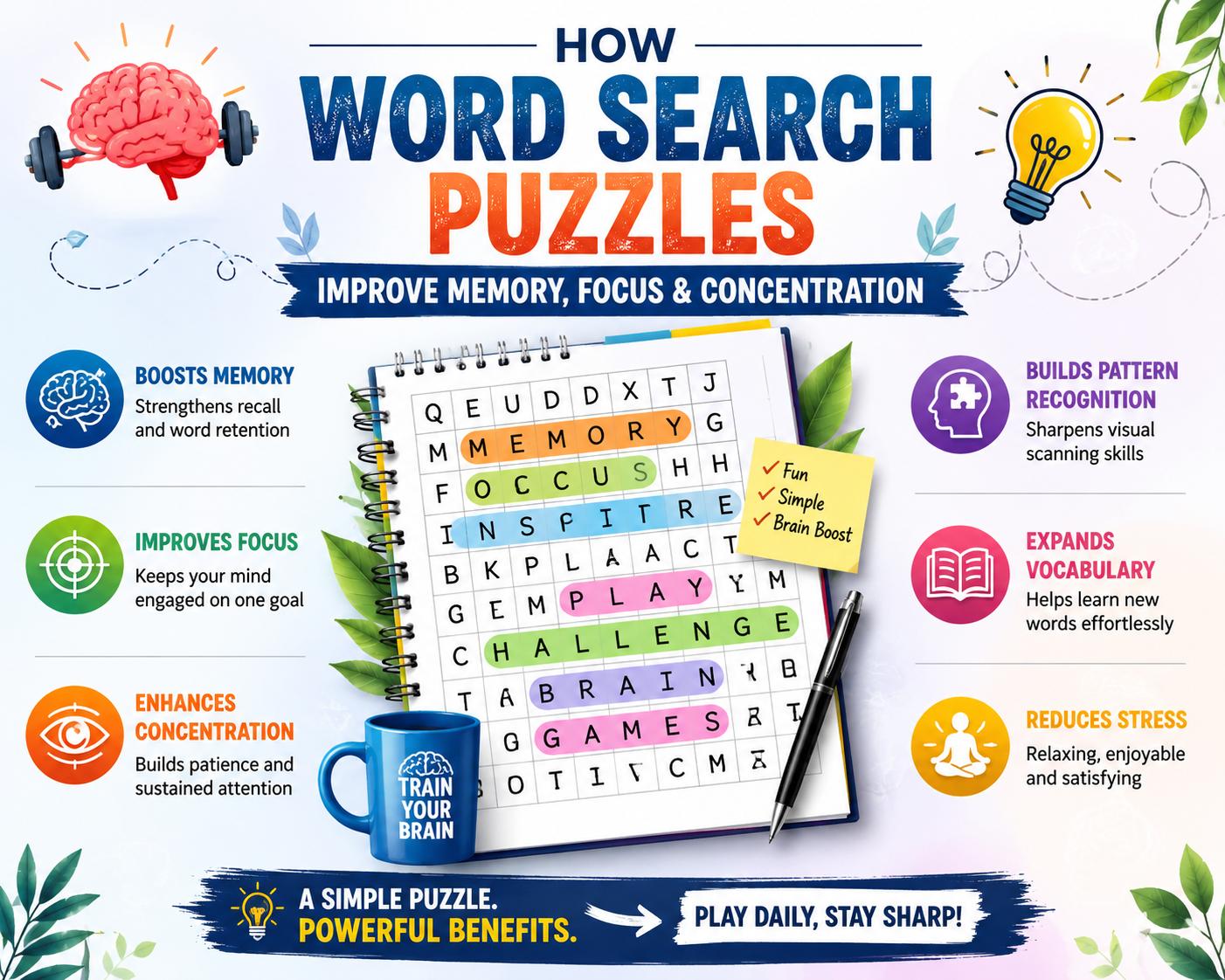
A few years ago, I would have described word search puzzles as nothing more than a simple way to pass time. They were the kind of activity you might find in a newspaper, a puzzle book, or a classroom worksheet. However, after spending more time with different puzzle games and observing how they affect attention and mental sharpness, I started to appreciate why word search puzzles have remained popular for decades.
What surprised me most was that the challenge is not really about finding words. It is about training your brain to stay engaged with a single task. In a world where most of us switch between apps, messages, emails, and notifications throughout the day, that ability has become increasingly valuable.
Whether you enjoy free online word search puzzles or traditional printed versions, these puzzles can offer meaningful benefits for memory, focus, and concentration.
Why Word Search Puzzles Demand More Mental Effort Than People Think
At first glance, a word search appears simple. You receive a list of words and a grid filled with letters. Your goal is to locate every hidden word.
The reality is more complex.
As you scan the puzzle, your brain is constantly making decisions. It filters irrelevant letters, compares patterns, checks spelling sequences, and remembers which sections of the puzzle have already been explored. All of this happens within seconds, often without you consciously noticing it.
This combination of visual scanning and mental processing is one reason word search games continue to be recommended as enjoyable brain-training activities.
The Connection Between Word Search Puzzles and Memory
One question frequently asked by puzzle enthusiasts is: Do word search puzzles improve memory?
The answer lies in how the brain uses information during gameplay.
Imagine searching for the word "concentration" in a large puzzle grid. You first remember the spelling of the word, then scan different rows and columns while keeping that spelling pattern in mind. If you move on to another word, your brain stores and retrieves information repeatedly throughout the puzzle.
This process activates working memory, which helps us temporarily hold and manipulate information. Working memory plays a role in everyday activities such as reading instructions, learning new concepts, and remembering details during conversations.
While word search puzzles are not a replacement for professional cognitive training, they provide a simple and enjoyable way to keep memory-related skills active.
How Word Search Puzzles Encourage Better Focus
Focus has become one of the most sought-after skills in modern life. Many people struggle to maintain attention for extended periods because distractions are always nearby.
One thing I have noticed while solving word search puzzles is that they naturally pull your attention into the task. There is a clear objective, immediate feedback, and a sense of progress every time a hidden word is found.
Unlike scrolling through social media, where attention constantly shifts, a word search puzzle rewards sustained focus. The longer you stay engaged, the more successful you become.
This is one reason many people include daily it in their routines. Even spending ten or fifteen minutes searching for hidden words can provide a focused mental break from a busy schedule.
Concentration Improves Through Consistent Practice
Concentration is slightly different from focus.
Focus helps you direct attention toward a task, while concentration helps you maintain that attention until the task is complete.
This puzzle encourages concentration because they require persistence. Some words are easy to locate, while others seem invisible until the very last moment. Players must continue searching carefully rather than giving up when the puzzle becomes challenging.
Over time, this repeated practice of maintaining attention can help strengthen concentration skills that are useful in studying, reading, and professional work.
The Hidden Benefit: Pattern Recognition
One benefit that often goes unnoticed is pattern recognition.
Experienced puzzle solvers begin spotting letter combinations more quickly than beginners. They learn to recognize common word structures and visual patterns hidden inside large groups of letters.
This skill extends beyond puzzles. Pattern recognition plays a role in language development, reading comprehension, problem-solving, and even certain workplace tasks.
The more frequently the brain practices identifying patterns, the more efficient it can become at processing information.
Why Word Search Puzzles Appeal to Every Age Group
Few activities manage to remain equally enjoyable for children, teenagers, adults, and seniors. Word search puzzles are one of those rare exceptions.
Children often use them to improve spelling and vocabulary. Students can benefit from better visual attention and reading skills. Adults frequently enjoy them as quick mental workouts during breaks, while older adults appreciate the opportunity to stay mentally engaged through a low-stress activity.
This wide appeal explains why online word search puzzles continue to attract millions of players worldwide.
Making Word Search Puzzles Part of Your Daily Routine
You do not need to spend hours solving puzzles to experience their benefits.
A short daily session can provide mental stimulation while fitting easily into a busy schedule. Some people enjoy completing a puzzle with their morning coffee, while others use word search games as a way to unwind after work.
The key is consistency. Like many skills, attention and memory tend to improve when they are exercised regularly.
Final Thoughts
Word search puzzles may seem simple on the surface, but they challenge several important cognitive functions at the same time. From strengthening working memory and improving focus to encouraging concentration and pattern recognition, these puzzles offer benefits that extend far beyond entertainment.
For anyone looking for an enjoyable mental workout, free online word search puzzles provide an accessible and engaging option. They require no special equipment, no complicated rules, and no prior experience—just a willingness to slow down, focus, and enjoy the challenge of finding hidden words.
In a world full of distractions, that simple habit can be surprisingly valuable.
- Managerial Effectiveness!
- Future and Predictions
- Motivatinal / Inspiring
- Fitness and Wellness
- Medical & Health
- Manufacturing
- Education
- Real-Estate
- Food Industry
- Hospitality
- Online Games
- Sports
- Home Services
- Civil Engineering
- Safety and Protection
- Software Products & Services
- Fashion and Jewellery
- Artificial Intelligence
- Entrepreneurship
- Mentoring & Guidance
- Marketing
- Networking
- HR & Recruiting
- Literature
- Shopping
- Career Management & Advancement