

 SkillClick
Contract Manufacturing Alcohol India: Top Compliance Challenges
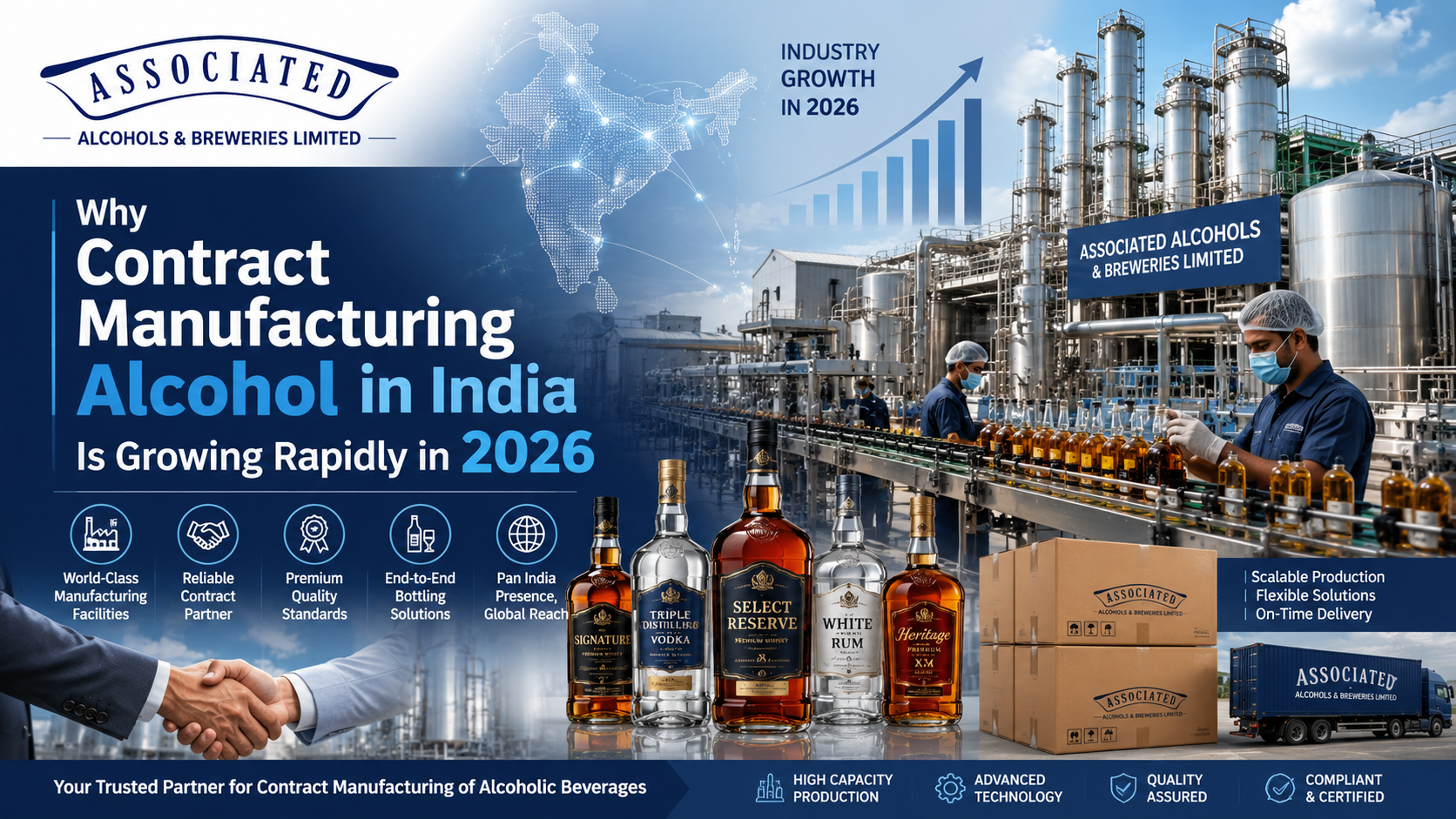
India's alcohol industry is one of the most heavily regulated sectors in the country, with over 30 different state-level excise frameworks governing production, sale, and distribution. For any brand entering contract manufacturing alcohol India, compliance is not an afterthought it is the entire foundation. Miss one licence or misread one state rule, and your launch stalls for months. This post breaks down the five biggest compliance challenges brands and manufacturers face, so you can plan ahead and avoid costly delays.
What Licences Are Required for Contract Manufacturing Alcohol in India?
Contract manufacturing alcohol in India requires a minimum of three distinct licences: a distillery or bottling unit licence from the State Excise Department, an FSSAI licence for food safety compliance, and a brand registration approval in each state where the product will be sold. Without all three, production cannot legally begin.
The State Excise Department is the primary licensing authority. Each state issues its own distillery licence under its excise act. There is no single national licence that covers all states. A manufacturer operating in Madhya Pradesh, for example, holds a licence valid only within that state's jurisdiction.
Brand owners also need separate approvals for label registration. States like Maharashtra, Telangana, and Uttar Pradesh each have distinct label approval processes, timelines, and fee structures. A brand launching across five states can face five completely different documentation sets.
FSSAI Compliance for Alcohol Manufacturers
FSSAI governs the food safety aspects of potable alcohol production. Under the Food Safety and Standards (Alcoholic Beverages) Regulations, 2018, manufacturers must meet specific standards for raw material quality, alcohol content labelling, and permissible additives (Source: FSSAI, 2018). Non-compliance can result in product recalls or licence suspension.
Distillery vs. Bottling Unit Licences
Many brands confuse distillery licences with bottling unit licences. A distillery licence covers production of spirit from raw materials. A bottling unit licence covers blending, filling, and packaging of already-produced spirit. Contract manufacturers that only bottle not distil hold a bottling licence, not a distillery licence. Brand owners must confirm which licence their manufacturing partner holds before signing any agreement.
How Does State Excise Policy Affect Contract Manufacturing Alcohol in India?
State excise policy directly controls where alcohol can be produced, at what duty rate, and under what conditions it can be moved. Since alcohol is a state subject under India's Constitution (Schedule VII, List II), every state sets its own rules. This creates a patchwork of regulations that contract manufacturers must track individually.
Duty structures vary sharply. Some states charge duty on production volume, others on the finished product's retail price. Rajasthan, for instance, applies a different duty computation method than Tamil Nadu (Source: Comptroller and Auditor General of India, 2022). A pricing model built on one state's rates can become unprofitable when applied to another.
Inter-State Movement of Alcohol
Moving alcohol across state lines is one of the most complex compliance areas. Each consignment requires a transport permit issued by the dispatching state and an import permit from the receiving state. Delays in permit issuance are common and can disrupt supply chains significantly. Some states also restrict imports of certain categories of spirits to protect local producers.
State-Specific Label and Packaging Rules
Several states require state-specific stickers, hologram seals, or barcode systems on each bottle. Andhra Pradesh and Kerala both mandate government-issued holograms, which must be procured separately from the state authority. Contract manufacturers must factor both the cost and lead time of these requirements into production planning.
What Quality Standards Apply to Contract-Manufactured Spirits in India?
Contract-manufactured spirits must meet the Bureau of Indian Standards (BIS) specifications for their respective categories whisky, rum, vodka, gin, or brandy as well as FSSAI's alcoholic beverage regulations. Manufacturers are also expected to follow GMP guidelines, which cover facility hygiene, equipment calibration, and batch record-keeping.
Third-party quality audits are increasingly common, especially when international brand owners partner with Indian contract manufacturers. For a detailed look at how reputable manufacturers structure their contract manufacturing operations to meet these standards, this overview of contract manufacturing for spirits in India illustrates the typical scope of such partnerships.
BIS Standards and Category Compliance
BIS sets the minimum alcohol strength, colour, and sensory requirements for each spirit category. Whisky, for example, must be aged in oak casks and meet minimum maturation requirements under IS 10524. Any deviation — even in labelling the product can trigger a legal challenge or bar the product from certain state markets.
Record-Keeping and Batch Traceability
State excise departments conduct periodic audits. Manufacturers must maintain daily production registers, raw material intake records, and dispatch logs. Digital record-keeping is now mandatory in several states under excise modernisation initiatives. Gaps in records attract penalties and can suspend operations.
Why Do Compliance Failures Happen in Alcohol Contract Manufacturing?
Most compliance failures in contract manufacturing alcohol India stem from three root causes: inadequate due diligence on the manufacturer's licence status, poor coordination between brand owner and manufacturer on state-specific requirements, and underestimating the time needed for regulatory approvals.
Brand owners often assume the contract manufacturer handles all compliance. In practice, responsibilities are split. The manufacturer holds production licences. The brand owner is responsible for brand registration, label approvals, and inter-state permits for their own product. This division is rarely documented clearly in manufacturing agreements.
Missing Clauses in Manufacturing Agreements
A compliant manufacturing agreement must specify who is responsible for FSSAI renewals, state label approvals, excise duty payments, and hologram procurement. Agreements that leave these areas vague create disputes and compliance gaps. Legal review by a specialist in India's excise laws is essential before finalising any contract.
Timelines for Regulatory Approvals
Brand owners frequently underestimate approval timelines. Label registration in some states takes 60 to 90 days. FSSAI licence amendments for new products can take 45 days. Building these timelines into the product launch plan not treating them as parallel tasks is a basic requirement that many first-time entrants miss.
Conclusion
Contract manufacturing alcohol India is a genuine opportunity for brands that want production capacity without capital investment in distillery assets. But the compliance load is real and highly state-specific. Licensing, excise policy, quality standards, and inter-state movement rules all demand careful attention before any agreement is signed. As India's alcohol market continues to grow projected to reach USD 64.56 billion by 2028 (Source: Statista, 2024) the brands that build compliance into their go-to-market strategy from day one will be the ones that scale without disruption.
- Managerial Effectiveness!
- Future and Predictions
- Motivatinal / Inspiring
- Fitness and Wellness
- Medical & Health
- Manufacturing
- Education
- Real-Estate
- Food Industry
- Hospitality
- Online Games
- Sports
- Home Services
- Civil Engineering
- Safety and Protection
- Software Products & Services
- Fashion and Jewellery
- Artificial Intelligence
- Entrepreneurship
- Mentoring & Guidance
- Marketing
- Networking
- HR & Recruiting
- Literature
- Shopping
- Career Management & Advancement