

 SkillClick
NetSuite ERP Partner in Ajman vs Traditional ERP: Which Wins?
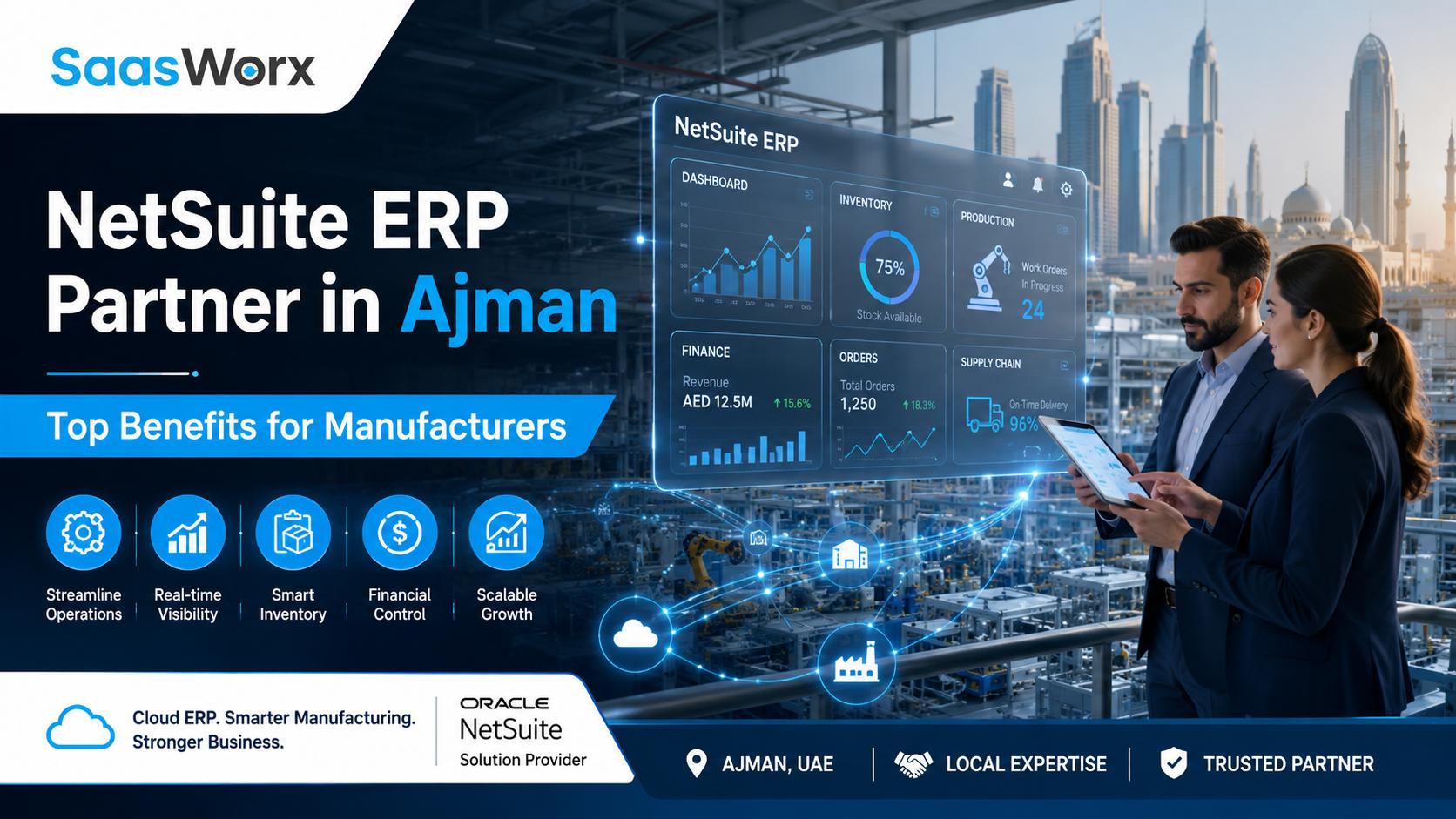
A NetSuite ERP partner in Ajman gives businesses faster deployment, lower upfront cost, and real-time data access compared to traditional ERP systems. Cloud ERP reduces total cost of ownership by 30–50% over five years for mid-sized companies. For Ajman businesses weighing their options, this distinction matters more than ever.
Traditional ERP has served businesses for decades. But the demands on businesses in the UAE have changed. Regulatory complexity, multi-entity structures, and the need for remote access have exposed the limitations of on-premise systems.
This post compares both approaches across cost, deployment, scalability, and long-term value so you can make a clear-headed decision.
Is NetSuite Better Than Traditional ERP Systems?
Yes, for most growing businesses in Ajman, NetSuite outperforms traditional ERP across cost, flexibility, and speed of deployment. Traditional ERP requires heavy upfront hardware investment and ongoing IT maintenance. NetSuite operates on a subscription model, with updates managed by the vendor.
Cost Structure: Cloud vs On-Premise
Traditional ERP systems carry high capital expenditure. You pay for servers, licensing, implementation, and internal IT support. The average cost of an on-premise ERP implementation for a mid-sized company exceeds $500,000.
NetSuite uses a subscription-based model. Costs are predictable, scalable, and shift from capital expenditure to operational expenditure. For Ajman SMEs managing tight budgets, this is a material advantage.
Deployment Timeline
Traditional ERP implementations take 12–18 months on average . Complex integrations and hardware procurement extend that timeline further.
NetSuite implementations typically complete in 3–6 months. A qualified NetSuite ERP partner in Ajman manages the configuration, data migration, and user training cutting the time between decision and go-live significantly.
Maintenance and Updates
With traditional ERP, every update requires IT involvement. Patches, upgrades, and compatibility testing consume internal resources and create downtime risk.
NetSuite pushes two major updates per year automatically. No downtime. No separate licensing fees. No version fragmentation across departments.
What Are the Benefits of Cloud ERP for UAE Businesses?
Cloud ERP gives UAE businesses real-time visibility, geographic flexibility, and built-in compliance features for VAT and multi-currency operations. These three advantages are particularly relevant for Ajman companies operating across the UAE or with international trade exposure.
Real-Time Financial Visibility
Traditional ERP systems often run batch processes overnight. Managers see yesterday's data, not today's. Cloud ERP delivers live dashboards for revenue, cash flow, inventory, and procurement accessible from any device.
For finance teams in Ajman managing consolidated group accounts, this is a significant operational shift. Decisions get faster. Errors get caught earlier.
VAT Compliance and Multi-Currency Support
The UAE introduced VAT in 2018. Businesses operating across multiple Emirates or trading internationally need ERP systems that handle tax calculation, invoice formatting, and filing natively.
NetSuite supports UAE VAT compliance out of the box. Traditional ERP systems often require expensive customisation to meet local requirements and those customisations break with every major update.
Remote Access and Business Continuity
Cloud ERP runs in a browser. Teams in different offices, free zones, or countries access the same live data. Traditional ERP ties users to a local network, creating operational risk when remote work is required.
68% of UAE businesses cite remote accessibility as a top criterion for ERP selection. This preference has only grown since the pandemic.
How Long Does ERP Implementation Take in the UAE?
ERP implementation in the UAE takes 3–18 months depending on the system type, company size, and complexity of existing processes. Cloud ERP deployments consistently take less time than on-premise implementations.
Factors That Affect Implementation Time
System type: Cloud ERP averages 3–6 months. Traditional on-premise ERP averages 12–18 months.
Data migration: Cleaning and migrating historical data is the most common cause of delays in any ERP project.
Customisation scope: The more custom workflows you build, the longer the project runs and the more expensive it becomes.
Partner quality: A certified ERP partner with UAE implementation experience reduces project risk substantially.
Why Partner Selection Matters
The quality of your ERP partner determines whether implementation finishes on time and on budget. Businesses that work with experienced partners report 35% higher project success rates compared to those that self-implement.
For Ajman businesses, working with a partner who understands UAE regulatory requirements, free zone structures, and local business practices accelerates deployment and reduces post-go-live issues.
Which ERP System Is Best for SMEs in Ajman?
For most SMEs in Ajman, a cloud-based ERP system like NetSuite is the more practical choice over traditional on-premise software. The combination of lower upfront cost, faster implementation, and built-in compliance features aligns with the operational profile of most UAE SMEs.
Scalability for Growing Businesses
Traditional ERP systems require significant re-implementation or module purchases when a business grows. Adding new entities, currencies, or geographies triggers expensive upgrade cycles.
NetSuite is built for multi-entity, multi-currency, and multi-subsidiary management from the start. As an Ajman business expands across the UAE or into GCC markets, the platform scales without re-implementation.
Integration with Modern Business Tools
Traditional ERP systems often use proprietary integration layers that are expensive to maintain. Cloud ERP platforms connect to CRM, ecommerce, logistics, and payroll systems through standard APIs.
For a detailed breakdown of how a certified partner structures NetSuite ERP deployments for businesses in the region, this resource on NetSuite ERP implementation in Ajman covers the key service components and local market considerations.
Conclusion
Traditional ERP systems served a purpose but they were built for a different era of business operations. Cloud ERP, delivered through a qualified NetSuite ERP partner in Ajman, offers lower total cost of ownership, faster time-to-value, and the flexibility UAE businesses need to stay competitive.
The right ERP system is not the one with the most features. It is the one your team will actually use effectively, at a cost your business can sustain, with a partner who understands your market.
As AI-driven automation and real-time analytics become standard business tools, the gap between cloud and traditional ERP will only widen. The question for Ajman businesses is not whether to modernise it is how soon.
- Managerial Effectiveness!
- Future and Predictions
- Motivatinal / Inspiring
- Fitness and Wellness
- Medical & Health
- Manufacturing
- Education
- Real-Estate
- Food Industry
- Hospitality
- Online Games
- Sports
- Home Services
- Civil Engineering
- Safety and Protection
- Software Products & Services
- Fashion and Jewellery
- Artificial Intelligence
- Entrepreneurship
- Mentoring & Guidance
- Marketing
- Networking
- HR & Recruiting
- Literature
- Shopping
- Career Management & Advancement