

 SkillClick
How Bounce Rate Affects SEO Rankings and Website Engagement in 2026
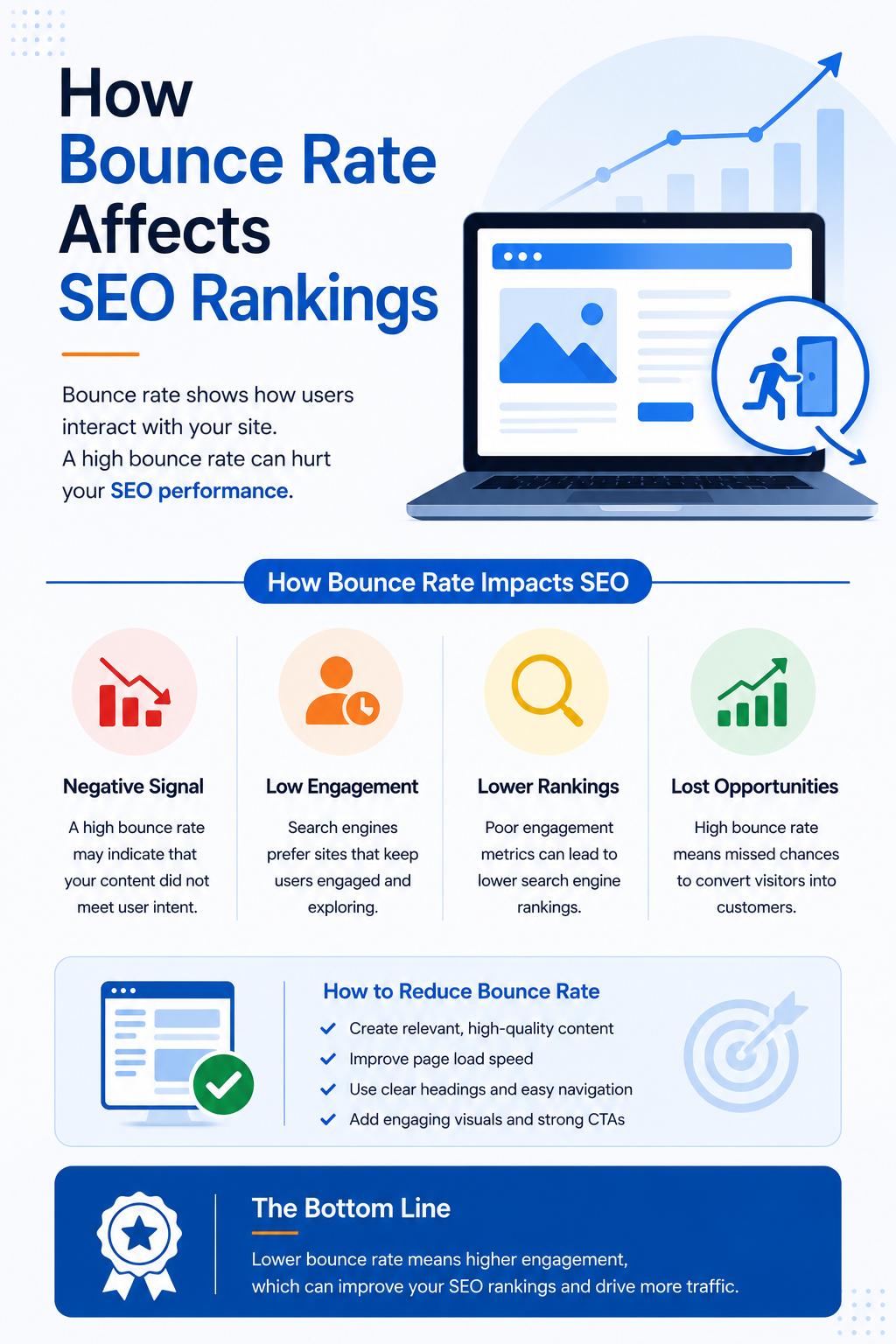
Bounce rate is one of the most discussed metrics in SEO because it reflects how users behave after visiting a website. In 2026, user behavior signals have become increasingly important for search engines when evaluating website quality and relevance.
When users visit a page from Google and leave quickly without interacting further, it may indicate that the content or user experience did not meet their expectations.
Understanding What Bounce Rate Means
Bounce rate refers to the percentage of visitors who leave a website after viewing only one page without taking any additional action.
A high bounce rate does not always mean poor performance, but in many cases, it can signal low engagement, weak content relevance, or poor user experience.
Bounce Rate Reflects User Experience
User experience plays a major role in bounce rate because visitors quickly decide whether a website is useful or not.
If a website is slow, difficult to navigate, or visually confusing, users are more likely to leave immediately.
Improving user experience helps keep visitors engaged for longer periods.
Content Quality Impacts Bounce Rate
Content that does not match user intent often increases bounce rate.
When users search for specific information and do not find clear answers on a webpage, they leave quickly and continue searching elsewhere.
Helpful, relevant, and well-structured content encourages users to explore more pages.
Website Speed Influences User Retention
Slow-loading websites are one of the biggest causes of high bounce rates.
Modern users expect websites to load quickly, especially on mobile devices. Even a few seconds of delay can lead to lost visitors and reduced engagement.
Fast websites improve both user satisfaction and SEO performance.
Mobile Optimization Helps Reduce Bounce Rate
Most online searches now happen through smartphones, making mobile optimization extremely important.
Websites that are not mobile-friendly often experience higher bounce rates because users struggle with navigation, readability, and loading performance.
Internal Linking Encourages More Interaction
Internal links help guide users toward related content within a website.
When visitors find useful additional pages to explore, they are more likely to stay longer and engage with the website, reducing bounce rate naturally.
Bounce Rate Can Affect SEO Signals
Search engines analyze user engagement patterns to understand content quality.
If users consistently leave a page quickly, it may signal that the page is not satisfying user intent effectively, which can impact search visibility over time.
Better Design Improves Engagement
Clean website layouts, readable text, and clear navigation improve the overall browsing experience.
A well-designed website encourages visitors to continue exploring instead of leaving immediately.
Reducing Bounce Rate Helps Increase Conversions
Lower bounce rates usually lead to better conversion opportunities because users spend more time interacting with the website.
The longer visitors stay engaged, the higher the chances of inquiries, bookings, or purchases.
Conclusion: Bounce Rate Reflects Website Effectiveness
Bounce rate is an important metric because it reveals how users interact with a website. Improving content quality, page speed, navigation, and mobile usability helps reduce bounce rates and strengthen overall SEO performance.
👉 Check Your SEO Score for Free: https://www.fly-social.com/
- Managerial Effectiveness!
- Future and Predictions
- Motivatinal / Inspiring
- Fitness and Wellness
- Medical & Health
- Manufacturing
- Образование
- Real-Estate
- Food Industry
- Hospitality
- Online Games
- Sports
- Home Services
- Civil Engineering
- Safety and Protection
- Software Products & Services
- Fashion and Jewellery
- Artificial Intelligence
- Entrepreneurship
- Mentoring & Guidance
- Marketing
- Networking
- HR & Recruiting
- Literature
- Shopping
- Career Management & Advancement