

 SkillClick
Inverter vs Non-Inverter Air Conditioner: Which AC Is Best for Your Home?
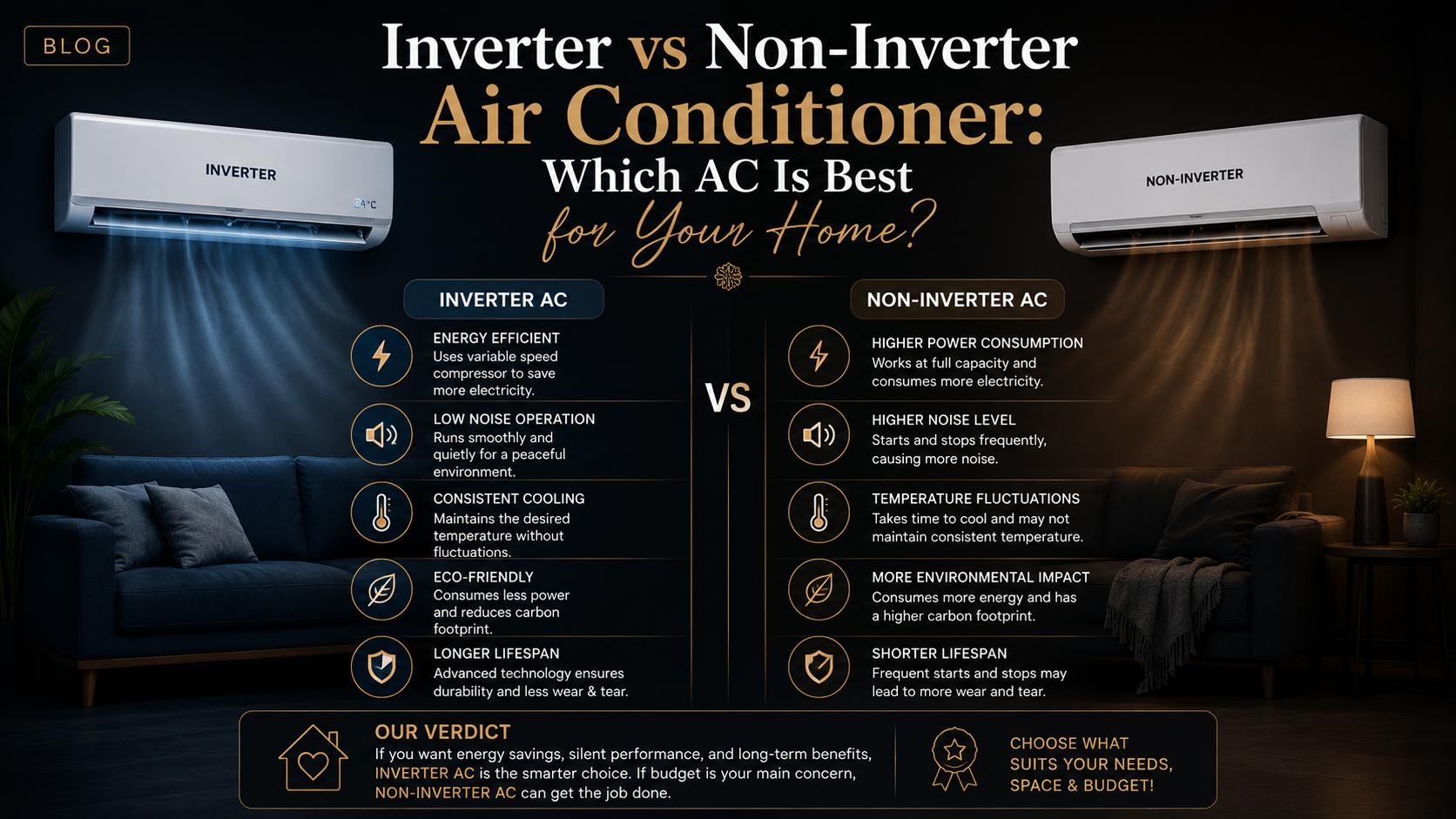
Choosing the right air conditioner is one of the most important decisions for every home, office, shop, or commercial space, especially during the hot summer season in Pakistan. When buyers start comparing AC options, one of the most common questions is: Should I buy an inverter AC or a non-inverter AC?
Both inverter and non-inverter air conditioners are designed to cool rooms, but they work differently. Their electricity usage, cooling performance, price, noise level, and long-term value are not the same. An inverter AC usually offers better energy saving and temperature control, while a non-inverter AC is often more affordable in initial price.
Before buying an air conditioner in Pakistan, it is important to understand the difference between these two types so you can choose the right one according to your room size, budget, usage time, and electricity concerns.
What Is an Inverter Air Conditioner?
An inverter air conditioner uses advanced compressor technology that adjusts its speed according to the room temperature. Instead of switching the compressor completely on and off again and again, it keeps running at variable speed. When the room needs more cooling, the compressor works faster. When the room reaches the set temperature, it slows down and maintains cooling with less power.
This smart working style helps reduce electricity consumption and provides more stable cooling. Inverter ACs are especially useful for people who use their AC for long hours, such as during night sleep, office hours, or full-day home cooling.
Many modern inverter AC models also come with features like fast cooling, heat and cool function, eco mode, self-cleaning, low noise operation, T3 compressor, and energy-saving performance. Some models, such as modern inverter AC options, are designed with smart inverter technology, stable performance, and better comfort for homes or offices.
What Is a Non-Inverter Air Conditioner?
A non-inverter air conditioner uses a fixed-speed compressor. This means the compressor either runs at full power or turns off when the desired temperature is reached. When the room temperature rises again, the compressor starts again at full speed.
This on-and-off cycle can use more electricity compared to inverter technology, especially when the AC is used for long hours. However, non-inverter ACs are usually cheaper to buy, which makes them attractive for people with a limited budget.
A non-inverter AC can still provide strong and fast cooling. It is suitable for users who do not use the AC continuously for many hours or need cooling for a limited time. Some models, such as a non-inverter air conditioner, are designed for small to medium rooms with reliable cooling and simple operation.
Main Difference Between Inverter and Non-Inverter AC
The main difference between inverter and non-inverter AC is compressor operation. An inverter AC adjusts compressor speed according to cooling demand, while a non-inverter AC runs the compressor at fixed speed and switches it on and off.
This difference affects electricity usage, cooling comfort, noise, price, and long-term cost. Inverter ACs are usually more energy-efficient because they avoid repeated compressor restarts. Non-inverter ACs may consume more electricity because every restart uses more power.
In simple words, an inverter AC is better for long daily usage and electricity saving, while a non-inverter AC is better for short usage and lower upfront cost.
Electricity Consumption Comparison
Electricity consumption is one of the biggest concerns when buying an AC in Pakistan. Since electricity prices continue to affect monthly household budgets, many buyers prefer appliances that reduce power usage.
An inverter AC is usually more energy-efficient because it does not keep starting and stopping the compressor at full power. Once the room becomes cool, it maintains the temperature using less energy. This can help reduce electricity bills, especially if the AC is used for several hours daily.
A non-inverter AC may use more electricity because its compressor starts repeatedly at full load. This can increase power consumption during long usage. However, if you use the AC only for short periods, the difference may not feel very large.
For homes where AC runs every night or for many hours daily, an inverter AC is usually the better long-term choice.
Cooling Performance
Both inverter and non-inverter ACs can provide good cooling if the capacity is correct for the room size. A 1-ton AC is usually suitable for smaller rooms, while a 1.5-ton or 2-ton AC is better for larger spaces.
An inverter AC provides smoother cooling because it maintains a stable temperature. It does not allow the room to become too hot or too cold repeatedly. This makes the environment more comfortable.
A non-inverter AC can also cool quickly, but because it turns on and off, the room temperature may fluctuate more. Some people may feel sudden cooling when the compressor starts and slight warmth when it stops.
For consistent comfort, inverter ACs generally perform better. For basic cooling at a lower price, non-inverter ACs can still be useful.
Price Difference
Price is another important factor. Non-inverter ACs are usually more affordable than inverter ACs. This makes them a good option for people who want an AC with strong cooling but have a limited budget.
Inverter ACs usually cost more at the time of purchase because they use advanced technology. However, they can save money in the long run through lower electricity usage. If you use your AC regularly, the extra initial cost may be recovered through reduced electricity bills over time.
So, if your budget is limited and usage is low, a non-inverter AC can be a practical option. If you can invest more and want long-term savings, an inverter AC is usually better.
Noise Level and Comfort
Inverter ACs are generally quieter because the compressor runs smoothly at variable speed. Since it does not start and stop frequently, the operation feels more stable and less noisy. This is especially useful for bedrooms, study rooms, offices, and baby rooms.
Non-inverter ACs can be noisier because the compressor repeatedly turns on and off. The sudden start of the compressor can sometimes create more sound and vibration.
If peaceful sleep and quiet operation are important for you, an inverter AC can provide a better experience.
Maintenance and Durability
Both inverter and non-inverter ACs need proper maintenance. Filters should be cleaned regularly, outdoor units should be checked, and servicing should be done before or during the summer season.
Non-inverter ACs have simpler technology, so repair and maintenance may sometimes be easier and less costly. Inverter ACs have more advanced components, including inverter PCB and smart compressor control, so repairs can be more expensive if major parts are damaged.
However, because inverter ACs run more smoothly and avoid frequent compressor restarts, they may support better compressor life when used properly. The final durability depends on brand quality, installation, voltage stability, maintenance, and usage habits.
Which AC Is Better for Long Usage?
If you use your AC for long hours daily, an inverter AC is usually the better choice. It can maintain temperature more efficiently and reduce electricity consumption. This makes it ideal for bedrooms, offices, lounges, and homes where the AC runs at night.
Long usage is where inverter technology gives the most benefit. The longer the AC runs, the more useful energy-saving performance becomes.
Which AC Is Better for Short Usage?
If you use your AC for only one or two hours a day, a non-inverter AC can be enough. It offers strong cooling and costs less to buy. For occasional use, the electricity-saving difference may not justify the higher upfront price of an inverter AC for some buyers.
Non-inverter ACs are also suitable for guest rooms, small offices, shops with limited use, or rooms where cooling is needed only for short periods.
Room Size and AC Capacity Matter
Whether you choose inverter or non-inverter, the AC capacity must match the room size. If the AC is too small for the room, it will work harder and consume more electricity. If the AC is too large, it may cool unevenly and waste energy.
For small rooms, a 1-ton AC may be suitable. For medium rooms, a 1.5-ton AC is commonly preferred. For larger rooms, lounges, or commercial spaces, a 2-ton AC may be needed.
Room size, sunlight exposure, ceiling height, insulation, number of people, and appliance heat all affect cooling performance. Always consider these factors before buying any wall mounted split AC.
Choose a Trusted Store for Buying an AC
When buying an air conditioner, choosing a trusted store is very important. A reliable store provides original products, proper warranty, clear specifications, secure delivery, and after-sales support. Since an AC is a long-term investment, buyers should avoid unclear sellers, fake discounts, and products without proper warranty.
Before purchasing, check compressor type, cooling capacity, inverter or non-inverter technology, warranty, energy-saving features, brand reputation, installation requirements, and service support. Also compare different models according to your room size and daily usage.
A trusted store helps you choose the right AC with confidence and reduces the risk of warranty or service issues later.
Final Thoughts
Both inverter and non-inverter air conditioners have their own advantages. An inverter AC is better for long usage, electricity saving, stable cooling, and quiet operation. It is a smart choice for people who use AC regularly and want long-term value.
A non-inverter AC is better for buyers who want a lower initial price and use the AC for limited hours. It provides strong cooling and simple operation, making it suitable for occasional use or smaller budgets.
The best choice depends on your usage pattern, room size, electricity concerns, and budget. If you use your AC daily for long hours, choose an inverter AC. If your usage is limited and upfront cost matters more, a non-inverter AC can also be a practical option.
- Managerial Effectiveness!
- Future and Predictions
- Motivatinal / Inspiring
- Fitness and Wellness
- Medical & Health
- Manufacturing
- Éducation
- Real-Estate
- Food Industry
- Hospitality
- Online Games
- Sports
- Home Services
- Civil Engineering
- Safety and Protection
- Software Products & Services
- Fashion and Jewellery
- Artificial Intelligence
- Entrepreneurship
- Mentoring & Guidance
- Marketing
- Networking
- HR & Recruiting
- Literature
- Shopping
- Career Management & Advancement