

 SkillClick
How Do Asset-Backed Tokens Simplify Cross-Border Investment and Asset Trading?
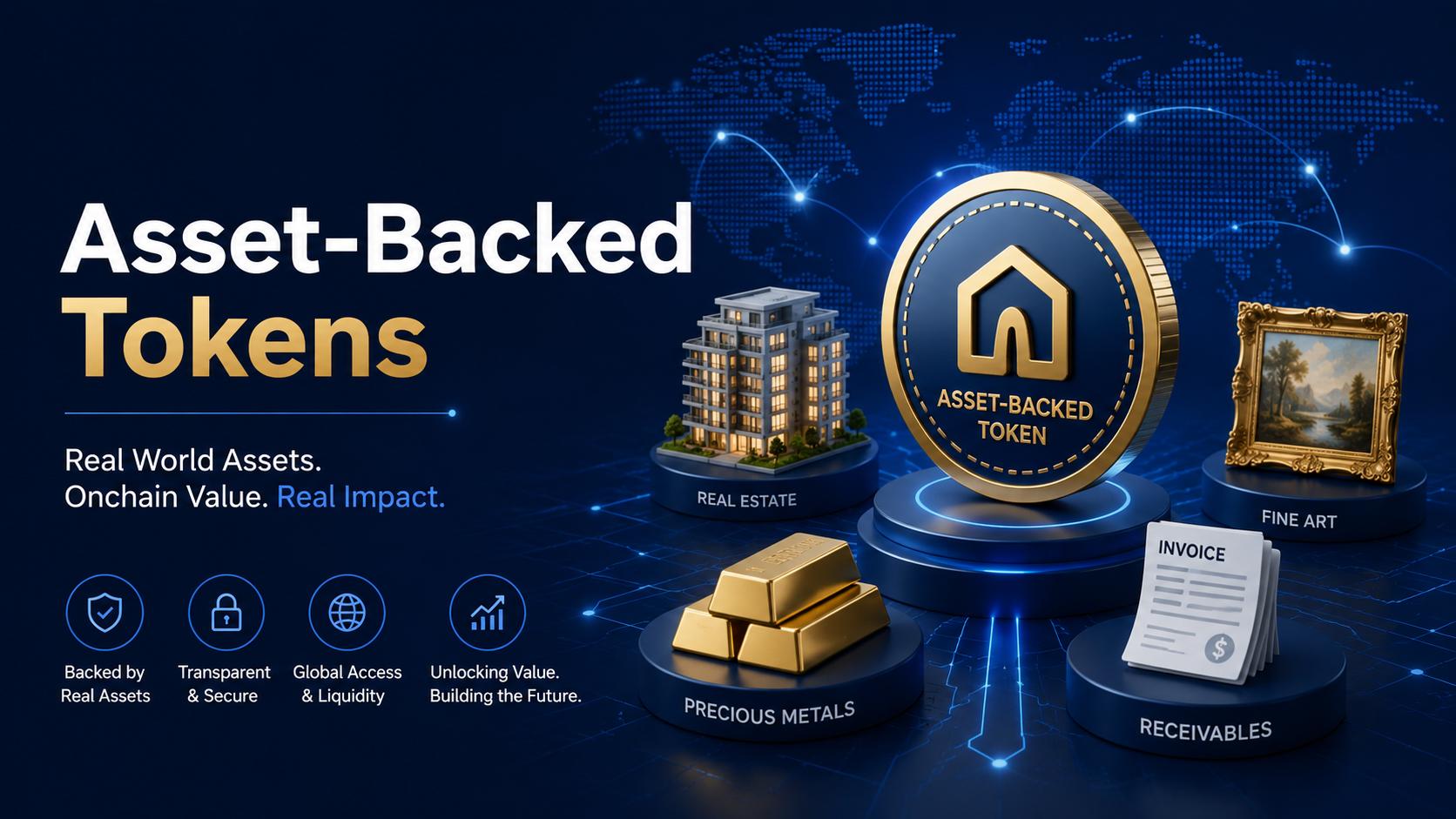
Cross-border investment has traditionally been slow, expensive, and heavily dependent on intermediaries such as banks, brokers, custodians, and legal advisors. Every international transaction typically involves currency conversion, regulatory checks, settlement delays, and documentation across multiple jurisdictions. Asset-backed tokens digital tokens representing real-world assets like real estate, commodities, equities, or debt instruments reshape this structure by enabling borderless, programmable, and near-instant transfer of value on blockchain networks.
By linking tangible or financial assets to tokenized representations on-chain, asset-backed tokens reduce friction in global investment flows and make asset trading more accessible to a wider pool of investors.
Understanding Asset-Backed Tokens in a Cross-Border Context
Asset-backed tokens are blockchain-based digital representations of real-world assets. Each token is tied to a verifiable underlying asset such as:
- Commercial or residential real estate
- Gold, oil, or other commodities
- Private equity or fund shares
- Government or corporate bonds
- Revenue-generating infrastructure assets
These tokens derive their value from the underlying asset and are typically issued through regulated structures such as SPVs (Special Purpose Vehicles) or custodial arrangements that hold the real-world asset.
In cross-border investment, the key innovation is that ownership rights can now be transferred digitally without requiring the physical movement of assets or reliance on traditional settlement infrastructure.
Eliminating Traditional Barriers in Cross-Border Investing
Cross-border asset trading has historically faced multiple barriers that slow down capital movement:
1. Settlement Delays
Traditional international transactions often take 2–5 business days due to clearing systems, banking networks, and compliance checks. Asset-backed tokens reduce this to near real-time settlement on blockchain networks.
2. Intermediary Dependency
Investors typically rely on banks, custodians, brokers, and transfer agents. Each layer adds cost and complexity. Tokenization removes or minimizes these intermediaries by using smart contracts for execution and settlement.
3. High Transaction Costs
Foreign exchange fees, brokerage commissions, and administrative costs significantly reduce net returns. Tokenized assets reduce these overheads by automating execution and reducing manual reconciliation.
4. Regulatory Fragmentation
Each country has its own securities and investment laws. Asset-backed tokens can be structured to comply with multiple jurisdictions simultaneously through programmable compliance logic.
How Asset-Backed Tokens Enable Seamless Global Investment
1. Fractional Ownership Across Borders
One of the most powerful features of asset-backed tokens is fractionalization. A high-value asset in one country can be divided into thousands or millions of tokens, allowing investors from anywhere in the world to purchase small fractions.
This removes geographic and capital barriers, enabling global participation in previously inaccessible markets such as:
- Prime commercial real estate in major cities
- Large-scale infrastructure projects
- Institutional-grade private funds
2. Blockchain-Based Settlement Systems
Blockchain networks act as decentralized settlement layers. Once a token transfer occurs, ownership is updated instantly and permanently recorded on-chain.
Unlike traditional systems that require reconciliation between multiple databases, blockchain provides a single source of truth, reducing:
- Settlement risk
- Counterparty risk
- Documentation delays
This makes cross-border asset trading significantly more efficient and transparent.
3. Smart Contract Automation for Compliance and Transfers
Smart contracts play a central role in simplifying global asset movement. They can automatically enforce:
- Investor eligibility rules (KYC/AML compliance)
- Jurisdiction-based restrictions
- Dividend or yield distribution
- Ownership transfer conditions
This ensures that regulatory requirements are embedded directly into the asset itself, reducing the need for manual compliance processing across borders.
4. 24/7 Global Market Access
Traditional financial markets operate within fixed hours and regional limitations. Asset-backed tokens operate on blockchain networks that are always active, allowing investors from any time zone to trade assets without market closures.
This continuous accessibility increases liquidity and creates more dynamic global pricing for tokenized assets.
5. Multi-Currency and Stablecoin Integration
Cross-border investing usually involves currency conversion, which introduces volatility and fees. Asset-backed token ecosystems often integrate stablecoins or multi-currency settlement layers that:
- Reduce FX conversion friction
- Provide price stability during transactions
- Enable instant settlement in digital dollars or euros
This simplifies international trading and reduces exposure to currency risk during settlement.
How Tokenization Improves Asset Trading Efficiency
Asset-backed tokens improve trading efficiency in several ways:
Faster Transfer of Ownership
Token transfers occur within minutes rather than days or weeks required for traditional asset transfers.
Lower Entry Barriers
Investors no longer need large capital commitments to access international assets.
Improved Liquidity
Previously illiquid assets like real estate or private equity become tradable on secondary markets.
Transparent Price Discovery
Blockchain-based trading platforms provide real-time visibility into asset demand and pricing trends.
Reduced Administrative Overhead
Ownership records, dividend distributions, and transaction histories are automatically maintained on-chain.
Cross-Border Real Estate Investment as a Key Use Case
Real estate is one of the most prominent sectors benefiting from asset-backed tokenization. Traditionally, investing in overseas property involves:
- Legal due diligence in foreign jurisdictions
- High transaction fees
- Currency conversion risk
- Complex ownership structures
With tokenization, a property in one country can be represented as digital tokens accessible globally. Investors can:
- Buy fractional shares of international properties
- Receive rental income automatically in digital wallets
- Trade ownership stakes on secondary markets
- Exit positions without lengthy legal processes
This transforms real estate into a globally accessible investment class.
Risk Management in Cross-Border Token Trading
While asset-backed tokens simplify global investment, they also introduce new considerations:
Regulatory Compliance Complexity
Different jurisdictions classify tokens differently—some as securities, others as digital assets.
Custody and Asset Verification
The integrity of the underlying asset must be independently verified to ensure token value stability.
Smart Contract Vulnerabilities
Poorly designed contracts may expose investors to technical risks.
Market Liquidity Variability
Some tokenized assets may still suffer from low trading volume depending on platform adoption.
The Broader Impact on Global Capital Markets
Asset-backed tokens are gradually reshaping global capital markets by:
- Reducing reliance on centralized intermediaries
- Increasing access to institutional-grade assets for retail investors
- Enabling real-time cross-border capital flows
- Creating unified digital marketplaces for real-world assets
This shift supports the development of a more interconnected financial system where asset ownership is no longer constrained by geography or institutional gatekeeping. Research on tokenized real-world assets highlights that blockchain-based representation of physical and financial instruments is emerging as a foundational layer for next-generation capital markets.
Role of Technology Providers in Cross-Border Tokenization
The efficiency of cross-border asset-backed token systems depends heavily on the underlying technology infrastructure, compliance architecture, and token issuance frameworks provided by specialized blockchain development firms. These providers build the platforms that enable asset digitization, smart contract deployment, regulatory compliance modules, and secondary market functionality.
One example in this space is INORU, which focuses on developing end-to-end tokenization platforms for real-world assets such as real estate, commodities, and financial instruments. Such platforms typically integrate features like fractional ownership issuance, investor onboarding systems, automated compliance checks, and blockchain-based settlement layers to support global asset trading.
Future Outlook of Cross-Border Asset Tokenization
The next stage of evolution in this space is likely to include:
- Interoperable blockchain networks for global asset exchange
- Regulated token marketplaces operating across jurisdictions
- Integration with decentralized finance (DeFi) lending and liquidity systems
- AI-driven compliance systems for real-time regulatory adaptation
- Expansion of tokenized funds and global index products
As infrastructure matures, cross-border investing may become more seamless, with tokenized assets functioning as standard instruments in global portfolios.
Conclusion
Asset-backed tokens simplify cross-border investment and asset trading by removing traditional barriers such as settlement delays, intermediaries, currency friction, and jurisdictional complexity. Through blockchain-based ownership, smart contract automation, and fractional accessibility, they enable global investors to participate in high-value assets with greater efficiency and transparency.
While regulatory and technical challenges still exist, the underlying model represents a structural shift in how international capital flows are managed. Over time, asset-backed tokenization is likely to become a core mechanism for global investment, making cross-border asset trading faster, more inclusive, and more efficient than conventional financial systems.
- Managerial Effectiveness!
- Future and Predictions
- Motivatinal / Inspiring
- Fitness and Wellness
- Medical & Health
- Manufacturing
- Education
- Real-Estate
- Food Industry
- Hospitality
- Online Games
- Sports
- Home Services
- Civil Engineering
- Safety and Protection
- Software Products & Services
- Fashion and Jewellery
- Artificial Intelligence
- Entrepreneurship
- Mentoring & Guidance
- Marketing
- Networking
- HR & Recruiting
- Literature
- Shopping
- Career Management & Advancement