

 SkillClick
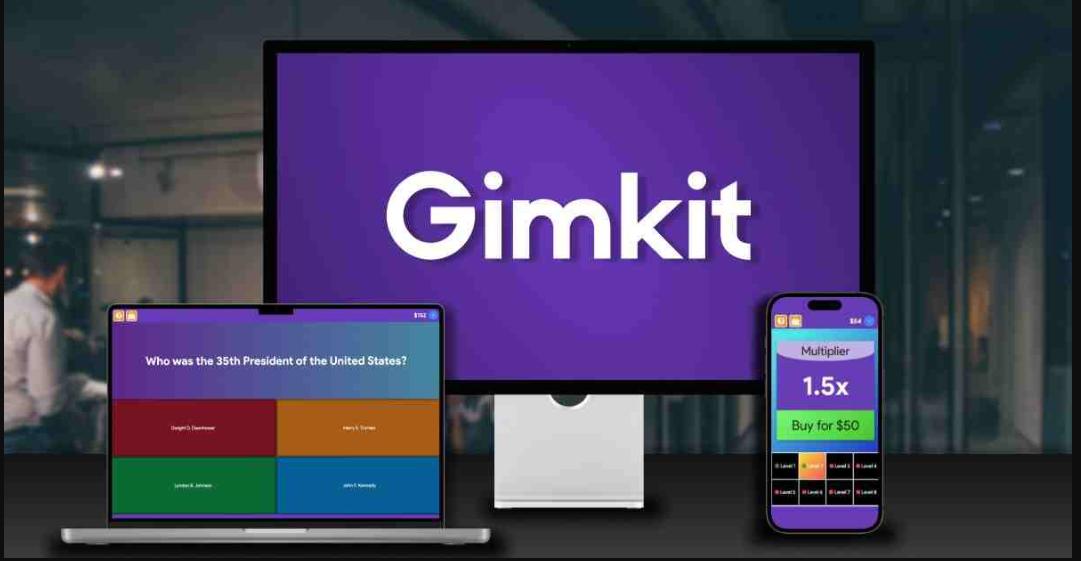
For nearly a decade, Kahoot! has been the default name in classroom quiz games. Its energetic music, bright colors, and race‑to‑answer format made it a favorite among teachers worldwide. But Gimkit, a newer platform built by a former student, has gained a devoted following by doing things differently. Many educators now face a genuine dilemma: which platform actually leads to better learning outcomes? This comparison breaks down both tools across eight critical categories, helping you choose the right fit for your classroom, subject, and teaching style.
Core Philosophy: Racing vs Strategizing
The most important difference between the two platforms is not a feature. It is a mindset.
Kahoot! prioritizes speed and excitement. Questions appear on a shared screen while students tap answers on their own devices. Points go to the fastest correct answer. The experience feels like a high‑energy game show. Students laugh, groan, and celebrate in real time. Learning happens, but the primary emotion is competition.
Gimkit prioritizes strategy and repetition. Students see questions on their own screens at their own pace. Every correct answer earns in‑game currency, which they spend on power‑ups and multipliers. The same questions recycle throughout the game. The experience feels more like an economic simulation. Students think about when to save, when to spend, and how to maximize long‑term earnings. Learning happens through repeated exposure and careful decision making.
Neither philosophy is universally better. Kahoot! wins when you need energy and engagement in a short time block. Gimkit wins when you need deep repetition and strategic thinking.
Question Presentation and Pacing
In a traditional Kahoot! game, all students see the same question on the projector or shared screen at the same time. They have a limited number of seconds to answer on their devices. The timer creates urgency but also anxiety. Slow readers or students who process information more deliberately struggle to keep up.
In Gimkit, each student sees questions on their own screen. Timers exist, but they are adjustable and less punishing. Students can work at their own pace within the overall game clock. A student who needs extra time on a difficult question does not hold up the entire class. This makes Gimkit significantly more inclusive for students with learning differences or language barriers.
However, Kahoot!’s shared screen format has one advantage: it naturally creates a shared classroom experience. Everyone looks up at the same content. The teacher can pause and discuss a question with the whole group. Gimkit’s individualized screens can feel isolating by comparison.
Repetition and Retention
This category is not close. Gimkit wins decisively.
In Kahoot!, each question appears exactly once per game. A student who guesses wrong sees the correct answer briefly but may never encounter that question again. Learning stops when the game ends.
In Gimkit, questions recycle continuously. A student sees the same question multiple times across a single game. Each correct repetition reinforces memory. This aligns directly with spaced repetition, a well‑established cognitive science principle. Students leave a Gimkit game having answered key questions several times, not just once.
For test preparation and vocabulary review, Gimkit’s recycling mechanic is superior. For a quick pulse check or end‑of‑week celebration, Kahoot!’s one‑and‑done approach is fine.
Game Modes and Variety
Kahoot! has expanded beyond its classic format. You can now play individual games, team games, and even assign asynchronous challenges. The platform also offers puzzle questions, polls, and word clouds. However, the core experience remains mostly unchanged. You answer, you earn points based on speed and accuracy.
Gimkit offers more dramatic variety. Beyond the standard Classic mode, you can play The Floor is Lava, where wrong answers eliminate you. Trust No One adds a hidden impostor mechanic similar to the popular game Among Us. Capture the Flag combines quiz mastery with territory control. Each mode changes the win condition completely. Some modes reward careful play; others reward risk‑taking.
If you want one consistent format you can use every Friday, Kahoot! is simpler and more predictable. If you want to surprise students with fundamentally different gameplay each week, Gimkit offers more depth.
Ease of Use and Setup
Kahoot! has a shallower learning curve. Creating a quiz takes minutes. The interface is clean and intuitive. Students join with a code and a nickname. Teachers who are not tech‑confident find Kahoot! immediately accessible.
Gimkit requires more upfront investment. Understanding the shop, power‑ups, and multiple game modes takes practice. Creating a Kit (Gimkit’s term for a question set) is straightforward, but choosing the right mode for your learning objective requires thought. First‑time hosts may feel overwhelmed.
That said, Gimkit’s complexity becomes an advantage over time. Once teachers learn the system, they appreciate the flexibility. Kahoot!’s simplicity, while a strength initially, can feel limiting after years of use.
Student Motivation and Engagement
Both platforms engage students, but through different levers.
Kahoot! drives motivation through adrenaline. The ticking timer, the rising leaderboard, the dramatic reveal of correct answers—these elements trigger excitement. Students play because it feels like a party.
Gimkit drives motivation through ownership. Students decide how to spend their cash. They feel smart when a well‑timed power‑up pays off. They feel invested in their own success. The motivation is internal rather than external.
Research on gamification suggests that internal motivation (autonomy, mastery, purpose) produces longer‑lasting engagement than external motivation (points, timers, leaderboards). However, some students genuinely prefer the pure excitement of Kahoot!. Know your audience.
Reporting and Assessment
Kahoot! provides basic reports: overall scores, accuracy percentages, and which questions were most difficult. The data is useful for formative assessment but not detailed enough for formal grading.
Gimkit offers more granular reporting. You can see exactly how many times each student saw each question, their accuracy on repeated attempts, and their spending patterns. This data reveals not just what students know, but how confidently they know it. A student who answers correctly on the first try is different from a student who needs four attempts.
For teachers who use quiz games as graded assignments, Gimkit’s reporting is stronger. For teachers who use games purely for review and engagement, Kahoot!’s reporting is sufficient.
Cost and Free Tiers
Both platforms offer free versions with significant limitations.
Kahoot!’s free tier allows you to create unlimited quizzes but restricts you to basic question types and limits the number of players per game. Advanced features like image uploads and detailed reports require a paid subscription.
Gimkit’s free tier allows you to create Kits and host live games but restricts access to advanced game modes and limits the size of your Kit library. The most popular modes, like Trust No One and The Floor is Lava, require a paid plan.
Neither platform is expensive. Both offer school and district pricing. The cost difference is unlikely to be your deciding factor.
The Verdict: Which Should You Choose?
Choose Kahoot! if you prioritize energy and simplicity. You want a fast, fun, low‑prep activity that gets every student participating. You teach younger students who benefit from a shared screen experience. You only play quiz games occasionally and do not need deep data.
Choose Gimkit if you prioritize repetition and strategy. You need students to see the same material multiple times for long‑term retention. You teach older students who enjoy resource management and tactical thinking. You want detailed reports to inform your instruction.
Many teachers do not choose at all. They use Kahoot! on Mondays for a high‑energy start to the week and Gimkit on Thursdays for focused test preparation. The two platforms complement each other perfectly. Try both. Let your students tell you which one makes them excited to learn. That answer is the only comparison that truly matters.