

 SkillClick
Smart Robot Market: The Evolution of Cognitive Machines
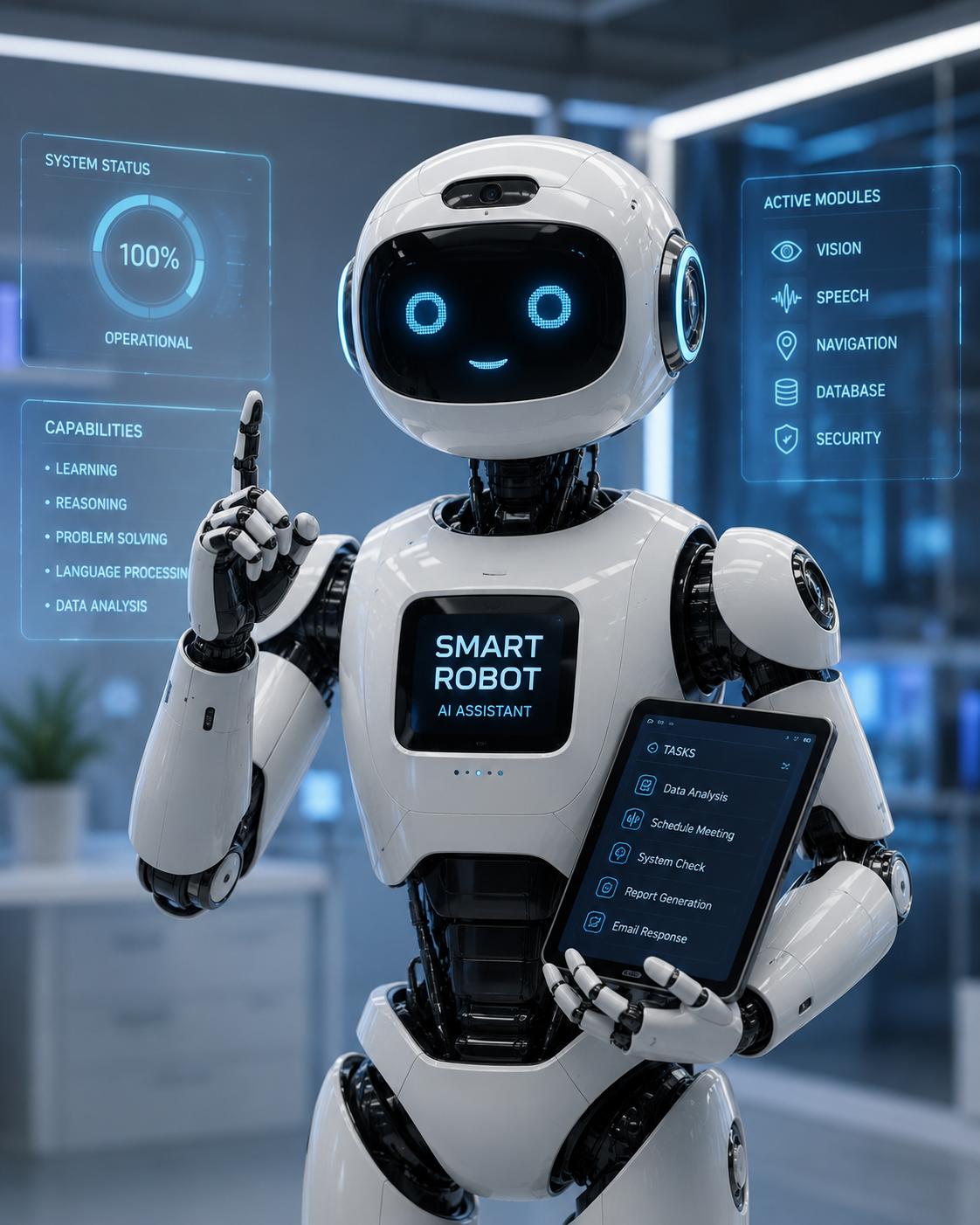
The global Smart Robot Market is currently navigating a period of unprecedented expansion, driven by the rapid convergence of advanced sensory technology, high-speed connectivity, and deep learning. Unlike their traditional counterparts, which operate on rigid, pre-programmed scripts, smart robots possess the ability to perceive their environment and make autonomous decisions. The proliferation of AI smart robots is redefining productivity across sectors ranging from healthcare to heavy manufacturing. As service robotics continues to mature, these machines are becoming increasingly integrated into the daily fabric of commercial and domestic life, offering solutions that were once relegated to the realm of science fiction.
Market Overview and Introduction
Smart robots represent a leap forward from simple automation to "intelligent" automation. These systems utilize a combination of computer vision, edge computing, and complex algorithms to perform tasks in unstructured environments. The market is broadly categorized into personal, professional, and industrial segments. While industrial applications have historically dominated the field, we are seeing a massive surge in professional service applications, such as medical assistants, agricultural drones, and security bots. The primary goal of this technology is to augment human capabilities, taking over "dirty, dull, or dangerous" jobs while providing a level of precision that humans simply cannot match.
Key Growth Drivers
Several factors are propelling this industry forward. First and foremost is the global labor shortage. Aging populations in developed nations like Japan, Germany, and South Korea have created a vacuum in both manual labor and specialized care roles. Furthermore, the exponential decrease in the cost of high-performance sensors and processors has made it economically viable for smaller enterprises to adopt robotic solutions. The push for "Industry 5.0," which emphasizes the collaboration between humans and machines, is also a significant driver, as companies look for robots that can safely work alongside people without the need for safety cages.
Consumer Behavior and E-commerce Influence
The explosion of online shopping has fundamentally altered the logistics landscape. Consumers now expect near-instant delivery, placing immense pressure on fulfillment centers. This behavior has led to the widespread adoption of autonomous service robots in warehouses, where they manage inventory and transport goods with extreme efficiency. In the domestic sphere, consumers are becoming more comfortable with the idea of robots in the home, moving from basic vacuum cleaners to intelligent home assistants that can manage IoT devices and provide companionship or security monitoring.
Regional Insights and Preferences
Asia-Pacific remains the powerhouse of the smart robot industry, led by China's aggressive manufacturing policies and Japan's long-standing cultural acceptance of robotics. In North America, the focus is heavily geared toward software innovation and medical robotics, particularly in surgical assistance. Europe, meanwhile, is a leader in collaborative robots (cobots) and agricultural automation, driven by strict labor regulations and a focus on high-precision engineering. Each region’s regulatory environment significantly shapes the adoption rate, with the EU focusing heavily on ethical AI and safety standards.
Technological Innovations and Emerging Trends
We are witnessing a shift toward "Soft Robotics," which uses flexible materials to allow robots to handle delicate objects like fruits or human limbs. Another major trend is the integration of 5G, which provides the low latency required for real-time remote operation and massive data transfer between robot fleets. Swarm intelligence is also emerging as a trend, where groups of smaller, less expensive robots work together to complete complex tasks, such as search and rescue or large-scale precision farming.
Sustainability and Eco-friendly Practices
As global focus shifts toward the environment, the smart robot industry is adapting. Robots are being used to optimize energy consumption in factories and to sort recyclable materials with high accuracy. In agriculture, smart robots use vision systems to apply pesticides only to specific weeds, drastically reducing chemical runoff. Furthermore, manufacturers are increasingly looking at the lifecycle of the robots themselves, utilizing modular designs that allow for easy repairs and the recycling of precious metals and rare earth elements used in their construction.
Challenges, Competition, and Risks
Despite the optimism, the market faces significant hurdles. Cyber-security is a paramount concern; as robots become more connected, they become potential entry points for hackers. There is also the persistent social risk of job displacement, leading to potential regulatory pushback. Technically, the "unstructured environment" problem remains a challenge—creating a robot that can navigate a messy human house as easily as a structured factory floor requires immense computational power and sensor fusion that is still being perfected.
Future Outlook and Investment Opportunities
The future of the market lies in the development of humanoid AI robots that can perform multi-purpose tasks. Investors are currently flocking to startups focused on "Robotics-as-a-Service" (RaaS), which allows companies to lease robotic fleets rather than making huge capital investments. As AI continues to evolve toward General Intelligence, the capability of these machines will expand from specific tasks to generalized problem-solving, opening up multi-billion dollar opportunities in elderly care, disaster response, and space exploration.
➤➤Explore Market Research Future- Related Ongoing Coverage In Semiconductor Industry:
- Managerial Effectiveness!
- Future and Predictions
- Motivatinal / Inspiring
- Fitness and Wellness
- Medical & Health
- Manufacturing
- Education
- Real-Estate
- Food Industry
- Hospitality
- Online Games
- Sports
- Home Services
- Civil Engineering
- Safety and Protection
- Software Products & Services
- Fashion and Jewellery
- Artificial Intelligence
- Entrepreneurship
- Mentoring & Guidance
- Marketing
- Networking
- HR & Recruiting
- Literature
- Shopping
- Career Management & Advancement