

 SkillClick
Are FY-valve Trunnion Mounted Valves Suitable for Hydrogen and Renewable Energy Pipeline Applications?
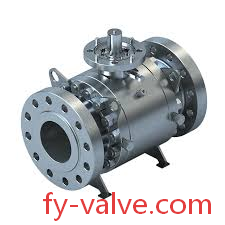
Global energy landscapes continue shifting toward carriers that generate reduced environmental footprints during end use phases. Hydrogen together with various renewable sources demands infrastructure capable of secure transport over extended distances while preserving efficiency and containment integrity. Pipeline systems handling these mediums encounter distinct operational parameters including permeability characteristics chemical reactivity profiles and pressure cycling patterns that differ from traditional hydrocarbon services. Are Trunnion Mounted Valves suitable for hydrogen and renewable energy pipeline applications?
Design principles for equipment in such services emphasize resistance to specific degradation mechanisms associated with the transported substances. Hydrogen in particular interacts with certain metals through diffusion processes that may affect mechanical properties over time. Selection of appropriate alloys and surface treatments becomes essential to counteract potential embrittlement while maintaining sealing effectiveness across operational cycles. Engineers reference established guidelines from international bodies when specifying components for these emerging networks.
Structural configurations influence overall system behavior under varying load conditions. Arrangements featuring fixed support elements for the closure member distribute forces evenly across the assembly reducing wear on seating surfaces even during frequent actuation or prolonged exposure to pressure differentials. This load distribution supports consistent performance in applications where lines experience thermal variations or flow interruptions. Operators appreciate configurations that limit the need for frequent interventions particularly in segments located far from maintenance bases.
Integration with adjacent pipeline elements requires careful matching of material properties and dimensional tolerances to avoid creation of stress concentration zones at connection points. Welding procedures and post-fabrication treatments receive close attention to preserve protective features applied during manufacturing stages. Project specifications often include requirements for compatibility with monitoring devices that track internal conditions without necessitating line shutdowns.
Safety considerations occupy central positions in planning because certain alternative energy carriers present flammability ranges or other hazard profiles that necessitate reliable isolation capabilities. Components enabling swift sectioning of pipeline segments contribute to risk management strategies by containing potential incidents within defined zones. Field teams rely on equipment that demonstrates stable operation across seasonal changes and operational transients.
Economic evaluations extend across entire project lifecycles with attention directed toward service duration and associated support requirements. Arrangements that sustain functionality with minimal adjustment intervals support favorable profiles regarding operational continuity and resource allocation. Compatibility with actuation systems allows remote operation which reduces personnel exposure in remote or buried installations.
Trunnion Mounted Valve assemblies serve key functions within these frameworks by providing isolation and regulation points that maintain system boundaries during both normal flows and upset conditions. Their construction incorporates precise machining to achieve uniform contact surfaces that support tight shutoff throughout service periods.
FY-valve directs resources toward verification activities that simulate conditions representative of hydrogen and renewable energy service environments. The company applies structured evaluation sequences to confirm component behavior prior to deployment in field applications.
Ongoing developments in material science expand the range of available options for manufacturers addressing the combined demands of strength corrosion resistance and compatibility with sensitive mediums. Collaborative efforts between suppliers and end users generate practical insights that inform incremental refinements in geometry and treatment selections. Suppliers maintain dialogue with project teams to align product features with site-specific operational profiles.
Examination protocols incorporate multiple verification steps including pressure testing permeation assessments and nondestructive inspection methods designed to identify any subsurface anomalies. Documentation accompanying each unit traces material origins through processing and assembly phases providing transparency for compliance reviews. These records assist stakeholders during approval processes with regulatory authorities.
Installation sequences emphasize qualified execution of joining techniques to maintain continuity of protective systems from factory to final placement. Alignment verification and torque application follow defined parameters to prevent distortion that could affect internal clearances or sealing interfaces. Commissioning activities include functional checks that confirm proper response to control signals.
Maintenance philosophies adapt to the realities of extended pipeline routes where physical access may involve significant logistical coordination. Designs that incorporate features facilitating inspection without full disassembly receive consideration because they minimize disruption to surrounding terrain or operational schedules. Remote diagnostics options further support condition monitoring from central locations.
Regulatory frameworks continue evolving in response to growing deployment of alternative energy vectors with authorities publishing updated expectations regarding material qualification and system integrity verification. Manufacturers who engage actively with standards organizations remain prepared to incorporate directional shifts into their development roadmaps.
In summary advancement of sustainable energy transport infrastructure depends on deliberate choices regarding components attuned to novel service conditions. All parties within the supply chain hold shared responsibility for delivering solutions that match the tempo of sector transformation. Professionals engaged in hydrogen or renewable energy pipeline initiatives may consult specialized sections detailing relevant product lines. Visit https://www.fy-valve.com/product/ball-valves/trunnion-mounted-ball-valve.html to review specific offerings related to these operations.
- Managerial Effectiveness!
- Future and Predictions
- Motivatinal / Inspiring
- Fitness and Wellness
- Medical & Health
- Manufacturing
- Education
- Real-Estate
- Food Industry
- Hospitality
- Online Games
- Sports
- Home Services
- Civil Engineering
- Safety and Protection
- Software Products & Services
- Fashion and Jewellery
- Artificial Intelligence
- Entrepreneurship
- Mentoring & Guidance
- Marketing
- Networking
- HR & Recruiting
- Literature
- Shopping
- Career Management & Advancement