

 SkillClick
Industrial Valve Market Outlook How Digitalization and Decarbonization Are Reshaping Demand
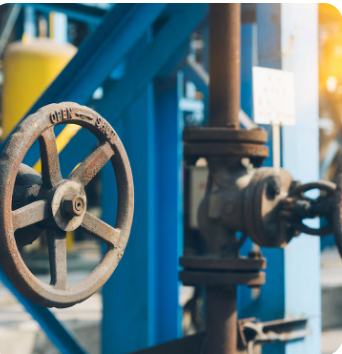
The industrial valve market stands as a silent giant within the global economy. These components, often overlooked, are the circulatory system of modern industry, dictating the flow of liquids, gases, and slurries across countless applications. From the deepest offshore oilfields to the sterile environments of pharmaceutical manufacturing, valves ensure safety, efficiency, and operational continuity. As we look ahead, the market is not merely growing; it is undergoing a profound transformation driven by technological shifts, evolving energy landscapes, and an intensified focus on operational resilience. Understanding this outlook requires moving beyond simple demand figures to examine the structural forces reshaping the industry.
The Foundation of Demand: Beyond Traditional Heavy Industries
For decades, the valve market’s fortunes were inextricably tied to the upstream oil and gas sector. While this remains a cornerstone, the current demand profile is notably more diversified. The global push for water and wastewater treatment infrastructure, particularly in rapidly urbanizing regions, has created a sustained, non-cyclical need for robust gate, globe, and butterfly valves. Simultaneously, the chemical and petrochemical sectors continue to demand high-performance specialty valves capable of withstanding corrosive media and extreme temperatures. This diversification is crucial; it provides a buffer against the volatility historically associated with crude oil prices, lending a degree of stability to the market that was absent a decade ago.
The Energy Transition: A Dual-Edged Catalyst
The global shift toward decarbonization presents the most complex set of drivers for the industrial valve market. On one hand, the gradual decline of traditional fossil fuel exploration in mature basins necessitates significant capital expenditure on maintenance, replacement, and efficiency upgrades in existing facilities, sustaining demand for high-reliability valves. On the other hand, the rapid expansion of new energy vectors is creating entirely new applications.
Liquefied natural gas, positioned as a transition fuel, requires cryogenic valves capable of operating at temperatures below -160°C, representing a high-value niche. More significantly, the carbon capture, utilization, and storage sector is emerging as a critical frontier. These facilities demand specialized valves that can manage high-pressure CO₂ streams with absolute integrity to prevent leakage. Similarly, the hydrogen economy—both in production via electrolysis and in transport—is creating a nascent but fast-growing market for valves made from materials resistant to hydrogen embrittlement. These new sectors are not just replacing lost volume; they are shifting the market’s value proposition toward higher-specification, more technologically complex products.
The Technological Imperative: The Rise of the Smart Valve
Perhaps the most significant shift in the industrial valve outlook is the migration from purely mechanical components to intelligent, connected assets. The proliferation of Industrial Internet of Things technologies is turning valves into data nodes. End-users are increasingly demanding smart valves equipped with integrated positioners, sensors, and wireless communication protocols that provide real-time data on performance, seat wear, temperature, and fugitive emissions.
This transition is driven by a clear operational goal: predictive maintenance. Unplanned downtime in industries like refining or power generation can cost millions per day. By enabling operators to move from reactive or calendar-based maintenance to condition-based interventions, smart valves offer a compelling return on investment. For manufacturers, this represents a shift in business models. The competitive advantage now lies not only in the metallurgy and sealing technology of the valve body but also in the sophistication of the digital ecosystem—the software, analytics, and cybersecurity—that accompanies it.
Navigating the Supply Chain and Material Landscape
The post-pandemic era has fundamentally altered procurement strategies within the valve industry. The era of just-in-time inventory, particularly for critical components like specialty castings, high-grade stainless steel, and exotic alloys, has been reevaluated. Lead times for large-diameter valves and custom-engineered solutions have become a critical factor in project scheduling for engineering, procurement, and construction contractors.
Consequently, end-users are prioritizing supply chain resilience and supplier consolidation. They are increasingly seeking long-term partnerships with manufacturers who demonstrate vertical integration, geographic manufacturing diversity, and a proven ability to deliver complex packages on time. Material science also remains a frontier of competition. As processes push into higher pressures, more corrosive environments, and cryogenic extremes, the development of new alloys and advanced polymers for seats and seals continues to differentiate market leaders from commodity suppliers.
Regional Dynamics: Localization and Self-Reliance
The geographic landscape of the industrial valve market is being redrawn by geopolitical factors and industrial policy. In North America, the Inflation Reduction Act and the broader focus on energy independence are fueling investments in domestic manufacturing, grid infrastructure, and clean energy projects, all of which require substantial valve content. The market is seeing a renewed emphasis on American-made and American-assembled products to reduce supply chain risk.
In contrast, the Asia-Pacific region remains the manufacturing powerhouse and the locus of volume growth. However, the dynamic is evolving. There is a pronounced trend toward localization, with countries like India and China implementing policies to reduce import dependency for critical infrastructure components. This is leading to the rise of sophisticated domestic manufacturers capable of competing on quality, not just cost. For global players, success increasingly depends on establishing strong local manufacturing footprints and navigating complex regulatory environments, rather than relying on cross-border trade alone.
The Pressure on Quality, Safety, and Standards
As industrial assets age and the consequences of failure become more severe—both environmentally and financially—the scrutiny on valve quality has intensified. Fugitive emissions standards, particularly those governed by protocols like the API 641 and ISO 15848, are becoming non-negotiable requirements across global markets. End-users are adopting more rigorous qualification processes, demanding extensive test documentation and material traceability.
This environment creates a bifurcation in the market. The commodity segment for low-pressure, non-critical applications remains highly price-competitive and subject to margin pressure. Conversely, the critical-service segment—encompassing severe service, high-pressure, high-temperature, and cryogenic applications—enjoys higher barriers to entry. In this segment, the primary competition is on reliability, safety credentials, and lifecycle cost rather than upfront price. Manufacturers who can demonstrate a zero-failure culture and invest heavily in testing and certification are capturing premium value.
Conclusion: A Market Defined by Precision and Purpose
The outlook for the industrial valve market is one of resilient growth, but it is a growth predicated on complexity. The era of selling standardized, passive components for undifferentiated applications is waning. The future belongs to manufacturers who can act as solutions providers—those who can engineer valves for the unique demands of hydrogen or carbon capture, embed intelligence into their products, and offer the supply chain stability that capital-intensive industries now demand.
The market’s trajectory will not be defined by a single factor but by the confluence of energy transition, digitalization, and a global shift toward supply chain security. For industry participants, the challenge is clear: to move up the value chain, invest in material science and digital capabilities, and build the operational resilience that their own customers now require. In this environment, the humble valve is being redefined not as a commodity, but as a critical instrument of industrial safety, efficiency, and sustainability.
- Managerial Effectiveness!
- Future and Predictions
- Motivatinal / Inspiring
- Fitness and Wellness
- Medical & Health
- Manufacturing
- Educación
- Real-Estate
- Food Industry
- Hospitality
- Online Games
- Sports
- Home Services
- Civil Engineering
- Safety and Protection
- Software Products & Services
- Fashion and Jewellery
- Artificial Intelligence
- Entrepreneurship
- Mentoring & Guidance
- Marketing
- Networking
- HR & Recruiting
- Literature
- Shopping
- Career Management & Advancement