

 SkillClick
Top Use Cases for Black Box Testing in Modern Software Development
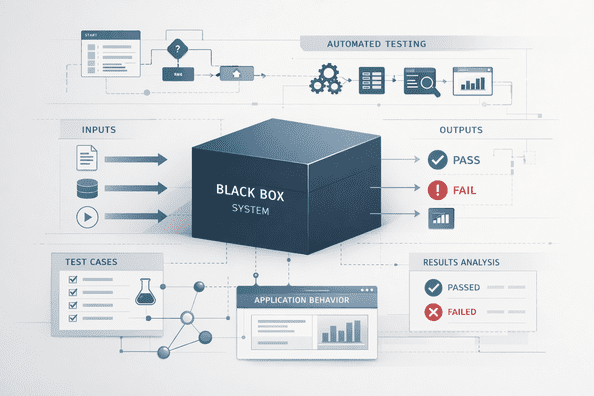
In today’s fast-paced software development environment, ensuring that applications function correctly from a user’s perspective is crucial. Black box testing is one of the most widely used testing approaches for validating system behavior without examining the internal code. By focusing on inputs, outputs, and user interactions, QA teams can ensure that software meets functional requirements and provides a reliable user experience.
Understanding the key use cases of black box testing helps organizations apply it effectively across different projects and development stages.
1. Functional Testing of Features
Functional testing is one of the primary use cases for black box testing. QA teams verify that individual features and components of an application behave as expected.
Testers design scenarios based on requirement documents, user stories, or specifications. For example, in a banking application, black box testing can validate whether account creation, fund transfers, and transaction history features work correctly. This approach ensures that core functionality aligns with business requirements.
2. Regression Testing
Regression testing ensures that new code changes do not adversely affect existing functionality. Black box testing plays a crucial role in this process by validating workflows and outputs after updates or bug fixes.
By simulating real user interactions, testers can confirm that previously working features continue to perform as intended. Tools such as Keploy and other regression testing tools can automate these tests, making it easier to maintain software stability in continuous integration environments.
3. User Workflow and End-to-End Testing
Black box testing is ideal for evaluating complete user workflows. Real-world applications often involve multiple integrated modules, such as e-commerce platforms with product selection, cart management, checkout, and payment processing.
Testing these workflows from an external perspective ensures that all components work together seamlessly and that users can complete their tasks without errors. This use case emphasizes user experience and system reliability.
4. Input Validation and Error Handling
Applications must handle a variety of user inputs, including invalid or unexpected data. Black box testing is used to verify that the system responds correctly to these inputs.
For example, in a registration form, testers check how the system reacts to missing fields, incorrect email formats, or excessively long input values. Proper input validation and error handling prevent crashes and maintain data integrity.
5. API and Integration Testing
Modern software systems rely heavily on APIs and integrations with third-party services. Black box testing helps validate whether these APIs return correct responses and handle different scenarios appropriately.
Testers focus on input requests and expected outputs, without inspecting the internal code of the API. This ensures reliable communication between systems and smooth integration of external services.
6. Mobile Application Testing
Mobile apps often have complex navigation and multi-step interactions. Black box testing is commonly used to validate usability and functionality on different devices, screen sizes, and operating systems.
Testers simulate user actions such as navigation, gestures, and feature interactions to ensure the app behaves consistently. This helps catch issues like broken links, navigation errors, or unexpected crashes.
7. Compliance and Business Rule Verification
Applications in regulated industries, such as finance, healthcare, and e-commerce, must comply with strict business rules and standards. Black box testing is used to ensure that these rules are correctly implemented and enforced.
For example, in a healthcare application, testers can validate access control, data privacy compliance, and workflow approvals without needing to access the underlying code.
8. Supporting Automation in Continuous Delivery
With the rise of continuous integration and continuous delivery (CI/CD), black box testing can be integrated into automated testing pipelines. Automated functional tests validate critical features after each code change, ensuring faster and safer releases.
Combining black box testing with white box testing and black box testing approaches allows teams to achieve both external functional validation and internal code quality assurance.
Conclusion
Black box testing is a versatile and essential approach for modern software development. Its use cases span functional testing, regression testing, user workflow validation, input handling, API integration, mobile app testing, compliance verification, and automation in CI/CD pipelines.
By applying black box testing strategically across these scenarios, QA teams can improve software reliability, ensure high-quality user experiences, and maintain stable application performance in today’s fast-paced development environments.
- Managerial Effectiveness!
- Future and Predictions
- Motivatinal / Inspiring
- Fitness and Wellness
- Medical & Health
- Manufacturing
- Education
- Real-Estate
- Food Industry
- Hospitality
- Online Games
- Sports
- Home Services
- Civil Engineering
- Safety and Protection
- Software Products & Services
- Fashion and Jewellery
- Artificial Intelligence
- Entrepreneurship
- Mentoring & Guidance
- Marketing
- Networking
- HR & Recruiting
- Literature
- Shopping
- Career Management & Advancement