

 SkillClick
Graphite Density Guide | Properties, Uses & Measurement
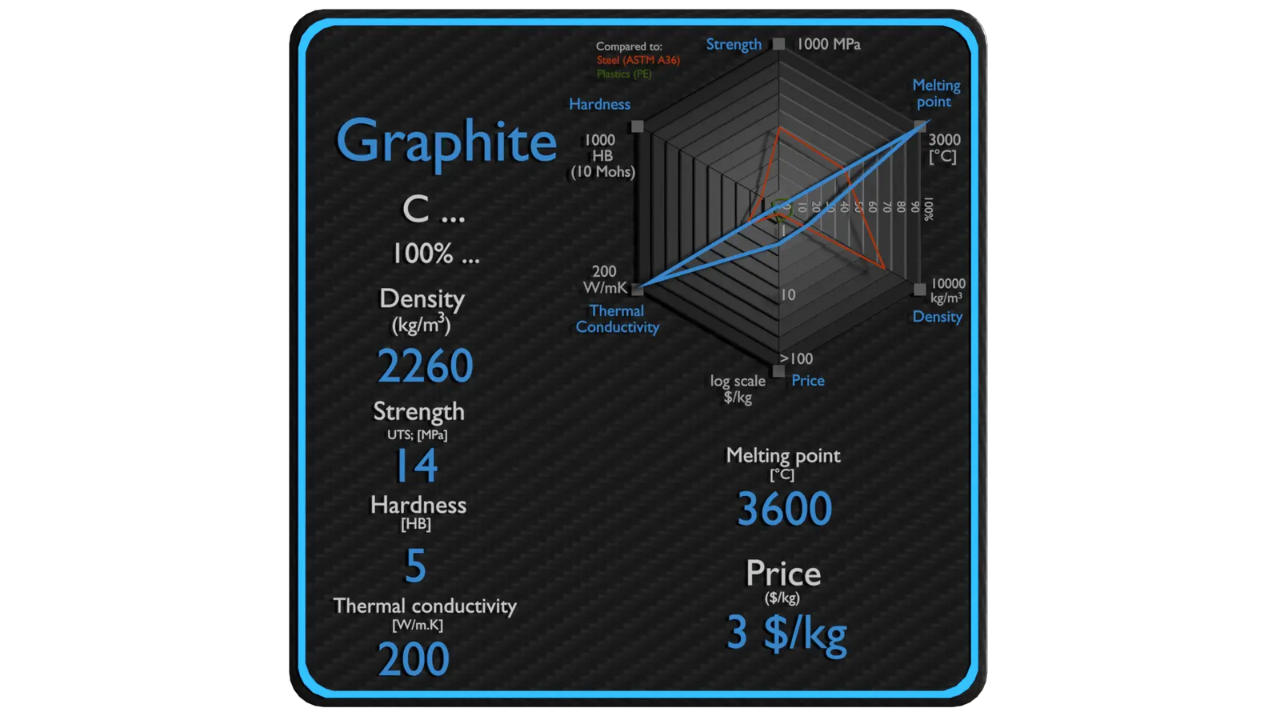
Graphite is a versatile material with unique physical and chemical properties that make it essential in numerous industrial, scientific, and commercial applications. Understanding graphite density is crucial for engineers, researchers, and hobbyists who use graphite in applications such as lubricants, batteries, electrodes, and refractory materials. This comprehensive guide explores graphite properties, measurement techniques, applications, and factors affecting its density.
Graphite’s density is an important characteristic that impacts its mechanical performance, electrical conductivity, thermal stability, and suitability for specific applications. High-quality graphite with consistent density is vital for industries that require precision and reliability. By understanding the density and other properties of graphite, users can select the right type for their intended use.
Properties of Graphite
Graphite exhibits a combination of properties that make it unique among industrial materials. It has a layered crystal structure where carbon atoms form hexagonal sheets, resulting in excellent lubricity and electrical conductivity. Graphite is also chemically stable, resistant to heat, and capable of withstanding high temperatures without decomposing.
The density of graphite varies depending on its form and purity. Natural graphite typically has a density of around 2.2 grams per cubic centimeter, whereas synthetic graphite can range from 1.5 to 2.3 grams per cubic centimeter. Factors such as porosity, crystallinity, and the manufacturing process influence graphite density. Understanding these properties is essential for applications such as high-temperature crucibles, conductive electrodes, and battery components.
Types of Graphite
Graphite is available in different forms, each with specific properties and density characteristics:
Natural Graphite: Extracted from mines, natural graphite is primarily used in lubricants, pencils, and refractory applications. Its density can vary due to impurities and crystal structure.
Synthetic Graphite: Produced from carbon-rich materials through high-temperature treatment, synthetic graphite offers more uniform density and purity. It is commonly used in batteries, electrodes, and industrial applications.
Expanded Graphite: This form has lower density due to its porous structure. Expanded graphite is ideal for sealing materials, gaskets, and insulation due to its compressibility and thermal resistance.
Graphene and Nano-Graphite: Advanced forms of graphite used in high-tech applications, including electronics, energy storage, and composites. Their density depends on layer arrangement and material processing.
Uses of Graphite
Graphite’s density and physical properties make it suitable for a wide range of applications:
Industrial Applications: Graphite is used in electrodes, crucibles, and heat-resistant components due to its high thermal stability and conductivity. Consistent density ensures structural integrity and performance in these high-temperature processes.
Battery Technology: In lithium-ion batteries, graphite serves as an anode material. The density of graphite influences battery capacity, charge efficiency, and overall performance. High-density synthetic graphite provides better conductivity and energy storage.
Lubricants and Coatings: Graphite’s layered structure allows it to act as a dry lubricant. Density affects particle size and uniformity, impacting lubrication efficiency in machinery and automotive applications.
Refractory Materials: Graphite is combined with ceramics and other materials to produce refractory bricks, which withstand extreme temperatures. Proper density ensures strength and thermal resistance for industrial furnaces and kilns.
Pencils and Writing Instruments: In pencils, graphite density affects hardness and smoothness of writing. A higher density usually results in darker, softer leads, while lower-density graphite produces harder, lighter lines.
Factors Affecting Graphite Density
Several factors influence the density of graphite:
Purity: Impurities in natural graphite reduce its density and alter its performance. Synthetic graphite offers more consistent density due to controlled manufacturing.
Porosity: Higher porosity decreases graphite density and can affect strength and conductivity. Expanded graphite has intentionally high porosity for specific applications.
Temperature and Pressure During Synthesis: The conditions under which synthetic graphite is produced determine its crystallinity, pore structure, and resulting density.
Additives and Compounds: Graphite mixed with binders or other materials may have altered density depending on composition and processing methods.
Understanding these factors helps engineers and researchers select the appropriate graphite type for specific industrial, technological, or scientific applications.
How to Measure Graphite Density
Graphite density can be measured using several techniques, depending on accuracy requirements:
Archimedes’ Principle: This method involves measuring the weight of graphite in air and its apparent weight in a liquid to determine density. It is commonly used for bulk materials and laboratory analysis.
Helium Pycnometry: A precise method that measures the volume of graphite by helium displacement. This technique accounts for open and closed pores and is ideal for high-purity synthetic graphite.
X-ray and Neutron Techniques: Advanced techniques such as X-ray diffraction (XRD) and neutron scattering help evaluate density, crystallinity, and structural properties for high-performance applications.
Tap Density and Bulk Density: These simpler methods are used for powdered graphite, where the material is gently tapped or compacted in a container to measure volume and calculate density. Bulk density is important for packaging, shipping, and processing calculations.
Choosing the Right Graphite Density
Selecting the appropriate graphite density depends on the intended application:
-
High-density synthetic graphite is preferred for batteries and electrodes requiring electrical conductivity.
-
Lower-density expanded graphite is ideal for thermal insulation, gaskets, and sealing applications.
-
Moderate-density natural graphite is commonly used in pencils, lubricants, and industrial fillers.
By understanding the relationship between density and performance, users can optimize material selection for durability, efficiency, and safety.
Frequently Asked Questions
What is graphite density?
Graphite density is the mass of a given volume of graphite, usually measured in grams per cubic centimeter (g/cm³). It affects mechanical strength, thermal conductivity, and electrical properties.
Why is graphite density important?
Density influences performance in industrial processes, battery technology, and scientific experiments. Consistent density ensures predictable results and reliability in applications.
How can graphite density be measured?
Graphite density can be measured using Archimedes’ principle, helium pycnometry, X-ray techniques, or bulk/tap density methods depending on accuracy requirements.
What affects the density of graphite?
Purity, porosity, synthesis conditions, and additives all influence graphite density. High-purity synthetic graphite typically has more uniform density than natural graphite.
What type of graphite has the highest density?
Synthetic graphite produced under high-temperature conditions generally has the highest and most consistent density, making it suitable for batteries and high-performance electrodes.
Can graphite density impact battery performance?
Yes, the density of graphite affects conductivity, charge capacity, and energy storage efficiency in lithium-ion batteries. Higher-density graphite improves performance and reliability.
Conclusion
Graphite density is a key property that determines performance, durability, and suitability for industrial, scientific, and DIY applications. Understanding graphite properties, the types available, and measurement techniques allows engineers, researchers, and hobbyists to make informed material choices. High-density synthetic graphite is ideal for batteries and electrodes, while expanded graphite serves thermal insulation and sealing purposes. Accurate measurement and proper selection of graphite density enhance efficiency, reliability, and safety across all applications. By considering factors such as purity, porosity, and manufacturing methods, users can optimize graphite usage and achieve consistent, high-quality results.
- Managerial Effectiveness!
- Future and Predictions
- Motivatinal / Inspiring
- Fitness and Wellness
- Medical & Health
- Manufacturing
- Education
- Real-Estate
- Food Industry
- Hospitality
- Online Games
- Sports
- Home Services
- Civil Engineering
- Safety and Protection
- Software Products & Services
- Fashion and Jewellery
- Artificial Intelligence
- Entrepreneurship
- Mentoring & Guidance
- Marketing
- Networking
- HR & Recruiting
- Literature
- Shopping
- Career Management & Advancement