

 SkillClick
How to Build the Best Real Estate Farming System in 2026
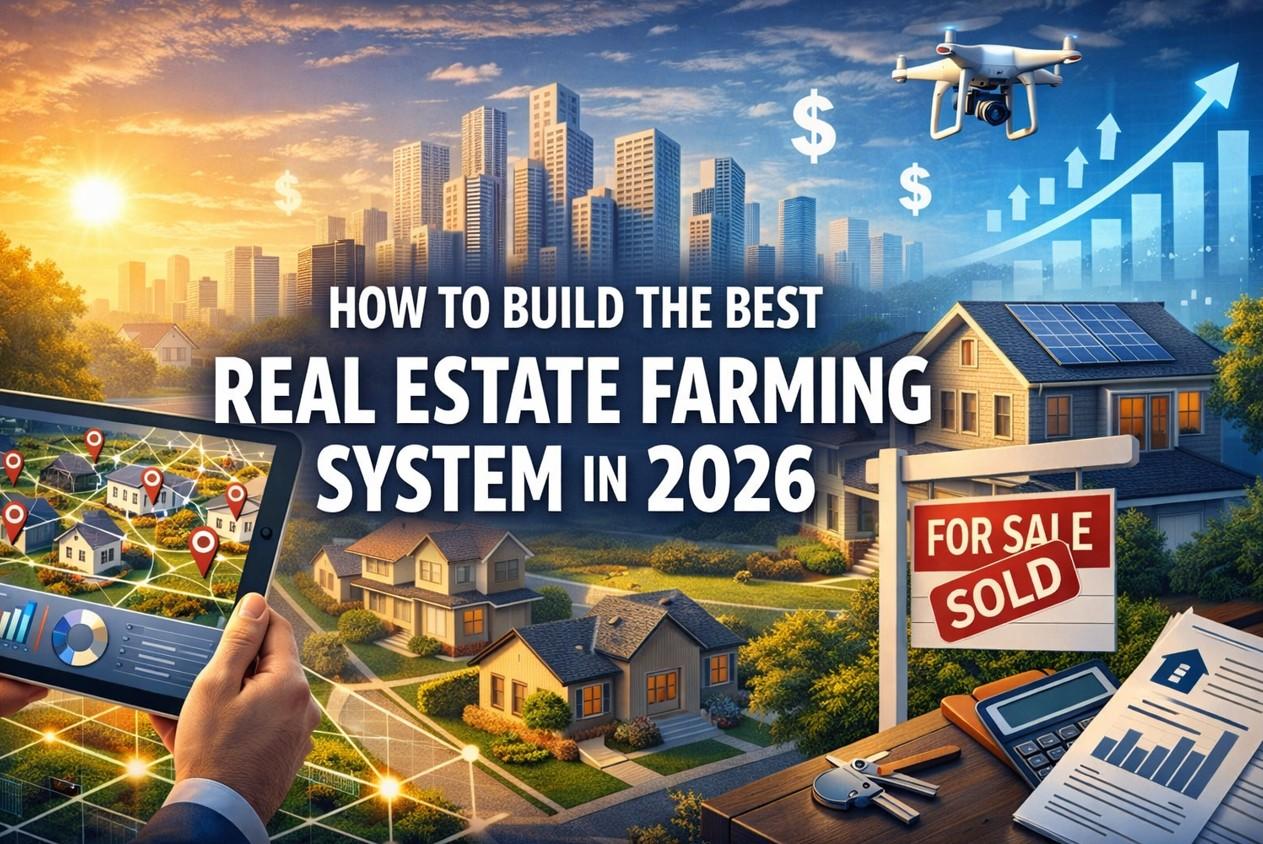
Real estate competition keeps getting tighter. As a result, agents who rely only on random prospecting often struggle to maintain steady listings. In contrast, professionals who implement the best real estate farming system create predictable pipelines and stronger local authority.
In 2026, farming is no longer just about postcards. Instead, it requires smart targeting, consistent messaging, and coordinated outreach across multiple channels. When done correctly, it positions you as the obvious choice when homeowners decide to sell.
This guide explains exactly how to build the best real estate farming system step by step.
Understand What Real Estate Farming Really Means
Before building your system, you must clearly understand the concept. Real estate farming is the consistent promotion of your services within a defined geographic area or homeowner segment.
Rather than chasing leads everywhere, you concentrate your marketing where it matters most. Over time, repeated exposure builds familiarity. Consequently, homeowners begin to recognize your name and associate you with local expertise.
The best real estate farming approach focuses on:
-
Consistency
-
Local relevance
-
Multi-channel visibility
-
Long-term positioning
Without these elements, farming efforts usually fade quickly.
Step 1: Select the Right Farm Area
Your farm area determines the ceiling of your results. Therefore, this step deserves careful attention.
What to Look For
First, analyze turnover rates. Neighborhoods with moderate movement often produce better opportunities than areas where owners rarely sell.
Next, evaluate competition. If several dominant agents already control the area, breaking through will take longer. However, that does not mean you should avoid competitive zones entirely. Instead, weigh effort versus potential return.
Additionally, consider these factors:
-
500 to 2,500 homes is ideal
-
Stable or rising property values
-
Owner-occupied majority
-
Clear neighborhood identity
When your area fits these criteria, your best real estate farming system starts on solid ground.
Step 2: Build a Consistent Brand Presence
Visibility without recognition does not produce listings. Therefore, branding must remain consistent across every touchpoint.
Key Branding Elements
Your materials should always include:
-
Professional headshot
-
Consistent colors and fonts
-
Clear value statement
-
Local positioning message
For example, phrases like “Your Neighborhood Market Specialist” often perform well because they reinforce local authority.
Moreover, repetition matters. When homeowners repeatedly see the same visual identity, trust grows naturally. As a result, your farming efforts compound over time.
Step 3: Create a Multi-Channel Outreach Plan
In 2026, relying on a single marketing channel is risky. Instead, the best real estate farming systems coordinate several touchpoints working together.
Core Channels to Include
Direct Mail
Postcards and letters remain powerful because they create physical visibility in the home.
Email Campaigns
Email keeps you present between mail drops and supports ongoing engagement.
Voicemail Drops
These add a personal layer that many agents overlook.
Landing Pages
Dedicated pages help capture interest and track responses.
Because each channel reinforces the others, your overall presence becomes stronger. Consequently, homeowners are more likely to remember you when the selling decision arrives.
Step 4: Commit to a Long-Term Touch Schedule
One of the biggest mistakes agents make is stopping too early. Farming works through repetition. Therefore, patience is essential.
Recommended Touch Frequency
Most successful campaigns include:
-
20 to 30 touches per year
-
Mail every 3–4 weeks
-
Email every 2–3 weeks
-
Quarterly market updates
Consistency beats intensity. In other words, steady visibility outperforms short bursts of heavy marketing.
The best real estate farming systems run continuously, not seasonally.
Step 5: Personalize Your Messaging
Generic marketing gets ignored. However, relevant messaging captures attention.
How to Improve Relevance
Start by segmenting homeowners when possible. For instance:
-
Absentee owners
-
Long-term owners
-
High-equity households
-
Move-up neighborhoods
Next, speak directly to their situations. For example, absentee owners respond better to messages about property management challenges.
Furthermore, include local data whenever possible. Market statistics, recent sales, and neighborhood trends make your outreach feel informed rather than promotional. As personalization improves, response rates usually follow.
Step 6: Track Performance and Adjust
Even the best real estate farming plan requires ongoing refinement. Therefore, tracking must be built into your system from the beginning.
Metrics That Matter
Focus on:
-
Response rates
-
Listing appointments
-
Conversion to listings
-
Cost per acquisition
-
Area market share growth
Additionally, use QR codes or unique landing pages to measure engagement accurately. Because data removes guesswork, you can improve results faster and avoid wasted spending.
Step 7: Support Farming With Community Presence
Marketing alone is powerful. However, combining it with real-world visibility strengthens results even more.
High-Impact Local Activities
Consider:
-
Hosting neighborhood events
-
Sponsoring community programs
-
Attending local meetings
-
Sharing hyperlocal social content
When homeowners see both your marketing and your presence in the community, credibility rises significantly.
This combination often separates average agents from those running the best real estate farming operations.
Common Mistakes to Avoid
Even motivated agents sometimes undermine their own campaigns. Fortunately, these pitfalls are preventable.
Stopping Too Soon
Farming requires time. Many agents quit just before results begin to appear.
Targeting Areas That Are Too Large
Oversized farm zones dilute visibility. Focus beats coverage.
Inconsistent Branding
Mixed visuals confuse homeowners and weaken recognition.
Generic Messaging
Broad, impersonal copy rarely creates urgency. By avoiding these mistakes, your system becomes far more effective.
What the Best Real Estate Farming Looks Like in 2026
The modern approach blends automation with personalization. While technology handles timing and coordination, the agent remains the trusted local expert.
Today’s top-performing systems typically include:
-
Automated campaign scheduling
-
Verified homeowner data
-
Multi-channel coordination
-
Behavior-based messaging
-
Continuous performance tracking
Because expectations keep rising, agents who build structured systems now position themselves ahead of slower adopters.
Conclusion
Building the best real estate farming system in 2026 requires focus, consistency, and smart coordination. When you select the right farm area, maintain steady outreach, and personalize your messaging, you create lasting neighborhood authority.
Although results do not appear overnight, the long-term payoff is significant. Over time, consistent farming builds recognition, trust, and predictable listing opportunities. Agents who commit to the process today position themselves for stronger, more stable growth in the years ahead.
Ready to implement the best real estate farming strategy? Harvist helps agents automate targeted neighborhood campaigns, maintain consistent outreach, and build lasting local authority that drives more listing opportunities.
- Managerial Effectiveness!
- Future and Predictions
- Motivatinal / Inspiring
- Fitness and Wellness
- Medical & Health
- Manufacturing
- Education
- Real-Estate
- Food Industry
- Hospitality
- Online Games
- Sports
- Home Services
- Civil Engineering
- Safety and Protection
- Software Products & Services
- Fashion and Jewellery
- Artificial Intelligence
- Entrepreneurship
- Mentoring & Guidance
- Marketing
- Networking
- HR & Recruiting
- Literature
- Shopping
- Career Management & Advancement