

 SkillClick
Two Continents, One Vehicle: Mastering Car Shipping Africa to UK
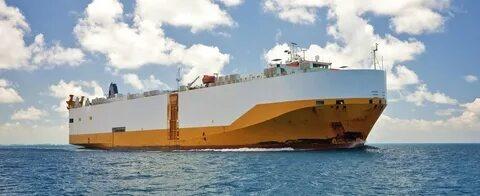
There is a unique story behind every vehicle that makes the journey from Africa to the United Kingdom. Some have spent years navigating the chaotic energy of Lagos traffic, their horns worn smooth from use. Others have quietly carried researchers across the Serengeti, their roofs dented by low-hanging acacia branches. A select few have ferried families along the Garden Route, their tires hugging curves that overlook the meeting of two oceans. When the owners of these vehicles decide to relocate, they face a fundamental question: how do you move a piece of your life across thousands of miles of open ocean?
The answer lies in the intricate world of international vehicle transport. The process of Car Shipping Africa to UK is a fascinating blend of old-fashioned seamanship and modern regulatory compliance. For those standing at the edge of this journey, understanding what lies ahead is the key to a successful crossing.
The Starting Point: Where the Journey Begins
Africa is not a single point of departure, and the logistics of shipping a vehicle vary dramatically depending on where your journey starts. The continent's coastline is dotted with major ports that serve as gateways to the world.
In the south, the ports of Durban and Cape Town handle a massive volume of vehicle traffic. These are modern, efficient facilities where ships load everything from mining equipment to family sedans. From here, vessels must first navigate the treacherous waters around the Cape of Good Hope before heading north into the Atlantic.
On the west coast, ports like Lagos in Nigeria, Tema in Ghana, and Abidjan in Ivory Coast serve as hubs for vehicles from across the region. These ports operate at a different pace, with their own unique rhythms and challenges. In the east, Mombasa in Kenya and Dar es Salaam in Tanzania handle vehicles from the interior of the continent, sending them on routes that may transit the Suez Canal or go around the Cape.
Regardless of the departure point, the initial steps are the same. Your vehicle must be presented in a condition that satisfies both the shipping line and the destination country's authorities. This begins with a thorough cleaning that goes far beyond what any car wash can provide.
The Non-Negotiable: Biosecurity and the Deep Clean
If there is one aspect of international vehicle shipping that catches people off guard, it is the absolute requirement for cleanliness. This is not about aesthetics; it is about protecting an island nation from foreign biological threats.
The United Kingdom maintains strict biosecurity controls to protect its agriculture and natural environment. Any trace of African soil clinging to your tires, any seeds nestled in your radiator grille, or any plant matter lodged in your undercarriage is considered a contaminant. These organic stowaways could introduce pests or diseases that would harm British crops and ecosystems.
To prevent this, your vehicle must undergo a professional-grade cleaning before it ever reaches the departure port. This process, often called a "bio-wash" or "undercarriage steam clean," uses high-pressure steam and specialized cleaning agents to remove every trace of organic material. The chassis, wheel wells, engine bay, and even the crevices of the bumper must be spotless. Port inspectors will check your vehicle thoroughly, and if they find any contamination, they have the authority to refuse loading. This is not a step that can be rushed or overlooked.
Beyond cleanliness, there are practical preparations. Fuel levels must be reduced to a minimum to comply with safety regulations. The battery must be securely fastened, and the vehicle must be free of any fluid leaks. Personal belongings are generally not permitted inside the vehicle, as they can shift during the crossing or complicate customs inspections.
The Loading: A Carefully Choreographed Operation
With a clean vehicle and all documentation in order, the next stage is loading at the port of departure. This is where your car becomes part of a vast, carefully orchestrated operation involving dozens of workers and massive machinery.
For the vast majority of vehicles, the loading method is Roll-on/Roll-off. You will drive your vehicle to a designated drop-off point at the port. From there, professional drivers known as stevedores take control. They drive your vehicle up the steep ramp of the vessel and into the cavernous interior.
The ship itself is an engineering marvel. It is essentially a floating multi-story car park, with decks stacked high above and below the waterline. Your vehicle is guided to a specific spot and parked just inches away from other cars, trucks, and SUVs. Heavy-duty straps or chains are then secured over the wheels, lashing the vehicle firmly to the deck. These lashings are designed to withstand the rolling and pitching of the ship in heavy seas, ensuring your car remains stationary throughout the voyage.
As the final vehicles are loaded and the massive doors are sealed, the ship prepares for departure. Your vehicle is now officially on its way.
The Crossing: A Journey Through Oceans and Climates
The voyage from Africa to the UK is one of the great maritime journeys, covering thousands of miles and crossing multiple climate zones. For ships departing from southern Africa, the journey begins with a dramatic exit. The waters around the Cape of Good Hope are notoriously treacherous, where the Atlantic and Indian Oceans meet in a powerful confluence. This region is famous for its "Cape Rollers"—long, powerful swells that can test the strength of even the most secure lashings.
Once past the Cape, the vessel turns north, sailing up the Atlantic coast. The cold Benguela current gradually gives way to the warmer waters of the tropical Atlantic. The ship crosses the equator, a milestone marked by tradition among the crew. As it approaches Europe, the weather cools again, and the waters become crowded with container ships, tankers, and fishing vessels, all converging on the busy ports of the continent.
Throughout this journey, your vehicle remains in the darkness of the car deck, held in place by its lashings. It is exposed to the constant vibration of the ship's engines, the salt-laden air, and the changes in temperature and humidity as the vessel moves through different climate zones. It is a test of endurance, but modern shipping methods ensure that vehicles arrive in the same condition they left.
Landfall: The UK Port and Customs Control
The first sight of the English coast is a moment of profound anticipation. But arrival at a UK port does not mean immediate freedom. Your vehicle is driven off the ship and into a secure customs compound, a transitional space where it is held while its legal importation is processed.
Here, the vehicle falls under the jurisdiction of His Majesty's Revenue and Customs. The first requirement is a declaration through the NOVA system. This digital notification provides the government with the vehicle's details and triggers an assessment of any import duties or VAT that may be due. The amount payable depends on the vehicle's value, age, and country of origin. This is a legal obligation, and the vehicle cannot leave the customs compound until it is fulfilled and any charges are paid.
While in the compound, the vehicle is also subject to inspection by UK Border Force. They may verify the chassis number against the documentation or conduct a random search. This phase requires patience, as the compound operates on its own schedule and clearing times can vary.
The Final Step: UK Registration and Roadworthiness
Once the customs hold is lifted and the vehicle is physically released, the final stage of the journey begins. Your car is now in the country, but it is not yet a legal resident. To achieve that status, it must be registered with the Driver and Vehicle Licensing Agency and proven to meet UK roadworthiness standards.
For most vehicles under ten years old, this requires passing an Individual Vehicle Approval test. This comprehensive inspection examines everything from the headlights and indicators to the emissions system and safety features. Vehicles imported from Africa may need modifications to pass. Headlights designed for right-hand driving may need to be adjusted or replaced for driving on the left, and speedometers that only display kilometers per hour must be capable of showing miles per hour.
Once the vehicle passes its test, the paperwork is submitted to the DVLA. In return, you receive a UK registration number and a V5C log book, the official document that proves ownership and legality. With these in hand, you can finally tax the vehicle, insure it, and drive it without restriction on British roads.
The Open Road Awaits
The process of Car Shipping Africa to UK is a marathon, not a sprint. It requires organization, patience, and a willingness to navigate complex regulations. But for those who see it through, the reward is immeasurable.
As you drive away from the port, your vehicle carries with it the spirit of its former life. The dust of African roads, the heat of tropical suns, and the memories of countless journeys are all still there, woven into its frame. Now, it begins a new chapter, ready to explore the green hills, historic cities, and winding country lanes of its new home. The journey across the ocean is complete, and the open road awaits.
- Managerial Effectiveness!
- Future and Predictions
- Motivatinal / Inspiring
- Fitness and Wellness
- Medical & Health
- Manufacturing
- Education
- Real-Estate
- Food Industry
- Hospitality
- Online Games
- Sports
- Home Services
- Civil Engineering
- Safety and Protection
- Software Products & Services
- Fashion and Jewellery
- Artificial Intelligence
- Entrepreneurship
- Mentoring & Guidance
- Marketing
- Networking
- HR & Recruiting
- Literature
- Shopping
- Career Management & Advancement