

 SkillClick
Environmental Resistance in Inflatable Materials
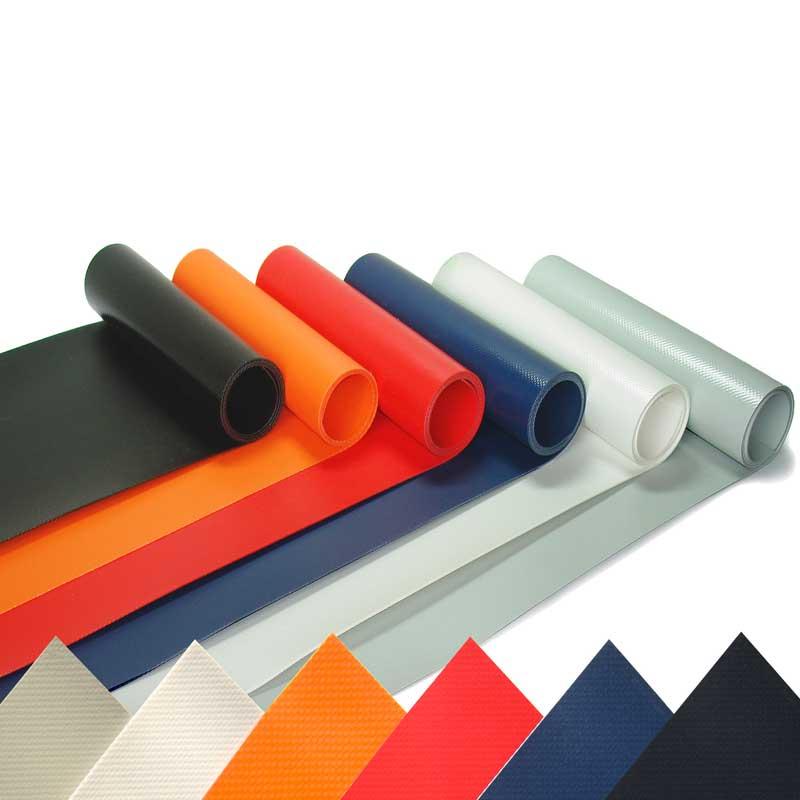
Inflatable structures are increasingly evaluated not only for their immediate visual impact but also for how reliably they perform over long service periods. During early material discussions, engineers often point out that PVC Inflatable Fabric must respond predictably to internal pressure while remaining stable under repeated deformation, a requirement that drives careful consideration of both composition and production methodology.
At the material level, durability begins with the relationship between polymer flexibility and structural restraint. Flexible PVC compounds are designed to stretch without permanent deformation, yet excessive softness can compromise dimensional accuracy. By adjusting resin grades and modifier ratios, manufacturers aim to achieve controlled elongation that supports inflation while preserving shape fidelity. This balance directly affects how inflatable chambers behave during rapid pressure changes.
Reinforcement fabrics embedded within the PVC layers play a defining role in long-term performance. The textile structure governs load transfer across the surface, helping distribute internal pressure evenly. Differences in yarn density and weave geometry influence how stress migrates from seams to panel centers. When reinforcement selection aligns with intended application loads, material fatigue is significantly reduced.
Processing techniques transform these material elements into functional composites. Precision coating and lamination ensure that the polymer layer penetrates and anchors to the fabric surface rather than forming a superficial bond. Consistent penetration depth improves resistance to delamination, particularly in products exposed to dynamic motion or frequent handling.
Heat-based joining methods further test material stability. Inflatable products rely heavily on welded seams, which must endure continuous tensile forces. The thermal window for effective welding is narrow: insufficient heat weakens seam strength, while excessive heat degrades adjacent material. Controlled thermal profiles allow seams to achieve structural integrity without sacrificing surrounding flexibility.
Surface behavior also influences practical usability. Inflatable materials may experience friction during folding, stacking, or deployment. Surface smoothness reduces abrasion, while specialized finishes can enhance resistance to dirt accumulation or staining. These treatments must be compatible with subsequent fabrication steps to avoid compromising weld quality or air retention.
Performance testing bridges the gap between laboratory assumptions and real-world use. Burst pressure testing evaluates safety margins, while cyclic inflation tests reveal how materials respond to repetitive stress. Environmental conditioning exposes samples to temperature fluctuations and humidity to observe changes in elasticity and bonding performance. Such tests provide insight into how processing variables affect lifespan.
Different application sectors prioritize distinct performance attributes. Recreational inflatables emphasize comfort and flexibility, whereas industrial or promotional structures often demand higher dimensional stability and resistance to mechanical wear. Adjusting material architecture for these varied needs highlights the importance of application-specific design rather than one-size-fits-all solutions.
Shanghai MSD supports this adaptive approach by coordinating material selection with customer manufacturing processes. By focusing on compatibility between PVC formulations, reinforcement fabrics, and fabrication techniques, the company helps reduce production inconsistencies and supports predictable product behavior across different inflatable categories.
Handling and storage considerations further shape material expectations. Inflatable fabrics must remain pliable after extended storage without developing surface adhesion or stiffness. Resistance to aging and plasticizer migration ensures that materials can be unfolded and welded without additional conditioning, streamlining production schedules.
As inflatable designs evolve toward larger scales and more intricate geometries, the interaction between material behavior and process control becomes increasingly critical. Understanding how composition, reinforcement, and fabrication interact enables manufacturers to refine designs with confidence rather than relying on trial and error.Readers seeking deeper insight into material structure, processing logic, and application-driven performance can explore additional technical perspectives through Shanghai MSD’s industry resource at
https://www.shanghaimsd.com/news/what-is-pvc-inflatable-fabric-everything-you-need-to-know.html .
- Managerial Effectiveness!
- Future and Predictions
- Motivatinal / Inspiring
- Fitness and Wellness
- Medical & Health
- Manufacturing
- Εκπαίδευση
- Real-Estate
- Food Industry
- Hospitality
- Online Games
- Sports
- Home Services
- Civil Engineering
- Safety and Protection
- Software Products & Services
- Fashion and Jewellery
- Artificial Intelligence
- Entrepreneurship
- Mentoring & Guidance
- Marketing
- Networking
- HR & Recruiting
- Literature
- Shopping
- Career Management & Advancement