

 SkillClick
How Does Kunliwelding Wire Achieve Greater Strength?
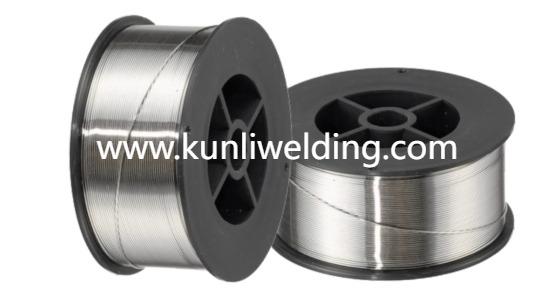
Structural integrity stands as the paramount concern in fabrication projects where welded joints bear significant loads or endure demanding service conditions. When strength requirements dictate material selection, Kunli Aluminum Welding Wire ER5356 emerges as a compelling choice for fabricators who cannot compromise on mechanical performance. The magnesium-based composition of this filler metal delivers tensile and yield strength characteristics that make it indispensable for applications ranging from heavy equipment frames to marine vessel construction, where weld failure could result in catastrophic consequences.
The strength advantage of ER5356 originates from its magnesium content, which functions as a potent solid solution strengthening agent in aluminum alloys. Unlike precipitation hardening mechanisms that require heat treatment, solid solution strengthening takes effect immediately upon solidification. The magnesium atoms dissolve into the aluminum matrix, creating lattice distortions that impede dislocation movement. This atomic-level interference requires greater stress to deform the material, translating directly to higher strength values in the finished weld.
When fabricators join high-strength aluminum alloys, matching the base material strength becomes essential for creating joints that perform as designed. Many structural aluminum alloys derive their properties from magnesium additions, making ER5356 a natural compatibility choice. Welding these materials with lower-strength filler metals creates weak zones where failures initiate under load. The chemistry matching principle ensures that welds possess comparable strength to the surrounding base metal, distributing stresses uniformly throughout the structure rather than concentrating them at the weld interface.
Load-bearing applications demand predictable mechanical properties that remain consistent across varying service conditions. ER5356 delivers reliable strength in both tensile and compressive loading scenarios. The weld deposit resists deformation under steady loads while also demonstrating acceptable performance under cyclic loading conditions. Structures experiencing repeated stress cycles, such as transportation equipment or lifting apparatus, benefit from the fatigue resistance that accompanies the alloy's inherent strength characteristics.
Yield strength particularly matters in structural design because it defines the threshold beyond which permanent deformation occurs. Engineers size components based on keeping operating stresses below yield values with appropriate safety factors. Higher yield strength in weld deposits allows designers to specify lighter structures while maintaining safety margins, or alternatively, to increase safety factors without adding weight. This flexibility proves valuable across industries where weight reduction translates to improved efficiency or performance.
Marine environments present particularly demanding conditions where strength and corrosion resistance must coexist. Saltwater exposure, combined with structural loads from waves and cargo, creates a challenging service environment. Aluminum Welding Wire ER5356 addresses both requirements simultaneously, offering strength to resist marine loads while providing corrosion resistance that extends service life. Hulls, superstructures, and deck fittings welded with this filler metal withstand the combined mechanical and chemical stresses inherent in marine service.
Architectural applications increasingly specify aluminum for its combination of strength, light weight, and weather resistance. Building facades, canopies, and structural supports must endure wind loads, thermal expansion cycles, and environmental exposure over decades of service. The strength provided by magnesium-bearing filler metals ensures these structures maintain their integrity throughout their design life. Architects and engineers gain confidence specifying aluminum when they know welds will perform reliably under expected loads.
Transportation industries rely on ER5356 for fabricating components where strength-to-weight ratios determine vehicle performance. Trailers, railcars, and specialized transport equipment benefit from aluminum's light weight, but only when welds provide adequate strength to handle cargo loads and road stresses. The filler metal's mechanical properties enable safe operation at design load capacities without excessive structural weight that would reduce payload capacity or increase fuel consumption.
Pressure vessels and tanks constructed from aluminum require welds that safely contain internal pressures without risk of failure. The hoop stresses in cylindrical vessels place demanding loads on circumferential welds, while longitudinal welds experience axial stresses. ER5356 provides the strength needed to resist these multi-directional stress states, ensuring vessel integrity under both operating pressures and occasional overpressure scenarios.
Repair welding on existing structures often necessitates matching or exceeding original strength characteristics. When repairing damaged components or modifying existing assemblies, using filler metals with adequate strength prevents creating weak zones that could fail prematurely. Aluminum Welding Wire ER5356 enables repair work that restores full structural capability, allowing equipment to return to service with confidence in its continued reliability.
Temperature effects on strength require consideration in filler metal selection. While all aluminum alloys experience some strength reduction at elevated temperatures, magnesium-bearing alloys maintain better strength retention across moderate temperature ranges compared to some alternatives. Applications involving occasional temperature excursions or steady-state elevated temperatures benefit from this characteristic, though design calculations should always account for temperature effects on material properties.
Dynamic loading scenarios place additional demands on weld metal performance. Impact loads, vibration, and sudden stress applications can initiate failures in welds lacking adequate strength and toughness. The combination of strength and ductility in ER5356 deposits helps structures absorb energy during dynamic events without catastrophic failure, providing resilience that static strength alone cannot guarantee.
Joint efficiency calculations compare weld strength to base metal strength, expressing the relationship as a percentage. Higher efficiency values indicate welds that more closely match parent metal properties. When properly executed with appropriate procedures, ER5356 welds achieve joint efficiencies that approach base metal strength in many applications. This performance enables designers to treat welded joints as nearly equivalent to unwelded material in structural calculations.
Fabrication efficiency benefits from using a single filler metal across multiple applications rather than maintaining inventory of specialized wires for different scenarios. The broad applicability and reliable strength of this magnesium-bearing wire make it a versatile choice that handles varied structural welding requirements. Shops can standardize on this alloy for strength-critical work, simplifying inventory management while ensuring consistent quality. Technical resources addressing strength requirements and proper application techniques for demanding aluminum welding projects remain accessible through industry specialists at https://www.kunliwelding.com/ where comprehensive material specifications support engineering and fabrication decisions across diverse applications.
- Managerial Effectiveness!
- Future and Predictions
- Motivatinal / Inspiring
- Fitness and Wellness
- Medical & Health
- Manufacturing
- Educação
- Real-Estate
- Food Industry
- Hospitality
- Online Games
- Sports
- Home Services
- Civil Engineering
- Safety and Protection
- Software Products & Services
- Fashion and Jewellery
- Artificial Intelligence
- Entrepreneurship
- Mentoring & Guidance
- Marketing
- Networking
- HR & Recruiting
- Literature
- Shopping
- Career Management & Advancement